si
Albanian • Alemannic German • Asturian • Bahnar • Bambara • Belizean Creole • Catalan • Central Bikol • Central Franconian • Chamorro • Chavacano • Cimbrian • Cornish • Czech • Dalmatian • Danish • Dutch • Esperanto • Ewe • Fala • French • Friulian • Galician • Gothic • Guinea-Bissau Creole • Haitian Creole • Hanunoo • Iau • Ido • Indonesian • Interlingua • Italian • Jamaican Creole • Japanese • Japhug • Kabuverdianu • Kankanaey • Khumi Chin • Koro (India) • Kusaal • Ladin • Ladino • Latin • Latvian • Lolopo • Louisiana Creole • Lower Tanana • Luxembourgish • Macanese • Malay • Mandarin • Mauritian Creole • Middle Dutch • Middle English • Middle French • Middle Low German • Mòcheno • Mokilese • Molo • Nalca • Norman • North Frisian • Norwegian Bokmål • Norwegian Nynorsk • Old English • Old French • Old Galician-Portuguese • Old High German • Old Saxon • Old Spanish • Pali • Papiamentu • Polish • Portuguese • Quapaw • Romagnol • Romani • Romanian • Romansh • Sassarese • Savi • Serbo-Croatian • Slovak • Slovene • Spanish • Sranan Tongo • Sumerian • Swahili • Tagalog • Ternate • Tok Pisin • Turkish • Vietnamese • Volapük • Waigali • Walloon • Welsh • Yoruba • Zhuang • Zou
Page categories
Translingual
Etymology
Clipping of English Sinhalese, from Sinhalese සිංහල (siṁhala), itself borrowed from Sanskrit सिंहल (siṃhala).
Symbol
si
See also
- Wiktionary’s coverage of Sinhalese terms
English
Alternative forms
Etymology
From Middle English si (“seventh degree or note of Guido of Arezzo's hexachordal scales”), Italian si in the solmization of Guido of Arezzo, from the initials of Latin Sāncte Iohannēs (“Saint John (the Baptist)”) in the lyrics of the scale-ascending hymn Ut queant laxis by Paulus Deacon; thus, also an initialism of Sāncte Iohannēs.
Pronunciation
Noun
si (plural sis)
- (music) A syllable used in solfège to represent the seventh note of a major scale.
Translations
|
See also
Anagrams
Albanian
Etymology
Varying reconstructions. Orel descends it from Proto-Albanian *tšei,[1] Matzinger from Proto-Albanian *čī.[2] Ultimately from instrumental Proto-Indo-European *kʷí-h₁. Compare Latin qui (“how, why”), Old English hwȳ, hwī (“why”). An interrogative and relative pronoun, especially in connection with a preposition.
Pronunciation
- IPA(key): [si]
Adverb
si
- how; in what way; in what state
- Si janë shokët e tu? ― How are your friends?
- like, as
- Si e dini, nuk kemi filluar ende. ― As you know, we've not yet begun.
Derived terms
See also
References
- ^ Oryol, Vladimir E. (1998), “si”, in Albanian Etymological Dictionary, Leiden; Boston; Köln: Brill, →ISBN, page 395
- ^ Forschungen, Stefan; Matzinger, Joachim (2013), Die Verben des Altalbanischen: Belegwörterbuch, Vorgeschichte und Etymologie (Albanische Forschungen; 33) (in German), Wiesbaden: Otto Harrassowitz, →ISBN, page 225
Alemannic German
Etymology 1
From Old High German siu, from Proto-Germanic *sī. Cognate with German sie (“she; it”), Gothic 𐍃𐌹 (si), Old English sēo.
Pronoun
si f
Declension
| nominative | accusative | dative | possessive m | |||
|---|---|---|---|---|---|---|
| singular | 1st person | ich, i | mich, mi | mir, mier, mer | min, miin | |
| 2nd person |
familiar | du | dich, di | dir, dier, der | din, diin | |
| polite | Si | Ine, Ene, -ne | Ire | |||
| 3rd person |
m | er | in, en | im | sin, siin | |
| f | si | ire | ||||
| n | es, 's, -s | im | sin, siin | |||
| plural | 1st person | mir, mer | üs, öis, ois, eus | üse, öise, oise, euse | ||
| 2nd person | ir, ier | öi, eu | öie, eure | |||
| 3rd person | si | ine, ene, -ne | ire | |||
Etymology 2
From Old High German sie m pl, sio f pl, siu n pl. Cognate with German sie, Dutch zij.
Pronoun
si pl
Declension
| nominative | accusative | dative | possessive m | |||
|---|---|---|---|---|---|---|
| singular | 1st person | ich, i | mich, mi | mir, mier, mer | min, miin | |
| 2nd person |
familiar | du | dich, di | dir, dier, der | din, diin | |
| polite | Si | Ine, Ene, -ne | Ire | |||
| 3rd person |
m | er | in, en | im | sin, siin | |
| f | si | ire | ||||
| n | es, 's, -s | im | sin, siin | |||
| plural | 1st person | mir, mer | üs, öis, ois, eus | üse, öise, oise, euse | ||
| 2nd person | ir, ier | öi, eu | öie, eure | |||
| 3rd person | si | ine, ene, -ne | ire | |||
Etymology 3
From Middle High German sein, sīn, from Old High German sīn, from Proto-Germanic *sīnaz. Cognate with German sein, Dutch zijn, West Frisian syn, Icelandic sinn.
Alternative forms
Determiner
si
Declension
Inflected forms include:
| Singular | Plural | |||
|---|---|---|---|---|
| masculine | feminine | neuter | ||
| Nominative Accusative |
si | sini | si | sini |
| Genitive | sines & si's | sines | ||
| Dative | si'm & sim | siner | si'm & sim | sine |
Etymology 4
From Middle High German sīn, from Old High German sīn. Cognate with German sein, Dutch zijn, Low German sien.
Alternative forms
Verb
si
References
- Patuzzi, Umberto, ed., (2013) Luserna / Lusérn: Le nostre parole / Ünsarne börtar / Unsere Wörter [Our Words], Luserna, Italy: Comitato unitario delle isole linguistiche storiche germaniche in Italia / Einheitskomitee der historischen deutschen Sprachinseln in Italien
Asturian
Etymology
Conjunction
si
Bahnar
Etymology
From Proto-Bahnaric *ciː, from Proto-Mon-Khmer *ciiʔ (“louse”); cognate with Vietnamese chí, chấy.
Pronunciation
- IPA(key): /siː/
Noun
si
Bambara
Noun
si
- shea.
Descendants
- → English: shea
Belizean Creole
Etymology
Verb
si
- to see
References
- Crosbie, Paul, ed. (2007), Kriol-Inglish Dikshineri: English-Kriol Dictionary. Belize City: Belize Kriol Project, p. 315–316.
Catalan
Pronunciation
Etymology 1
From Old Catalan si, from Latin si (“if”).
Conjunction
si
See also
- si bé
- si de cas
- si doncs no
- si més no
- si no
- si per cas
- si et plau
- si us plau
Etymology 2
From Latin Sancte Iohannes (“Saint John”) in the hymn for St. John the Baptist.
Noun
si m (plural sis)
Etymology 3
From Old Catalan si~sin, from Latin sĭnus.
Noun
si m (plural sins)
- cavity, depression
- (anatomy) sinus
- (figuratively) uterus
- front portion of the breast
- (figuratively) heart
- estuary, bay
See also
- si d'Abraham m
Etymology 4
Pronoun
si
Usage notes
- Si is the stressed (or "strong", or "tonic") form of the reflexive pronoun es. As such, it is used after prepositions.
Declension
| strong/subject | weak (direct object) | weak (indirect object) | possessive | |||||
|---|---|---|---|---|---|---|---|---|
| proclitic | enclitic | proclitic | enclitic | |||||
| singular | 1st person |
standard | jo, mi3 | em, m’ | -me, ’m | em, m’ | -me, ’m | meu |
| majestic1 | nós | ens | -nos, ’ns | ens | -nos, ’ns | nostre | ||
| 2nd person |
standard | tu | et, t’ | -te, ’t | et, t’ | -te, ’t | teu | |
| formal1 | vós | us | -vos, -us | us | -vos, -us | vostre | ||
| very formal2 | vostè | el, l’ | -lo, ’l | li | -li | seu | ||
| 3rd person |
m | ell | el, l’ | -lo, ’l | li | -li | seu | |
| f | ella | la, l’4 | -la | li | -li | seu | ||
| n | ho | -ho | li | -li | seu | |||
| plural | ||||||||
| 1st person | nosaltres | ens | -nos, ’ns | ens | -nos, ’ns | nostre | ||
| 2nd person |
standard | vosaltres | us | -vos, -us | us | -vos, -us | vostre | |
| formal2 | vostès | els | -los, ’ls | els | -los, ’ls | seu | ||
| 3rd person |
m | ells | els | -los, ’ls | els | -los, ’ls | seu | |
| f | elles | les | -les | els | -los, ’ls | seu | ||
| 3rd person reflexive | si | es, s’ | -se, ’s | es, s’ | -se, ’s | seu | ||
| adverbial | ablative/genitive | en, n’ | -ne, ’n | |||||
| locative | hi | -hi | ||||||
1 Behaves grammatically as plural. 2 Behaves grammatically as third person.
3 Only as object of a preposition. 4 Not before unstressed (h)i-, (h)u-.
See also
- de si mateix
- en si
- entre si
- fora de si
- per a si
- per si mateix
- tornar en si
See also
Central Bikol
Etymology
Compare Chamorro si, Indonesian si, Malay si, and Tagalog si.
Pronunciation
- IPA(key): /si/ [si]
- Hyphenation: si
Article
si (Basahan spelling ᜐᜒ)
- direct marker placed before names or terms of address of people
- Nagdalagan si Juan. ― Juan ran.
- Dinara ninda si Tatay sa ospital. ― They brought Father to the hospital.
- direct marker placed before an adjective used to refer to a person with those distinct characteristics
- Yaon na si Taba. ― Fatso is here.
- (Naga) direct marker placed before common nouns
- Synonym: su
- Kinua ko na si pakete. ― I already got the package
See also
Central Franconian
Alternative forms
Etymology
From Middle High German sīn.
Pronunciation
Determiner
si (masculine senge or singe, feminine and plural seng or sing)
- (Ripuarian) his, its (third-person masculine and neuter possessive)
- Wo hät e dann si Jlas henjestallt? ― Where did he put his glass?
Usage notes
- The form seng/sing is used for the neuter when strongly stressed: Dat es sing Jlas! (“That's his glass!”) Contrariwise, the form si may be used for the masculine and feminine when unstressed, chiefly with words for relatives: si Papp (“his father”, but less common than senge Papp).
Chamorro
Etymology
Compare Central Bikol si, Indonesian si, and Malay si.
Preposition
si
- Subject marker for personal names
Chavacano
Pronunciation
- IPA(key): /si/, [si]
Etymology 1
Particle
si
Etymology 2
Inherited from Spanish si (“if”).
Conjunction
si
Cimbrian
Alternative forms
Etymology
From Middle High German si(e), from Old High German siu, from Proto-West Germanic *sī, from Proto-Germanic *sī, nominative singular feminine of *iz. Cognate with German sie.
Pronoun
si
Inflection
| singular | plural | |
|---|---|---|
| 1st person | i | biar |
| 2nd person | du | iar |
| 3rd person | er, si, 'z | se |
References
- “si” in Cimbrian, Ladin, Mòcheno: Getting to know 3 peoples. 2015. Servizio minoranze linguistiche locali della Provincia autonoma di Trento, Trento, Italy.
Cornish
Etymology 1
(This etymology is missing or incomplete. Please add to it, or discuss it at the Etymology scriptorium.)
Noun
si m (plural siow)
Derived terms
- edhen si (“hummingbird”)
Etymology 2
(This etymology is missing or incomplete. Please add to it, or discuss it at the Etymology scriptorium.)
Verb
si
- (transitive) to fancy
Derived terms
- sians (“notion, whim”)
Czech
Etymology
Inherited from Proto-Slavic *si.
Pronunciation
- IPA(key): [ˈsɪ]
Audio: (file)
Pronoun
si (reflexive)
- clitic dative of sebe:
- to oneself
- to myself
- to yourself
- Posluž si. ― Serve yourself.
- to himself
- to herself
- to itself
- to ourselves
- to yourselves
- to themselves
- Synonym: (stressed) sobě
Further reading
- “si”, in Příruční slovník jazyka českého (in Czech), 1935–1957
- “si”, in Slovník spisovného jazyka českého (in Czech), 1960–1971, 1989
Dalmatian
| < 5 | 6 | 7 > |
|---|---|---|
| Cardinal : si | ||
Etymology
Numeral
si
Danish
Etymology
From Old Norse sía (“to sieve, filter”).
Pronunciation
- IPA(key): /siː/, [siːˀ]
- Rhymes: -i
- Rhymes: -iː
Noun
si c (singular definite sien, plural indefinite sier)
Inflection
| common gender |
singular | plural | ||
|---|---|---|---|---|
| indefinite | definite | indefinite | definite | |
| nominative | si | sien | sier | sierne |
| genitive | sis | siens | siers | siernes |
Verb
si (imperative si, infinitive at si, present tense sier, past tense siede, perfect tense har siet)
Dutch
Pronunciation
- IPA(key): /si/
Audio: (file) - Hyphenation: si
- Rhymes: -i
Noun
si f (plural si's, diminutive sietje n)
- musical note; ti
Anagrams
Esperanto
Etymology
From Italian si, French soi, Spanish se, Latin se, plus the i of personal pronouns.
Pronunciation
- IPA(key): /si/
Audio 1: (file) Audio 2: (file) Audio 3: (file) - Rhymes: -i
- Syllabification: si
Pronoun
si (reflexive, accusative sin, possessive sia)
Usage notes
The reflexive pronoun si is only used to refer to the third person (In English: he/she/it/they) not the first or second person (In English: I/we/you). When the subject of a sentence is first or second person, the same pronoun is repeated (with the accusative ending -n added if needed) instead of using si. (E.g. "they wash themselves" is ili lavas sin, but "I wash myself" is mi lavas min, instead of *mi lavas sin.)
See also
| singular | plural | |||||||
|---|---|---|---|---|---|---|---|---|
| nominative | accusative | possessive | nominative | accusative | possessive | |||
| first person | mi | min | mia | ni | nin | nia | ||
| second person |
formal | vi | vin | via | vi | vin | via | |
| familiar1 | ci | cin | cia | |||||
| third person |
masculine | li | lin | lia | ||||
| feminine | ŝi | ŝin | ŝia | |||||
| neuter | ĝi | ĝin | ĝia | |||||
| gender-neutral2 | ri ŝli |
rin ŝlin |
ria ŝlia | |||||
| reflexive | si | sin | sia | si | sin | sia | ||
| indefinite | oni | onin | onia | oni | onin | onia | ||
Ewe
Verb
si
- to escape
Fala
Etymology 1
From Old Galician-Portuguese se, from Latin sī (“if”).
Conjunction
si
- if (used to introduce a condition or choice)
- 2000, Domingo Frades Gaspar, Vamus a falal: Notas pâ coñocel y platical en nosa fala, Editora regional da Extremadura, Theme I, Chapter 1: Lengua Española:
- I si “a patria do homi é sua lengua”, cumu idía Albert Camus, o que está claru é que a lengua está mui por encima de fronteiras, serras, rius i maris, de situaciós pulíticas i sociu-económicas, de lazus religiosus e inclusu familiaris.
- And if “a man’s homeland is his language”, as Albert Camus said, what is clear is that language is above borders, mountain ranges, rivers and seas, above political and socio-economic situations, of religious and even family ties.
Etymology 2
Pronoun
si
- alternative form of se
- 2000, Domingo Frades Gaspar, Vamus a falal: Notas pâ coñocel y platical en nosa fala, Editora regional da Extremadura, Theme I, Chapter 2: Númerus?:
- As lenguas, idiomas, dialectus o falas tenin un-as funciós mui claras desde o principiu dos siglu i si hai contabilizaus en o mundu un-as 8.000 lenguas, ca un-a con sua importancia numérica relativa, a nossa fala é un tesoiru mais entre elas.
- The tongues, languages or regional variants have some very clear functions since the beginning of the centuries and some 8,000 languages have been accounted for in the world, each with its relative numerical importance, Fala is yet another treasure among them.
French
| This entry is part of the phrasebook project, which presents criteria for inclusion based on utility, simplicity and commonness. |
Pronunciation
- IPA(key): /si/
Audio: (file) Audio (France (Paris)): (file) Audio (France (Toulouse)): (file) Audio (France (Vosges)): (file) Audio (France): (file) Audio (France (Grenoble)): (file) Audio (France (Vosges)): (file) Audio (France (Vosges)): (file) Audio (France (Hérault)): (file) Audio (France (Lyon)): (file) Audio (France (Massy)): (file) - Homophones: ci, scie, scient, scies
Etymology 1
From Old French se, from Latin si (“if”).
Conjunction
si
- if, whether
- Je me demande si elle sera seule. ― I wonder if she'll be alone.
- Je veux savoir si tu viendras ou non. ― I want to know if you're coming or not.
- if (assuming that)
- Si j'avais ses pouvoirs, je créerais un monde où le mal n'existe pas.
- If I had his power, I'd create a world where evil didn't exist.
- Si tu n'avais pas appelé, je serais morte. ― If you hadn't called, I'd be dead.
- even if
- although, while
Usage notes
Elided preceding il or ils, resulting in the contracted forms s'il and s'ils.
Derived terms
Etymology 2
From Old French si, from Latin sic (“so, thus”). Doublet of sic.
Interjection
si
- yes (used to contradict a negative statement)
- Synonym: (archaic) si fait
- Tu ne m’aimes pas, n’est-ce pas ? — Si !
- You don’t like me, do you? — Yes, I do!
- Moi, je n'ai rien fait ! — Si ! ― I didn't do anything! — Yes, you did!
Usage notes
The positive particle usage is uncommon in Québec, where most speakers use oui instead (or for more emphasis, ben oui, mais oui, etc.).
Adverb
si
- so, such (intensifier)
- J’étais si fatigué ces jours-ci que je n’avais pas le courage de vous écrire.
- I was so tired those days that I didn't have the energy to write to you.
- Cela n'aurait pas été une si bonne idée. ― That wouldn't have been such a good idea.
- (si + adjective/adverb + que ...) however (to whatever extent or degree)
- Synonyms: aussi, tout, quelque
- Si bavard qu'il soit, il ne dit rien de stupide.
- However talkative he may be, he doesn't say anything stupid.
- 2017, Luc Brisson, Platon:
- Mais un législateur qui aurait un tant soit peu de worth, si infime soit elle, quand bien même il n'en irait pas comme l'argument vient de le démontrer, n'aurait-il pas commis en cette occasion, plus qu'en n'importe quelle autre circonstance où il aurait eu l'audace de mentir aux jeunes gens dans l'intérêt du bien, son plus utile mensonge, celui capable de faire que tous, non pas de force mais de leur plein gré, se conduisent de façon entièrement juste ?
- But a legislator who would have the slightest bit of valour, however tiny it may be, even if it were not as the argument has just demonstrated, would he not have committed on this occasion, more than in any other circumstance where he would have had the audacity to lie to young people in the interest of the good, his most useful lie, the one capable of making everyone, not by force but of their own accord, behave in an entirely just fashion?
Usage notes
- In the sense however, the verb is usually in the subjunctive.
- The que is sometimes replaced by an inverted-subject construction with a subjunctive verbal element and nominal, usually a personal pronoun.
- si heureuse soit-elle ― however happy she may be
- si faible paraisse-t-il ― however weak he may seem
Etymology 3
Noun
si m (invariable)
Derived terms
Further reading
- “si”, in Trésor de la langue française informatisé [Digitized Treasury of the French Language], 2012
Friulian
Etymology
Pronoun
si (third person)
Related terms
Galician
Pronunciation
- IPA(key): /ˈsi/ [ˈs̺i]
- Rhymes: -i
- Hyphenation: si
Etymology 1
Interjection
si
Etymology 2
From Latin sē, ablative and accusative pronoun form.
Pronoun
Usage notes
The pronoun si is used exclusively as the object of a preposition; no nominative form exists.
Etymology 3
(This etymology is missing or incomplete. Please add to it, or discuss it at the Etymology scriptorium.)
Noun
si m (plural sis)
See also
Gothic
Romanization
si
- romanization of 𐍃𐌹
Guinea-Bissau Creole
Etymology
From Portuguese se. Cognate with Kabuverdianu si.
Conjunction
si
Haitian Creole
Etymology
Pronunciation
- IPA(key): /si/
Conjunction
si
Hanunoo
Etymology
From Proto-Austronesian *si.
Pronunciation
- IPA(key): /ˈsi/ [ˈsi]
- Rhymes: -i
- Syllabification: si
Article
si (Hanunoo spelling ᜰᜲ)
- a form preposed to personal names
- Si Gawid ― Gawid
- Sintay si Luyon? ― Who is Luyon?
- Kang manok si manayti. ― My bird the manayti (small bird)
See also
Further reading
- Conklin, Harold C. (1953), Hanunóo-English Vocabulary (University of California Publications in Linguistics), volume 9, London, England: University of California Press, →OCLC, page 244
Iau
Noun
si
References
- Bill Palmer, The Languages and Linguistics of the New Guinea Area (→ISBN, 2017), page 531, table 95, Comparative basic vocabulary in Lakes Plain Languages
Ido
Etymology
Borrowed from Italian sì, Spanish sí.
Pronunciation
- IPA(key): /si/
Adverb
si
References
- Progreso I (in Ido), 1908–1909, page 10
Indonesian
Pronunciation
- (Standard Indonesian) IPA(key): /ˈsi/ [ˈsi]
Audio: (file) - Rhymes: -i
- Syllabification: si
Etymology 1
Inherited from Malay si, from Proto-Austronesian *si. Compare Central Bikol si, Chamorro si, and Tagalog si.
Article
si
- definite article used before the names of those with whom the speaker and interlocutor is intimate or familiar with
- Tiada satupun yang berani pada si Tigor pemberani. ― No one dared to oppose the brave Tigor.
- Kukatakan pada si Yopi kecil, janganlah marah ― I said to little Yopi, don't angry.
- Kudengar bahwa si Tuti besar sedang sakit ― I hear that big Tuti is ill.
- definite article used before a noun referring to a particular person with a particular characteristic
- Si penjual jamu itu cantik sekali. ― That jamu seller is very pretty.
- Dia tertawa dengan si orang asing itu. ― She was laughing with the foreigner.
- Si pemuda itu tersenyum lebar lalu pergi. ― The young man smiled broadly then left.
- definite article used before a nickname, typically for a subject whose well-known attributes are referred to by an adjective
- Namanya si Putih ― The name is Whitey.
- Si Gendut ― The Fatso
- Si Goblok ― The Old Muttonhead
- definite article used before animals
- si kucing ― the cat
Usage notes
Only used for singular nouns/proper nouns.
Etymology 2
Borrowed from Betawi [Term?].
Article
si
Alternative forms
Etymology 3
From Italian si in the solmization of Guido of Arezzo, from the initials of Latin Sāncte Iohannēs (“Saint John (the Baptist)”) in the lyrics of the scale-ascending hymn Ut queant laxis by Paulus Deacon; thus, also an initialism of Sāncte Iohannēs.
Noun
si
Etymology 4
Noun
si
- (law enforcement) apheretic form of seksi (“section”)
Etymology 5
Unadapted borrowing from Japanese 市 (shi, “city”). Romanised according modified Kunrei-shiki romanization.
Noun
si
- (historical, 1942-1945) synonym of kota (“city”)
Further reading
- “si”, in Kamus Besar Bahasa Indonesia [Great Dictionary of the Indonesian Language] (in Indonesian), Jakarta: Agency for Language Development and Cultivation – Ministry of Education, Culture, Research, and Technology of the Republic of Indonesia, 2016
Interlingua
Adverb
si
Italian
Etymology 1
From Latin se (“him-, her-, it-, themselves”, reflexive third-person pronoun). Cognate with Spanish se and Portuguese se and si.
Alternative forms
Pronunciation
Pronoun
si
- (reflexive pronoun) oneself, himself, herself, itself, themselves
- Il tuo gatto si lava sul mio letto. ― Your cat cleans himself/itself on my bed.
- La tua gatta si lava sul mio letto. ― Your cat cleans herself on my bed.
- Marco si è rotto il braccio. ― Marco has broken his arm.
- (reciprocal pronoun) each other, one another
- Carlo e Laura si amano. ― Carlo and Laura love each other.
- (indefinite) one, you, we, they, people
- In Italia si pranza intorno all'una. ― In Italy they eat lunch around 13.
- In Italia si tende ad andare a letto tardi. ― In Italy, people tend to go to bed late.
- Si dice che Maria volesse uccidere Giovanni. ― It is said that Maria wanted to kill Giovanni.
- Da questa finestra si vede la banca. ― From this window, one can see the bank.
- (si passivante) Used to form the passive voice of a verb; it
- Si vende latte. / Vendesi latte. ― Milk for sale.
- Non si accettano carte di credito. ― Credit cards are not accepted.
- (dialectal, notably Romanesco) reflexive and reciprocal first person pronoun, where Standard Italian uses ci
- Se semo fatti sei chilometri a fette. (Ci siamo fatti sei chilometri a piedi.)
- We walked for six kilometers.
- Volemose bene. (Vogliamoci bene.) ― Let's love each other.
- Se la smezzamo? (Ce la dividiamo?) ― Do you want to split?
- 1483, Matteo Maria Boiardo, Orlando Innamorato, I, XVIII, lines 37–39:
- Ambo se poseremo in questo prato
e domatina, come il giorno pare,
ritornaremo insieme a battagliare.- We will both lie down in this meadow
and tomorrow morning, when the day appears,
together we will go back to fight.
- We will both lie down in this meadow
Usage notes
- When si is part of an infinitive, it can be placed before it as a separate word, but more often it is attached to the end. In this case, the final -e of the infinitive is dropped, or, in the case of infinitives ending in -rre, the final -re is dropped. Examples: amar(e) + si = amarsi; ridur(re) + si = ridursi.
- Often translated using the passive voice in English when used as indefinite personal pronoun:
- Si dice che […] ― It is said that […]
- Verb + si is often translated as become or get + [past participle] in English.
- In cases where si (indefinite pronoun) and si (reflexive pronoun) follow each other, the first si is replaced with ci:
- Ci si lava. ― One washes oneself.
- (instead of: *Si si lava.)
- Becomes se when followed by a third-person direct object clitic (lo, la, li, le, or ne).
See also
| singular | plural | |||||||||||
|---|---|---|---|---|---|---|---|---|---|---|---|---|
| first | second | second formal / polite5 | third | first | second | second formal / polite5 | third | |||||
| m or f | m | f | m or f | m | f | |||||||
| nominative | io | tu | Lei, Ella8 | lui, egli8, elli3, 8, esso8 | lei, ella8, essa8 | noi | voi, Voi7 | Loro | loro | |||
| elli3, 8, ellino4, 8, eglino4, 8, essi8 | elle3, 8, elleno4, 8, esse8 | |||||||||||
| atonic (clitic)11 | accusative / dative-reflexive | mi, m', -mi, me9 | ti, t', -ti, te9 | ― | si6, s', -si, se9 | ci, c', -ci, ce9 | vi, Vi7, v', V'7, -vi, -Vi7, ve9 | ― | si, s', -si, se9 | |||
| accusative | La, -La, L' | lo, l', -lo, il4 | la, l', -la | Le, -Le | li, -li | le, -le | ||||||
| dative | Le, -Le | glie9 | Loro10 | loro10, gli2, -gli2, glie9 | ||||||||
| gli, -gli | le, -le, gli2, -gli2 | |||||||||||
| locative | ― | ci, c', vi1, v'1 |
― | ci, c', vi1, v'1 | ||||||||
| partitive | ne, n' | ne, n' | ||||||||||
| tonic12 | prepositional-reflexive | ― | sé | ― | sé | |||||||
| oblique | me | te | Lei | lui, esso8 | lei, essa8 | noi | voi, Voi7 | Loro | loro, | |||
| essi8 | elle8, esse8 | |||||||||||
| 1 | Formal. | |||||||||||
| 2 | Informal. | |||||||||||
| 3 | Archaic. | |||||||||||
| 4 | Obsolete. | |||||||||||
| 5 | Grammatically third person forms used semantically in the second person as a formal or polite way of addressing someone (with the first letter frequently capitalised as a sign of respect, and to distinguish them from third person subjects). Unlike the singular forms, the plural forms are mostly antiquated terms of formal address in the modern language, and second person plural pronouns are almost always used instead. | |||||||||||
| 6 | Also used as indefinite pronoun meaning “one”, and to form the passive. | |||||||||||
| 7 | Formal (capitalisation optional); in many regions, can refer to just one person (compare with French vous). | |||||||||||
| 8 | Traditional grammars still indicate the forms egli (animate), ella (animate), esso (inanimate), essa (inanimate), essi, esse as the nominative forms of the third person pronouns; outside of very formal or archaizing contexts, all such forms have been replaced by the obliques lui, lei, loro. | |||||||||||
| 9 | Forms used when followed by a third-person direct object proclitic (lo, la, li, le, or ne). | |||||||||||
| 10 | Used after verbs. | |||||||||||
| 11 | Unstressed forms, stand alone forms are found proclitically (except dative loro / Loro), others enclitically (-mi, -ti, etc.). | |||||||||||
| 12 | Disjunctive, emphatic oblique forms used as direct objects placed after verbs, in exclamations, along prepositions (prepositional) and some adverbs (come, quanto, etc.); also used with a to create alternative emphatic dative forms. | |||||||||||
Etymology 2
Pronunciation
Noun
si m (invariable)
References
- ↑ 1.0 1.1 1.2 si in Luciano Canepari, Dizionario di Pronuncia Italiana (DiPI)
- ^ si in Bruno Migliorini et al., Dizionario d'ortografia e di pronunzia, Rai Eri, 2025
- ^ si in Bruno Migliorini et al., Dizionario d'ortografia e di pronunzia, Rai Eri, 2025
Jamaican Creole
Etymology
Pronunciation
- IPA(key): /si/
Verb
si
- to see
- Mi wuda laik si im tu. ― I'd like to see him too.
Preposition
si
- (Used with ya) Here is; here are.
- Si Jan ya. ― Here is John.
- Si yu buk-dem ya. ― Here are your books.
Further reading
- si at majstro.com
Japanese
Romanization
si
Japhug
Pronunciation
- IPA(key): /si/
Etymology 1
From Proto-Sino-Tibetan *sij (“to die”). Cognate with Tibetan ཤི (shi), Chinese 死 (OC *hljiʔ).[1]
Verb
si
- (Kamnyu, intransitive) to die
Etymology 2
From Proto-Sino-Tibetan *siŋ ~ *sik (“tree; wood; firewood”). Cognate with Tibetan ཤིང (shing, “tree”), Chinese 薪 (OC *siŋ, “firewood”), Tangut 𗝠 (*sji¹, “tree”).[2][3]
Noun
si
References
- ^ Zhang, Shuya; Jacques, Guillaume; Lai, Yunfan (2019), “A study of cognates between Gyalrong languages and Old Chinese”, in Journal of Language Relationship, volume 17, number 1, , page 89 of 73–92
- ^ Zhang, Shuya; Jacques, Guillaume; Lai, Yunfan (2019), “A study of cognates between Gyalrong languages and Old Chinese”, in Journal of Language Relationship, volume 17, number 1, , page 85 of 73–92
- ^ Jacques, Guillaume (2014), Esquisse de phonologie et de morphologie historique du tangoute, Leiden: Brill, →ISBN, page 100
- Guillaume Jacques, Argument Demotion in Japhug Rgyalrong (2012)
- Guillaume Jacques (2021), A grammar of Japhug[3], Berlin: Language Science Press, →ISBN
Kabuverdianu
Etymology 1
From Portuguese se.
Conjunction
si
Etymology 2
From Portuguese sim.
Adverb
si
Kankanaey
Alternative forms
Pronunciation
- IPA(key): /si/ [si̞]
- (parts of Bauko, Sabangan and Tadian) IPA(key): /hi/ [hi̞]
- Rhymes: -i
- Syllabification: si
Article
si
- oblique argument, specifically a common nominal indefinite marker
Synonyms
See also
References
- Janet L. Allen (2014), Kankanaey: A Role and Reference Grammar Analysis[4] (overall work in English), →ISBN, page 128
Khumi Chin
Pronunciation
- IPA(key): /sʰi˩/
Noun
si
- wild cow
References
- K. E. Herr (2011), The phonological interpretation of minor syllables, applied to Lemi Chin[5], Payap University, page 50
Koro (India)
Noun
si
References
- Roger Blench, Mark Post, (De)classifying Arunachal languages: Reconstructing the evidence (2011)
Kusaal
Etymology
Noun
si
- saw (tool)
Ladin
Etymology
Adjective
si
Ladino
Pronunciation
Audio (Spain): (file)
Etymology 1
Inherited from Old Spanish si (“if”).
Conjunction
Etymology 2
Inherited from Old Spanish si (“oneself”).
Pronoun
Etymology 3
Inherited from Old Spanish si (“yea”).
Particle
References
Latin
Alternative forms
Etymology
From Proto-Italic *sei (“so, thus”) used in parataxis, likely via the meaning "in this" as the locative singular of Proto-Indo-European *só (“this, that”); this older meaning is preserved in Latin sīc as well as in the oath sī dīs placet, cf. English so help me God. Related to Old English sē (“he, that”).
Pronunciation
- (Classical Latin) IPA(key): [ˈsiː]
- (modern Italianate Ecclesiastical) IPA(key): [ˈsiː]
Conjunction
sī
- if, supposing that
- Sī versūs hōrum duōrum poētārum neglegētis, magnā parte litterārum carēbitis.
- If you neglect the verses of these two poets, you will miss a great part of literature.
- Sī vis pacem, para bellum. ― If you want peace, prepare for war.
- whether (when a verb of seeing or trying is the main verb in the apodosis; or when sī is used twice correlatively)
- sī... sī ― whether... or
Derived terms
- ac sī (“just as if”)
- nisi (“unless”)
- quasi (“as if, like”)
- sī dīs placet (“expr. of indignant surprise”)
- sī mē amās (“please”)
- sī minus (“if not”)
- sī modo (“provided that”)
- sī nōn (“if not”)
- sī nōndum (“if not yet”)
- sī̆ quandō (“if ever”)
- sī̆ quidem (“if/since indeed”)
- sī quis, sī quid (“if anybody/anything”)
- sī vīs (“if you like”)
- sī vīvō (“as sure as I'm alive”)
- sīc (“so, thus”)
- sīcubi (“if anywhere”)
- sīcunde (“if from anywhere”)
- sīcut (“as”)
- sīn (“if however”)
- sī(n) aliter (“if otherwise”)
- sīs (“if you will”)
- sīve, seu (“disjunctive sī”)
- sōdēs (“if you will”)
Descendants
References
- si in Charlton T. Lewis and Charles Short (1879), A Latin Dictionary, Oxford: Clarendon Press
- si in Charlton T. Lewis (1891), An Elementary Latin Dictionary, New York: Harper & Brothers
- "si", in Charles du Fresne du Cange, Glossarium Mediæ et Infimæ Latinitatis (augmented edition with additions by D. P. Carpenterius, Adelungius and others, edited by Léopold Favre, 1883–1887)
- “si”, in Gaffiot, Félix (1934), Dictionnaire illustré latin-français, Hachette.
- si in Richard Stillwell et al., editor (1976), The Princeton Encyclopedia of Classical Sites, Princeton, N.J.: Princeton University Press
- Sihler, Andrew L. (1995), New Comparative Grammar of Greek and Latin, Oxford, New York: Oxford University Press, →ISBN
- De Vaan, Michiel (2008), “sī, sīc”, in Etymological Dictionary of Latin and the other Italic Languages (Leiden Indo-European Etymological Dictionary Series; 7), Leiden, Boston: Brill, →ISBN, page 561
Latvian
Noun
si m (invariable)
Lolopo
Etymology
From Proto-Loloish *ʃe² (“to die”), from Proto-Lolo-Burmese *səj¹ (“to die”), from Proto-Sino-Tibetan *sij (“to die”).
Pronunciation
- IPA(key): [sz̩³³]
Verb
si
- (Yao'an) to die
Noun
si
- (Yao'an) death
References
- Merrifield, Judith; Merrifield, Scott (2018), “Query for si”, in Yao'an Loxrlavu – English Dictionary (in Chinese), SIL International
Louisiana Creole
Pronunciation
- IPA(key): /si/
- Rhymes: -i
Etymology 1
Inherited from French si (“if”).
Conjunction
si
Etymology 2
Inherited from French si (“so”).
Adverb
si
- so (intensifier)
Etymology 3
| < 5 | 6 | 7 > |
|---|---|---|
| Cardinal : si | ||
Inherited from French six (“six”).
Numeral
si
Usage notes
- Precedes consonant-initial words. See usage notes at sis.
Lower Tanana
Alternative forms
- sih (Chena)
Etymology
From Proto-Athabaskan *šiˑ. Cognate with Navajo shí, Ahtna sii.
Pronoun
si
See also
| singular | plural | |
|---|---|---|
| 1st person | si | denaxwnh, xwnh |
| 2nd person | nenh | nwxwnh, ywxwnh |
| 3rd person human | eyenh, yexwnh | exdenh |
| Reflexive/emphatic | edenh | exdenh |
| 3rd person non-human | eyi | |
References
- Kari, James et al. (2024), Kari, James, editor, Lower Tanana Dene Dictionary, Fairbanks, Alaska: Alaska Native Language Center, →ISBN, page 496
Luxembourgish
Pronunciation
- IPA(key): /zi/
Pronoun
si
- third-person feminine singular, nominative: she
- Si ass eng ganz schéi Fra. ― She is a very beautiful woman
- third-person feminine singular, accusative: her
- Den Hond huet si gebass. ― The dog bit her
- third-person plural, nominative: they
- Si si ganz schéi Fraen. ― They are very beautiful women.
- third-person plural, accusative: them
- Den Hond huet si gebass. ― The dog bit them
Usage notes
- The feminine singular is used chiefly with feminine words for things. Female persons are predominantly treated as grammatically neuter, though the feminine is not impossible. See hatt for more.
Declension
| nominative | accusative | dative | reflexive | ||||||||
|---|---|---|---|---|---|---|---|---|---|---|---|
| stressed | unstressed | stressed | unstressed | stressed | unstressed | ||||||
| singular | 1st person | ech | — | mech | — | mir | mer | like dat. and acc. | |||
| 2nd person | informal | du | de | dech | — | dir | der | like dat. and acc. | |||
| formal | Dir | Der | Iech | Iech [əɕ] | Iech | Iech [əɕ] | Iech | ||||
| 3rd person | m | hien | en | hien | en | him | em | sech | |||
| f | si | se | si | se | hir | er | sech | ||||
| n | hatt | et ('t) | hatt | et ('t) | him | em | sech | ||||
| plural | 1st person | mir | mer | eis (ons) | — | eis (ons) | — | eis (ons) | |||
| 2nd person | dir | der | iech | iech [əɕ] | iech | iech [əɕ] | iech | ||||
| 3rd person | si | se | si | se | hinnen | en | sech | ||||
Macanese
Alternative forms
Etymology
From Portuguese se.
Conjunction
si
- if (introduces a condition)
- si nunca ― otherwise (literally, “if not”)
- si sâm capaz ― if you are brave / if you dare
- si más pricisâ ― if more is needed
- si já falâ co iou ― if you had told me
- si vosôtro querê vêm ― if you (pl.) want to come
- iou vai olâ si têm ― I'm going to see if there is any
- si têm vagar lôgo vêm ― I'll come if I have time
Derived terms
References
Malay
Etymology
Inherited from Proto-Austronesian *si₁. Compare Compare Berik si, Chamorro si, Indonesian si, and Tagalog si.
Pronunciation
- IPA(key): /ˈsi/ [ˈsi]
- Rhymes: -i
Article
si (Jawi spelling سي)
- the (primarily used with people, rarely necessary)
- Ke mana perginya si budak nakal yang aku jumpa di taman tadi?
- Where has the brat I just met in the park headed to?
- definite particle used with adjectives to describe people
- si mati ― the dead (person)
- si pengawal buncit ― the fat controller
- a definite article used in names or nicknames
- Si Polan ― John Doe
- definite article used before animals
- si arnab ― the bunny
Synonyms
- sang (more formal)
Descendants
- > Indonesian: si (inherited)
Further reading
- "si" in Pusat Rujukan Persuratan Melayu (PRPM) [Malay Literary Reference Centre (PRPM)] (in Malay), Kuala Lumpur: Dewan Bahasa dan Pustaka, 2017|
Mandarin
Romanization
- Hanyu Pinyin reading of 廁 / 厕
si
Usage notes
- Transcriptions of Mandarin into the Latin script often do not distinguish between the critical tonal differences employed in the Mandarin language, using words such as this one without indication of tone.
Mauritian Creole
Etymology
Pronunciation
- IPA(key): /si/
Conjunction
si
Derived terms
Interjection
si
- yes (used to contradict a negative statement)
Middle Dutch
Pronunciation
- IPA(key): /ziː/
Etymology 1
Alternative forms
Pronoun
si
Inflection
| nominative | accusative | dative | genitive | |||
|---|---|---|---|---|---|---|
| singular | 1st person | ic | mi | mijn | ||
| 2nd person | du | di | dijn | |||
| 3rd person |
m | hi | hem, hen | sijn | ||
| f | si | haer | haer | |||
| n | het | hem, hen | sijn | |||
| plural | 1st person | wi | ons | onse | ||
| 2nd person | gi | u | uwe | |||
| 3rd person | si | hem, hen | haer | |||
Descendants
Etymology 2
Alternative forms
Pronoun
si
- they (all genders)
- 1249, Schepenbrief van Bochoute, Velzeke, eastern Flanders:
- Si maken bekent die nu sien ende wesen selen
- They make known to those who are now and will be
Inflection
| nominative | accusative | dative | genitive | |||
|---|---|---|---|---|---|---|
| singular | 1st person | ic | mi | mijn | ||
| 2nd person | du | di | dijn | |||
| 3rd person |
m | hi | hem, hen | sijn | ||
| f | si | haer | haer | |||
| n | het | hem, hen | sijn | |||
| plural | 1st person | wi | ons | onse | ||
| 2nd person | gi | u | uwe | |||
| 3rd person | si | hem, hen | haer | |||
Descendants
Etymology 3
See the etymology of the corresponding lemma form.
Verb
si
- first/third-person singular present subjunctive of wēsen
Further reading
- “si (II)”, in Vroegmiddelnederlands Woordenboek, 2000
- “si (III)”, in Vroegmiddelnederlands Woordenboek, 2000
- Verwijs, E.; Verdam, J. (1885–1929), “si (I)”, in Middelnederlandsch Woordenboek, The Hague: Martinus Nijhoff, →ISBN, page I
Middle English
Etymology
From Old English sīe, singular subjunctive of wesan, from Proto-Germanic *sijǭ (first person), *sijēs (second person), and *sijē (third person), singular subjunctive forms of *wesaną.
Verb
si
- (Early Middle English, rare) singular present subjunctive of been
Middle French
Alternative forms
Etymology
From Old French se.
Adverb
si
Descendants
- French: si
Middle Low German
Pronunciation
Pronoun
sî
- alternative form of sê
Mòcheno
Etymology
From Middle High German si(e), from Old High German siu, from Proto-West Germanic *sī, from Proto-Germanic *sī, nominative singular feminine of *iz. Cognate with German sie.
Pronoun
si
Inflection
References
- “si” in Cimbrian, Ladin, Mòcheno: Getting to know 3 peoples. 2015. Servizio minoranze linguistiche locali della Provincia autonoma di Trento, Trento, Italy.
Mokilese
Pronunciation
- IPA(key): /ˈsi/
Noun
si
Declension
| singular possessor |
first person | sioaioa | |
|---|---|---|---|
| second person | sioamwen | ||
| third person | sioa | ||
| dual possessors |
first person inclusive | siasa | |
| first person exclusive | siama | ||
| second person | siamwa | ||
| third person | siara | ||
| plural possessors |
first person inclusive | siasai | |
| first person exclusive | siamai | ||
| second person | siamwai | ||
| third person | siarai | ||
| remote plural possessors |
first person inclusive | siahs | |
| first person exclusive | siami | ||
| second person | siemwi | ||
| third person | siahr | ||
| construct form | sien | ||
Molo
Noun
si
References
- Marvin Lionel Bender, Topics in Nilo-Saharan linguistics (1989)
- [6]
Nalca
Noun
si
Norman
Etymology
From Old French si, from Latin si (“if”).
Conjunction
si
North Frisian
Alternative forms
Etymology
From Old Frisian siā, from Proto-West Germanic *sehwan, from Proto-Germanic *sehwaną (“to see”), from Proto-Indo-European *sekʷ- (“to see”).
Verb
si
- (Heligoland) to see
Norwegian Bokmål
Pronunciation
- IPA(key): /siː/
Etymology 1
From Old Norse segja, from Proto-Germanic *sagjaną, ultimately from Proto-Indo-European *sekʷ- (“to say”).
Verb
si (imperative si, present tense sier, passive sies, past tense sa, past participle sagt, present participle siende)
- to say
Derived terms
See also
Etymology 2
Determiner
si
- feminine singular of sin
See also
| Number | Person | Type | Nominative | Oblique | Possessive | |||
|---|---|---|---|---|---|---|---|---|
| feminine | masculine | neuter | plural | |||||
| Singular | First | – | jeg | meg | mi | min | mitt | mine |
| Second | general | du | deg | di | din | ditt | dine | |
| formal (rare) | De | Dem | Deres | |||||
| Third | feminine (person) | hun | henne | hennes | ||||
| masculine (person) | han | ham / han | hans | |||||
| feminine (noun) | den | dens | ||||||
| masculine (noun) | ||||||||
| neuter (noun) | det | dets | ||||||
| reflexive | – | seg | si | sin | sitt | sine | ||
| Plural | First | – | vi | oss | vår | vårt | våre | |
| Second | general | dere | deres | |||||
| formal (very rare) | De | Dem | Deres | |||||
| Third | general | de | dem | deres | ||||
| reflexive | – | seg | si | sin | sitt | sine | ||
Etymology 3
See the main entry.
Noun
si (uncountable)
Etymology 4
Noun
si (uncountable)
References
Anagrams
Norwegian Nynorsk
Etymology 1
Determiner
si f
- feminine singular of sin
Etymology 2
Acronym of Latin Sancte Ioannes, the phrase ending the hymn Ut queant laxis from earlier words of which the other notes of solfège were derived. A younger alteration, ti, allows for every note of the solfège to begin with a different letter.
Pronunciation
- IPA(key): /siː/
- Homophone: sid
Noun
si m (definite singular si-en, indefinite plural si-ar, definite plural si-ane)
- (music) si, a syllable used in seventh note of a major scale
Coordinate terms
Etymology 3
Akin to the first part of Old Norse síþráðr.
Noun
si n (definite singular siet, uncountable)
Etymology 4
Doublet of side.
Noun
si ?
- Used only idiomatically in the prepositional phrase på si.
Etymology 5
Clipping of sidan.
Adverb
si
References
- “si” in The Nynorsk Dictionary.
Anagrams
Old English
Pronunciation
- IPA(key): /siː/
- Rhymes: -ī
Verb
sī
- alternative form of sīe
Old French
Alternative forms
Etymology 1
Adverb
si
- so; thus; in such a way
- c. 1180, Chrétien de Troyes, Lancelot ou le Chevalier de la charrette:
- Si li a dit eneslepas
- So he said to him quickly
Descendants
Etymology 2
See se.
Conjunction
si
- alternative form of se (if)
Old Galician-Portuguese
Pronunciation
- IPA(key): /ˈsi/
Etymology 1
Inherited from Latin sibi, from Proto-Indo-European *sébʰye, dative of *swé (“self”). Cognate with Old French sei and Old Spanish si.
Pronoun
si
Etymology 2
Inherited from Latin sīc (“thus; so”), from Proto-Indo-European *so (“this, that”).
Particle
si
- yes (affirmatively)
- Antonym: non
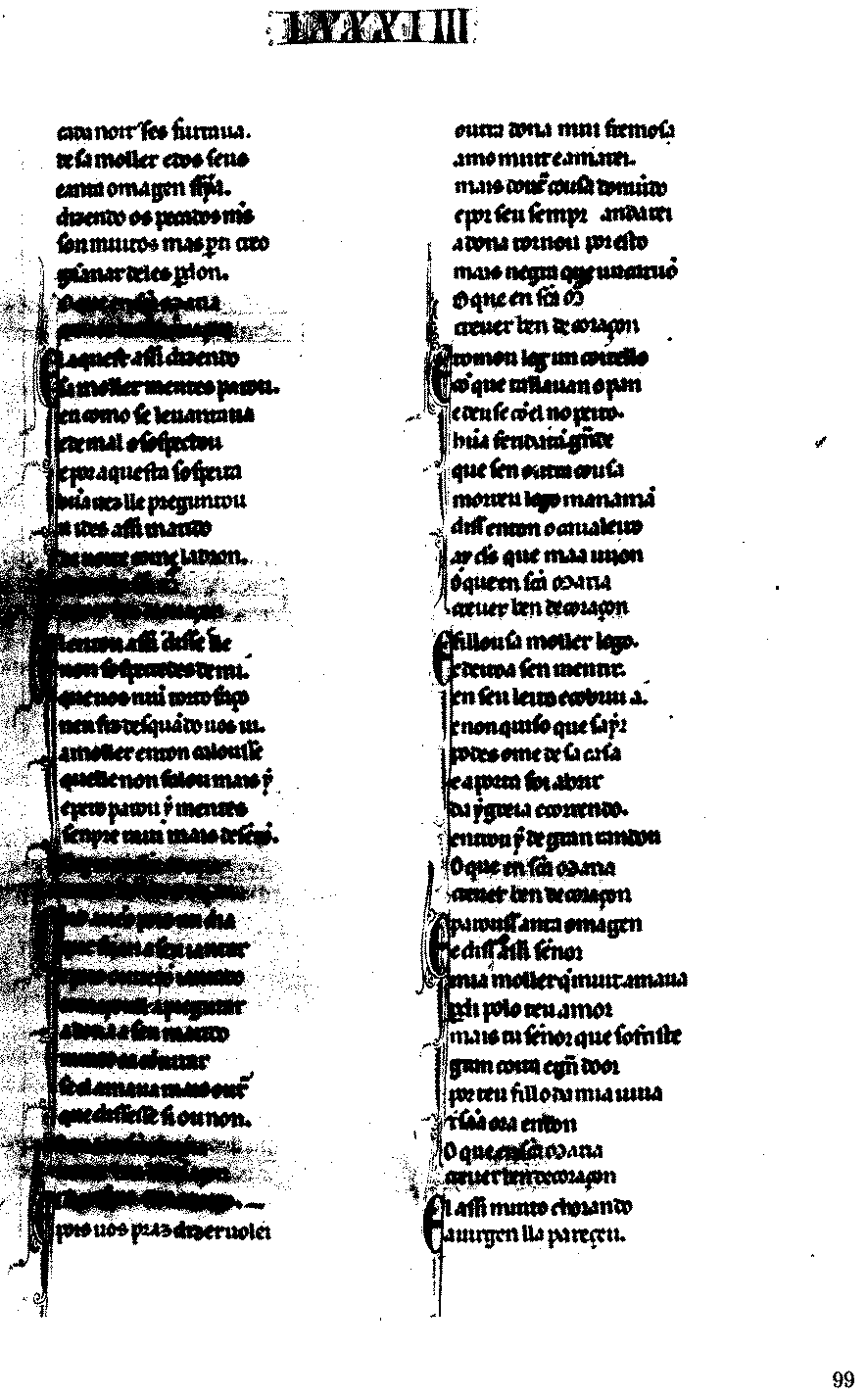
- a. 1284, Alfonso X of Castile, Cantigas de Santa Maria, Códice de los músicos, cantiga 84 (facsimile):
- ſi ou non
- yes or no
- ſi ou non
Descendants
Old High German
Verb
sī
- first/third-person singular present subjunctive of wesan
Old Saxon
Pronunciation
- IPA(key): /si/
Article
si
- feminine nominative singular of sē
Declension
| singular | plural | |||
|---|---|---|---|---|
| masculine | neuter | feminine | ||
| nominative | sē | that | si, sia | thē, thie |
| accusative | than, then | that | thē, thie | thē, thie |
| genitive | thēs | thēs | thēra | thēra |
| dative | thēm | thēm | thēra | thēm |
| instrumental | thiu, thia, thuo, thuru | — | ||
Old Spanish
Etymology 1
Inherited from Latin si (“if”).
Conjunction
si
Etymology 2
Inherited from Latin sibi, from Proto-Indo-European *sébʰye, dative of *swé (“self”). Cognate with Old French sei and Old Galician-Portuguese si.
Pronoun
si
Etymology 3
Inherited from Latin sīc (est) (“thus”).
Particle
si
Descendants
References
- Ralph Steele Boggs et al. (1946), “si”, in Tentative Dictionary of Medieval Spanish, volume II, Chapel Hill, page 469
Pali
Etymology 1
Inherited from Sanskrit शी (śī).
Root
si
- to lie down
Derived terms
- sayati
- sayāpeti
- seti
Etymology 2
Inherited from Sanskrit श्रि (śri).
Root
si
- to rest on
Usage notes
The initial consonant tends to geminate after prefixes.
Derived terms
Etymology 3
Inherited from Sanskrit सि (si).
Root
si
- to bind
Derived terms
Papiamentu
Etymology 1
From Spanish si and Portuguese se and Kabuverdianu si.
Conjunction
si
Etymology 2
From Spanish sí and Portuguese sim and Kabuverdianu si.
Adverb
si
Polish
Etymology 1
Pronunciation
- IPA(key): /ˈsi/
Audio: (file) - Rhymes: -i
- Syllabification: si
Noun
si n (indeclinable)
Etymology 2
Inherited from Old Polish si, from Proto-Slavic *sь.
Pronunciation
- IPA(key): /ˈɕi/
- Rhymes: -i
- Syllabification: si
Pronoun
si
- (obsolete except in set phrases) this
Declension
This adjective needs an inflection-table template.
Further reading
- si I (rzeczownik) in Wielki słownik języka polskiego, Instytut Języka Polskiego PAN
- si II (przymiotnik) in Wielki słownik języka polskiego, Instytut Języka Polskiego PAN
- si in Polish dictionaries at PWN
- “SI”, in Elektroniczny Słownik Języka Polskiego XVII i XVIII Wieku [Electronic Dictionary of the Polish Language of the XVII and XVIII Century], (Can we date this quote?)
- Samuel Bogumił Linde (1812), “si”, in Słownik języka polskiego, volume 3, page 222
- Aleksander Zdanowicz (1861), “si”, in Słownik języka polskiego, Wilno 1861, volume II, page 1473
- J. Karłowicz, A. Kryński, W. Niedźwiedzki, editors (1915), “si”, in Słownik języka polskiego (in Polish), volume 6, Warsaw, page 85
- “si nazwa dźwięku; nuta”, in Słownik gramatyczny języka polskiego [Grammatical Dictionary of Polish], 2022
- “si ów, ten, tamten”, in Słownik gramatyczny języka polskiego [Grammatical Dictionary of Polish], 2022
- S. Urbańczyk, editor (1978), “si”, in Słownik staropolski (in Polish), volume 8, Wrocław, Warsaw, Kraków, Gdańsk: Polish Academy of Sciences, page 159
Portuguese
Pronunciation
- (Brazil) IPA(key): /ˈsi/
- (Portugal) IPA(key): /ˈsi/
Etymology 1
From Old Galician-Portuguese si, from Latin sibi, from Proto-Indo-European *sébʰye, dative of *swé (“self”). Cognate with French soi, Italian sé, Spanish sí.
Alternative forms
- sy (obsolete)
Pronoun
si (reflexive)
- (following a preposition) oneself, yourself, himself, herself, itself, yourselves, themselves
See also
| number | person | nominative (subject) |
accusative (direct object) |
dative (indirect object) |
prepositional | prepositional with com |
non-declining | |
|---|---|---|---|---|---|---|---|---|
| singular | first | eu | me | mim | comigo | — | ||
| second | tu | te | ti | contigo | você o senhor m a senhora f | |||
| third | m | ele | o (lo, no) | lhe | ele | com ele | o mesmo | |
| f | ela | a (la, na) | ela | com ela | a mesma | |||
| plural | first | nós | nos | nós | connosco (Portugal) conosco (Brazil) |
a gente | ||
| second | vós | vos | vós | convosco com vós |
vocês os senhores m as senhoras f | |||
| third | m | eles | os (los, nos) | lhes | eles | com eles | os mesmos | |
| f | elas | as (las, nas) | elas | com elas | as mesmas | |||
| reflexive third / indefinite |
— | se | si | consigo | o mesmo etc. (reflexive) | |||
Etymology 2
From Latin Sancte Iohannes (“Saint John”) in the hymn for St. John the Baptist.
Noun
si m (plural sis)
- si (musical note)
Coordinate terms
Etymology 3
Conjunction
si
Etymology 4
Possibly borrowed from Spanish sí or a clipping of sim.
Interjection
si
- (Rio Grande do Sul, informal, Internet slang) yes (affirmative answer)
- Synonyms: see Thesaurus:sim
Further reading
- “si”, in Dicionário Aulete Digital (in Portuguese), Rio de Janeiro: Lexikon Editora Digital, 2008–2026
- “si”, in Dicionário Priberam da Língua Portuguesa (in Portuguese), Lisbon: Priberam, 2008–2026
Quapaw
Etymology
Cognate with Assiniboine sihá, Dakota sihá, Lakota sí, Omaha-Ponca si, Hidatsa icí, Crow iché.
Noun
si
References
- Quapaw Tribe of Oklahoma (2017–), English to Quapaw Dictionary[7]
Further reading
- Rankin, Robert L. (1982), “A Quapaw Vocabulary”, in Kansas Working Papers in Linguistics[8], volume 7, The University of Kansas, page 136 of 125–152
Romagnol
Pronunciation
- (Central Romagnol) IPA(key): [ˈsiː]
- (Ville Unite):
Etymology 1
Inherited from Latin sĕx (“six”).
Numeral
si m
- six
- Uj vö si dè. ― It takes six days.
Etymology 2
From the initial letters of Sancte + Iohannes, of the seventh verse of the hymn Ut queant laxis.
Noun
si m (plural si)
- Si (musical note)
Etymology 3
Inherited from Latin sēbum (“tallow”).
Noun
si m (plural si)
References
Masotti, Adelmo (1996), Vocabolario Romagnolo Italiano [Romagnol-Italian dictionary] (in Italian), Bologna: Zanichelli, pages 584, 585
Romani
Etymology
(This etymology is missing or incomplete. Please add to it, or discuss it at the Etymology scriptorium.)
Verb
si
- to be
- there be
- Used before an accusative personal pronoun to indicate possession.
- Si la kale bala. ― She has black hair.
Usage notes
- The personal pronoun is often omitted when si is used to mean "to be".
- When a noun indicates the possessor, si follows the accusative case of the noun.
Conjugation
| singular | plural | |||||||||||||||||||||||||||||||||||||||||||||||||||||||||||||||||||||||||||||||||||||||||||||||||||||||||||||||||||||||||||||||||||||||||||||||||||||||||||||||||||||||||||||||||||||||||||||||||||||||||||||||||||||||||||||||||||||||||||||||||||||||||||||||||||||||||||||||||||||||||||||||||||||||||||||||||||||||||||||||||||||||||||||||||||||||||||||||||||||||||||||||||||||||||||||||||||||||||||||||||||||||||||||||||||||||||||||||||||||||||||||||||||||||||||||||||||||||||||||||||||||||||||||||||||||||||||||||||||||||||||||||||||||||||||||||||||||||||||||||||||||||||||||||||||||||||||||||||||||||||||||||||||||||||||||||||||||||||||||||||||||||||||||||||||||||||||||||||||||||||||||||||||||||||||||||||||||||||||||||||||||||||||||||||||||||||||||||||||||||||||||||||||||||||||||||||||||||||||||||||||||||||||||||||||||||||||||||||||||||||||||||||||||||||||||||||||||||||||||||||||||||||||||||||||||||||||||||||||||||||||||||||||||||||||||||||||||||||||||||||||||||||||||||||||||||||||||||||||||
|---|---|---|---|---|---|---|---|---|---|---|---|---|---|---|---|---|---|---|---|---|---|---|---|---|---|---|---|---|---|---|---|---|---|---|---|---|---|---|---|---|---|---|---|---|---|---|---|---|---|---|---|---|---|---|---|---|---|---|---|---|---|---|---|---|---|---|---|---|---|---|---|---|---|---|---|---|---|---|---|---|---|---|---|---|---|---|---|---|---|---|---|---|---|---|---|---|---|---|---|---|---|---|---|---|---|---|---|---|---|---|---|---|---|---|---|---|---|---|---|---|---|---|---|---|---|---|---|---|---|---|---|---|---|---|---|---|---|---|---|---|---|---|---|---|---|---|---|---|---|---|---|---|---|---|---|---|---|---|---|---|---|---|---|---|---|---|---|---|---|---|---|---|---|---|---|---|---|---|---|---|---|---|---|---|---|---|---|---|---|---|---|---|---|---|---|---|---|---|---|---|---|---|---|---|---|---|---|---|---|---|---|---|---|---|---|---|---|---|---|---|---|---|---|---|---|---|---|---|---|---|---|---|---|---|---|---|---|---|---|---|---|---|---|---|---|---|---|---|---|---|---|---|---|---|---|---|---|---|---|---|---|---|---|---|---|---|---|---|---|---|---|---|---|---|---|---|---|---|---|---|---|---|---|---|---|---|---|---|---|---|---|---|---|---|---|---|---|---|---|---|---|---|---|---|---|---|---|---|---|---|---|---|---|---|---|---|---|---|---|---|---|---|---|---|---|---|---|---|---|---|---|---|---|---|---|---|---|---|---|---|---|---|---|---|---|---|---|---|---|---|---|---|---|---|---|---|---|---|---|---|---|---|---|---|---|---|---|---|---|---|---|---|---|---|---|---|---|---|---|---|---|---|---|---|---|---|---|---|---|---|---|---|---|---|---|---|---|---|---|---|---|---|---|---|---|---|---|---|---|---|---|---|---|---|---|---|---|---|---|---|---|---|---|---|---|---|---|---|---|---|---|---|---|---|---|---|---|---|---|---|---|---|---|---|---|---|---|---|---|---|---|---|---|---|---|---|---|---|---|---|---|---|---|---|---|---|---|---|---|---|---|---|---|---|---|---|---|---|---|---|---|---|---|---|---|---|---|---|---|---|---|---|---|---|---|---|---|---|---|---|---|---|---|---|---|---|---|---|---|---|---|---|---|---|---|---|---|---|---|---|---|---|---|---|---|---|---|---|---|---|---|---|---|---|---|---|---|---|---|---|---|---|---|---|---|---|---|---|---|---|---|---|---|---|---|---|---|---|---|---|---|---|---|---|---|---|---|---|---|---|---|---|---|---|---|---|---|---|---|---|---|---|---|---|---|---|---|---|---|---|---|---|---|---|---|---|---|---|---|---|---|---|---|---|---|---|---|---|---|---|---|---|---|---|---|---|---|---|---|---|---|---|---|---|---|---|---|---|---|---|---|---|---|---|---|---|---|---|---|---|---|---|---|---|---|---|---|---|---|---|---|---|---|---|---|---|---|---|---|---|---|---|---|---|---|---|---|---|---|---|---|---|---|---|---|---|---|---|---|---|---|---|---|---|---|---|---|---|---|---|---|---|---|---|---|---|---|---|---|---|---|---|---|---|---|---|---|---|---|---|---|---|---|---|---|---|---|---|---|---|---|---|---|---|---|---|---|---|---|---|---|---|---|---|---|---|---|---|---|---|---|---|---|---|---|---|---|---|---|---|---|---|---|---|---|---|---|---|---|---|---|---|---|---|---|---|---|---|---|---|---|---|---|---|---|---|---|---|---|---|---|---|---|---|---|---|---|---|---|---|---|---|---|---|---|---|---|---|---|---|---|---|---|---|---|---|---|---|---|---|---|---|---|---|---|---|---|---|---|---|---|---|---|---|---|---|---|---|---|---|---|---|---|---|---|---|---|---|---|---|---|---|---|---|---|---|---|---|---|---|---|---|---|---|---|---|---|---|---|---|---|---|---|---|---|---|---|---|---|---|---|---|---|---|---|---|---|---|---|---|---|---|---|---|---|---|---|---|---|---|---|---|---|---|---|---|---|---|---|---|---|---|---|---|---|---|---|---|---|---|---|---|---|---|---|---|---|---|---|---|---|---|---|---|---|---|---|---|---|---|---|---|---|---|---|---|---|---|---|---|---|---|---|---|---|---|---|---|---|---|---|---|---|---|---|---|---|---|---|---|---|---|---|---|---|---|---|---|---|---|---|---|---|---|---|---|---|---|---|---|---|---|---|---|---|---|---|---|---|---|---|---|---|---|---|---|---|---|
| first | second | third | first | second | third | |||||||||||||||||||||||||||||||||||||||||||||||||||||||||||||||||||||||||||||||||||||||||||||||||||||||||||||||||||||||||||||||||||||||||||||||||||||||||||||||||||||||||||||||||||||||||||||||||||||||||||||||||||||||||||||||||||||||||||||||||||||||||||||||||||||||||||||||||||||||||||||||||||||||||||||||||||||||||||||||||||||||||||||||||||||||||||||||||||||||||||||||||||||||||||||||||||||||||||||||||||||||||||||||||||||||||||||||||||||||||||||||||||||||||||||||||||||||||||||||||||||||||||||||||||||||||||||||||||||||||||||||||||||||||||||||||||||||||||||||||||||||||||||||||||||||||||||||||||||||||||||||||||||||||||||||||||||||||||||||||||||||||||||||||||||||||||||||||||||||||||||||||||||||||||||||||||||||||||||||||||||||||||||||||||||||||||||||||||||||||||||||||||||||||||||||||||||||||||||||||||||||||||||||||||||||||||||||||||||||||||||||||||||||||||||||||||||||||||||||||||||||||||||||||||||||||||||||||||||||||||||||||||||||||||||||||||||||||||||||||||||||||||||||||||||||||||||||||
| indicative | present | sem | san | si | sam | sen | si | |||||||||||||||||||||||||||||||||||||||||||||||||||||||||||||||||||||||||||||||||||||||||||||||||||||||||||||||||||||||||||||||||||||||||||||||||||||||||||||||||||||||||||||||||||||||||||||||||||||||||||||||||||||||||||||||||||||||||||||||||||||||||||||||||||||||||||||||||||||||||||||||||||||||||||||||||||||||||||||||||||||||||||||||||||||||||||||||||||||||||||||||||||||||||||||||||||||||||||||||||||||||||||||||||||||||||||||||||||||||||||||||||||||||||||||||||||||||||||||||||||||||||||||||||||||||||||||||||||||||||||||||||||||||||||||||||||||||||||||||||||||||||||||||||||||||||||||||||||||||||||||||||||||||||||||||||||||||||||||||||||||||||||||||||||||||||||||||||||||||||||||||||||||||||||||||||||||||||||||||||||||||||||||||||||||||||||||||||||||||||||||||||||||||||||||||||||||||||||||||||||||||||||||||||||||||||||||||||||||||||||||||||||||||||||||||||||||||||||||||||||||||||||||||||||||||||||||||||||||||||||||||||||||||||||||||||||||||||||||||||||||||||||||||||||||||||||||||
| perfect | semas | sanas | sas | samas | senas | sas | ||||||||||||||||||||||||||||||||||||||||||||||||||||||||||||||||||||||||||||||||||||||||||||||||||||||||||||||||||||||||||||||||||||||||||||||||||||||||||||||||||||||||||||||||||||||||||||||||||||||||||||||||||||||||||||||||||||||||||||||||||||||||||||||||||||||||||||||||||||||||||||||||||||||||||||||||||||||||||||||||||||||||||||||||||||||||||||||||||||||||||||||||||||||||||||||||||||||||||||||||||||||||||||||||||||||||||||||||||||||||||||||||||||||||||||||||||||||||||||||||||||||||||||||||||||||||||||||||||||||||||||||||||||||||||||||||||||||||||||||||||||||||||||||||||||||||||||||||||||||||||||||||||||||||||||||||||||||||||||||||||||||||||||||||||||||||||||||||||||||||||||||||||||||||||||||||||||||||||||||||||||||||||||||||||||||||||||||||||||||||||||||||||||||||||||||||||||||||||||||||||||||||||||||||||||||||||||||||||||||||||||||||||||||||||||||||||||||||||||||||||||||||||||||||||||||||||||||||||||||||||||||||||||||||||||||||||||||||||||||||||||||||||||||||||||||||||||||||
| future | avava | avesa | avela | avasa | avena | avena | ||||||||||||||||||||||||||||||||||||||||||||||||||||||||||||||||||||||||||||||||||||||||||||||||||||||||||||||||||||||||||||||||||||||||||||||||||||||||||||||||||||||||||||||||||||||||||||||||||||||||||||||||||||||||||||||||||||||||||||||||||||||||||||||||||||||||||||||||||||||||||||||||||||||||||||||||||||||||||||||||||||||||||||||||||||||||||||||||||||||||||||||||||||||||||||||||||||||||||||||||||||||||||||||||||||||||||||||||||||||||||||||||||||||||||||||||||||||||||||||||||||||||||||||||||||||||||||||||||||||||||||||||||||||||||||||||||||||||||||||||||||||||||||||||||||||||||||||||||||||||||||||||||||||||||||||||||||||||||||||||||||||||||||||||||||||||||||||||||||||||||||||||||||||||||||||||||||||||||||||||||||||||||||||||||||||||||||||||||||||||||||||||||||||||||||||||||||||||||||||||||||||||||||||||||||||||||||||||||||||||||||||||||||||||||||||||||||||||||||||||||||||||||||||||||||||||||||||||||||||||||||||||||||||||||||||||||||||||||||||||||||||||||||||||||||||||||||||||
| imperfect | semas | sanas | sasas | samas | senas | sasas (sinesas) | ||||||||||||||||||||||||||||||||||||||||||||||||||||||||||||||||||||||||||||||||||||||||||||||||||||||||||||||||||||||||||||||||||||||||||||||||||||||||||||||||||||||||||||||||||||||||||||||||||||||||||||||||||||||||||||||||||||||||||||||||||||||||||||||||||||||||||||||||||||||||||||||||||||||||||||||||||||||||||||||||||||||||||||||||||||||||||||||||||||||||||||||||||||||||||||||||||||||||||||||||||||||||||||||||||||||||||||||||||||||||||||||||||||||||||||||||||||||||||||||||||||||||||||||||||||||||||||||||||||||||||||||||||||||||||||||||||||||||||||||||||||||||||||||||||||||||||||||||||||||||||||||||||||||||||||||||||||||||||||||||||||||||||||||||||||||||||||||||||||||||||||||||||||||||||||||||||||||||||||||||||||||||||||||||||||||||||||||||||||||||||||||||||||||||||||||||||||||||||||||||||||||||||||||||||||||||||||||||||||||||||||||||||||||||||||||||||||||||||||||||||||||||||||||||||||||||||||||||||||||||||||||||||||||||||||||||||||||||||||||||||||||||||||||||||||||||||||||||
| past perfect | avilemas | avilǎnas | avilǎsas | avilǎmas | avilenas | avilenas | ||||||||||||||||||||||||||||||||||||||||||||||||||||||||||||||||||||||||||||||||||||||||||||||||||||||||||||||||||||||||||||||||||||||||||||||||||||||||||||||||||||||||||||||||||||||||||||||||||||||||||||||||||||||||||||||||||||||||||||||||||||||||||||||||||||||||||||||||||||||||||||||||||||||||||||||||||||||||||||||||||||||||||||||||||||||||||||||||||||||||||||||||||||||||||||||||||||||||||||||||||||||||||||||||||||||||||||||||||||||||||||||||||||||||||||||||||||||||||||||||||||||||||||||||||||||||||||||||||||||||||||||||||||||||||||||||||||||||||||||||||||||||||||||||||||||||||||||||||||||||||||||||||||||||||||||||||||||||||||||||||||||||||||||||||||||||||||||||||||||||||||||||||||||||||||||||||||||||||||||||||||||||||||||||||||||||||||||||||||||||||||||||||||||||||||||||||||||||||||||||||||||||||||||||||||||||||||||||||||||||||||||||||||||||||||||||||||||||||||||||||||||||||||||||||||||||||||||||||||||||||||||||||||||||||||||||||||||||||||||||||||||||||||||||||||||||||||||||
| infinitive | te avav / te ovav | te aves / te oves | te avel / te ovel | te avas / te ovas | te aven / te oven | te aven / te oven | ||||||||||||||||||||||||||||||||||||||||||||||||||||||||||||||||||||||||||||||||||||||||||||||||||||||||||||||||||||||||||||||||||||||||||||||||||||||||||||||||||||||||||||||||||||||||||||||||||||||||||||||||||||||||||||||||||||||||||||||||||||||||||||||||||||||||||||||||||||||||||||||||||||||||||||||||||||||||||||||||||||||||||||||||||||||||||||||||||||||||||||||||||||||||||||||||||||||||||||||||||||||||||||||||||||||||||||||||||||||||||||||||||||||||||||||||||||||||||||||||||||||||||||||||||||||||||||||||||||||||||||||||||||||||||||||||||||||||||||||||||||||||||||||||||||||||||||||||||||||||||||||||||||||||||||||||||||||||||||||||||||||||||||||||||||||||||||||||||||||||||||||||||||||||||||||||||||||||||||||||||||||||||||||||||||||||||||||||||||||||||||||||||||||||||||||||||||||||||||||||||||||||||||||||||||||||||||||||||||||||||||||||||||||||||||||||||||||||||||||||||||||||||||||||||||||||||||||||||||||||||||||||||||||||||||||||||||||||||||||||||||||||||||||||||||||||||||||||
| subjunctive | present | avavas | avesas | avelas | avasas | avenas | avenas | |||||||||||||||||||||||||||||||||||||||||||||||||||||||||||||||||||||||||||||||||||||||||||||||||||||||||||||||||||||||||||||||||||||||||||||||||||||||||||||||||||||||||||||||||||||||||||||||||||||||||||||||||||||||||||||||||||||||||||||||||||||||||||||||||||||||||||||||||||||||||||||||||||||||||||||||||||||||||||||||||||||||||||||||||||||||||||||||||||||||||||||||||||||||||||||||||||||||||||||||||||||||||||||||||||||||||||||||||||||||||||||||||||||||||||||||||||||||||||||||||||||||||||||||||||||||||||||||||||||||||||||||||||||||||||||||||||||||||||||||||||||||||||||||||||||||||||||||||||||||||||||||||||||||||||||||||||||||||||||||||||||||||||||||||||||||||||||||||||||||||||||||||||||||||||||||||||||||||||||||||||||||||||||||||||||||||||||||||||||||||||||||||||||||||||||||||||||||||||||||||||||||||||||||||||||||||||||||||||||||||||||||||||||||||||||||||||||||||||||||||||||||||||||||||||||||||||||||||||||||||||||||||||||||||||||||||||||||||||||||||||||||||||||||||||||||||||||||
| past | avilemas | avilǎnas | avilǎsas | avilǎmas | avilenas | avilenas | ||||||||||||||||||||||||||||||||||||||||||||||||||||||||||||||||||||||||||||||||||||||||||||||||||||||||||||||||||||||||||||||||||||||||||||||||||||||||||||||||||||||||||||||||||||||||||||||||||||||||||||||||||||||||||||||||||||||||||||||||||||||||||||||||||||||||||||||||||||||||||||||||||||||||||||||||||||||||||||||||||||||||||||||||||||||||||||||||||||||||||||||||||||||||||||||||||||||||||||||||||||||||||||||||||||||||||||||||||||||||||||||||||||||||||||||||||||||||||||||||||||||||||||||||||||||||||||||||||||||||||||||||||||||||||||||||||||||||||||||||||||||||||||||||||||||||||||||||||||||||||||||||||||||||||||||||||||||||||||||||||||||||||||||||||||||||||||||||||||||||||||||||||||||||||||||||||||||||||||||||||||||||||||||||||||||||||||||||||||||||||||||||||||||||||||||||||||||||||||||||||||||||||||||||||||||||||||||||||||||||||||||||||||||||||||||||||||||||||||||||||||||||||||||||||||||||||||||||||||||||||||||||||||||||||||||||||||||||||||||||||||||||||||||||||||||||||||||||
| imperative | — | av (ov) | — | — | aven (oven) | — | ||||||||||||||||||||||||||||||||||||||||||||||||||||||||||||||||||||||||||||||||||||||||||||||||||||||||||||||||||||||||||||||||||||||||||||||||||||||||||||||||||||||||||||||||||||||||||||||||||||||||||||||||||||||||||||||||||||||||||||||||||||||||||||||||||||||||||||||||||||||||||||||||||||||||||||||||||||||||||||||||||||||||||||||||||||||||||||||||||||||||||||||||||||||||||||||||||||||||||||||||||||||||||||||||||||||||||||||||||||||||||||||||||||||||||||||||||||||||||||||||||||||||||||||||||||||||||||||||||||||||||||||||||||||||||||||||||||||||||||||||||||||||||||||||||||||||||||||||||||||||||||||||||||||||||||||||||||||||||||||||||||||||||||||||||||||||||||||||||||||||||||||||||||||||||||||||||||||||||||||||||||||||||||||||||||||||||||||||||||||||||||||||||||||||||||||||||||||||||||||||||||||||||||||||||||||||||||||||||||||||||||||||||||||||||||||||||||||||||||||||||||||||||||||||||||||||||||||||||||||||||||||||||||||||||||||||||||||||||||||||||||||||||||||||||||||||||||||||
Derived terms
- si te
References
- Yūsuke Sumi (2018), ニューエクスプレスプラス ロマ(ジプシー)語 [New Express Plus Romani (Gypsy)] (in Japanese), Tokyo: Hakusuisha, published 2021, →ISBN, →OCLC, page 71
Romanian
Etymology
Pronunciation
- IPA(key): /si/
Noun
si m (plural si)
Declension
| singular | plural | ||||
|---|---|---|---|---|---|
| indefinite | definite | indefinite | definite | ||
| nominative-accusative | si | siul | si | sii | |
| genitive-dative | si | siului | si | silor | |
| vocative | siule | silor | |||
Romansh
Alternative forms
Etymology
From Vulgar Latin, Late Latin root sūsum, from Latin sūrsum.
Adverb
si
Sassarese
Pronunciation
- IPA(key): /si/
Etymology 1
From Latin se (“him-, her-, it-, themselves”, reflexive third-person pronoun). Cognate with Italian si, Portuguese si and se.
Alternative forms
Pronoun
si
- (reflexive pronoun) oneself, himself, herself, itself, themselves
- La camìsgia si la pònini li manni ― Adults wear shirts (literally, “The adults put the shirt on themselves”)
- (reciprocal pronoun) each other, one another
- Eddi s'àmani ― They love each other
- (indefinite) one, you, we, they, people
- Lu zipressu si dizi "àiburu di campusantu" ― The cypress is called "graveyard tree"
Related terms
Etymology 2
From Latin sī, from Proto-Italic *sei (“so, thus”) used in parataxis, likely via the meaning "in this" as the locative singular of Proto-Indo-European *só (“this, that”).
Conjunction
si
- if
- Si lu sai, dìmmiru! ― If you know, tell me! (literally, “If you know it, tell it to me!”)
References
- Rubattu, Antoninu (2006), Dizionario universale della lingua di Sardegna, 2nd edition, Sassari: Edes
Savi
Etymology
Inherited from Sanskrit सेतु (setu).
Noun
si
References
- Knobloch, Nina (2020), A grammar sketch of Sauji: An Indo-Aryan language of Afghanistan[9], Stockholm: Stockholm University
Serbo-Croatian
Pronunciation
- IPA(key): /si/
Pronoun
si ? (Cyrillic spelling си)
- (reflexive) Replaces the dative of a personal pronoun when the subject is of the same person as the dative object; to oneself (clitic dative singular of sȅbe (“oneself”))
- to myself
- to yourself
- to himself, herself, itself
- to ourselves
- to yourselves
- to themselves
- (reflexive, emphatic, possessive, dative) one's, of oneself (clitic dative singular of sebe (“one”))
- Kako li je samo zaboravio gdje si je parkirao auto?
- Just how did he forget where he parked his car?
Declension
| singular | plural | |
|---|---|---|
| nominative | — | — |
| genitive | sȅbe, se | sȅbe |
| dative | sȅbi, si | sȅbi |
| accusative | sȅbe, se | sȅbe |
| vocative | — | — |
| locative | sȅbi | sȅbi |
| instrumental | sȍbōm | sȍbom |
Verb
si (Cyrillic spelling си)
- second-person singular present of bȉti
Usage notes
Sense 2 is limited to most Croatian dialects and the Torlakian/Prizren-Timok dialect. The Serbian and Bosnian standards discourage the usage of si as an empathic clitic and instead rely purely on sentence intonation.
Slovak
Etymology
From Proto-Slavic *esi.
Pronunciation
- IPA(key): /si/, [si]
- Rhymes: -i
Verb
si
Pronoun
si
- dative of seba
- Kupujem si topánky. ― I am buying me shoes.
- Komu kupuješ topánky? Sebe. ― Whom are you buying shoes for? Myself.
Further reading
- “si”, in Slovníkový portál Jazykovedného ústavu Ľ. Štúra SAV [Dictionary portal of the Ľ. Štúr Institute of Linguistics, Slovak Academy of Science] (in Slovak), https://slovnik.juls.savba.sk, 2003–2026
Slovene
Pronunciation 1
- IPA(key): /sí/
Verb
sȉ
- second-person singular present of bíti
Pronunciation 2
- IPA(key): /si/
Pronoun
si
- dative singular of sébe
Spanish
Etymology
Pronunciation
- IPA(key): /si/ [si]
Audio: (file) - Rhymes: -i
- Syllabification: si
- Homophone: sí
Conjunction
si
- if, whether
- 2025 July 4, Allison Morrow, “Por qué la Cybertruck de Tesla ha sido un fracaso total”, in CNN en Español[10]:
- Se podría estimar, entonces, que Tesla probablemente vendió entre 5.000 y 6.000 Cybertrucks en el segundo trimestre si las tendencias de consumo se mantuvieron estables.
- It could be estimated, then, that Tesla probably sold between 5,000 and 6,000 Cybertrucks in the second quarter if consumer trends remained stable.
- (often after pero) points out a contradiction (and often implies that it's obvious or that it's easy to find out about)
- ¿¡(Pero) a dónde va este!? ¡Si la carretera está cerrada!
- Where's this guy going!? The road is closed! (therefore he can't drive there)
- "¿Cómo fue el concierto?" "(Pero) si es mañana..."
- "How was the concert?" "It's tomorrow... (How was I supposed to be there if it's tomorrow?)"
- "Voy a salir." "¡Pero si estás malo! ¿¡Cómo vas a salir!?" (can be rephrased as "¿¡Cómo vas a salir si estás malo!?", which uses sense 1)
- "I'm going out now." "But you're sick! What do you mean, you're going out!?"
Derived terms
See also
Further reading
- “si”, in Diccionario de la lengua española [Dictionary of the Spanish Language] (in Spanish), online version 23.8.1, Royal Spanish Academy [Spanish: Real Academia Española], 15 December 2025
Sranan Tongo
Alternative forms
Etymology
From English see or Dutch zien,[1] both from Proto-West Germanic *sehwan.
Pronunciation
- IPA(key): /si/
Verb
si
- to see
- 1975, “Basya Adyuku koni”, in Ursy M. Lichtveld, Jan Voorhoeve, editors, Creole drum. An Anthology of Creole Literature in Surinam[11], New Haven, London: Yale University Press, →ISBN, page 86:
- A krabdagu taki: - Angri e kiri mi ba. A di mi si yu e nyan, ne mi kon.
- The crab-eating raccoon said: 'I'm starving, brother. When I saw that you're eating, I came over immediately.
- 1985, “Mi Dren (I Shall Be Released)”, in Anne-Marie Hunsel (lyrics), Bob Dylan (music), Mi Dren (I Shall Be Released)[12], performed by Anne-Marie Hunsel:
- Ini mi dren mi ben si / fa Srananman ben makandra / Ala buba ben kon na wan / Ke Masra, mi winsi a ben de tru
- In my dream, I saw / how the Surinamese were getting along / All races had united / Oh Lord, I wish it were true
- 1991, Ronald L. Pinas, Sranan kloroeboekoe [Surinamese colouring book][13], Paramaribo: Instituut voor Taalwetenschap (SIL), page 58:
- Nanka nanga Joeria gwe go onti ini a boesi. Den wani njan legwana meti tide. Den si wan kapelka, wan loiri nanga wan toekanfowroe. Joe kan jepi den foe feni wan legwana?
- [Nanka nanga Yuria gwe go onti ini a busi. Den wani nyan legwanameti tide. Den si wan kapelka, wan loiri nanga wan tukanfowru. Yu kan yepi den fu feni wan legwana?]
- Nanka and Yuria left to go hunting in the jungle. They want to eat iguana meat today. They see a butterfly, a sloth, and a toucan. Can you help them to find an iguana?
Descendants
References
Sumerian
Romanization
si
- romanization of 𒋛
Swahili
Pronunciation
Audio (Kenya): (file)
Verb
si
Verb
| Other scripts | |
|---|---|
| Ajami | ـسِ |
-si
- negative relative stem of -wa, -wapo, -wako, or -wamo
- mtu asiye na maarifa ― a person without knowledge
Tagalog
Pronunciation
- (Standard Tagalog) IPA(key): /si/ [sɪ]
- Rhymes: -i
- Syllabification: si
Etymology 1
Inherited from Proto-Austronesian *si. Compare Central Bikol si, Cebuano si, Gorontalo ti, Hiligaynon si, Ilocano si, Kapampangan i, Pangasinan si, Tausug hi, and Waray-Waray si.
Article
si (plural sina, Baybayin spelling ᜐᜒ)
- direct marker placed before names or terms of address of people
- Tumakbo si Juan. ― Juan ran.
- Dinala nila si Tatay sa ospital. ― They brought Father to the hospital.
- direct marker placed before an adjective used to refer to a person with those distinct characteristics
- Nandiyan na si taba. ― Fatso is there.
Alternative forms
- c — text messaging
- çi — obsolete
See also
| direct (ang) | indirect (ng) | oblique (sa) | ||
|---|---|---|---|---|
| common | singular | ang | ng | sa |
| plural | ang mga | ng mga | sa mga | |
| personal | singular | si | ni | kay |
| plural / polite | sina | nina | kina | |
Etymology 2
Borrowed from English cee, the English name of the letter C / c.
Noun
si (Baybayin spelling ᜐᜒ)
- the name of the Latin script letter C/c, in the Filipino alphabet
- Synonym: (in the Abecedario) ce
See also
- (Latin-script letter names) titik; ey, bi, si, di, i, ef, dyi, eyts, ay, dyey, key, el, em, en, enye, en dyi, o, pi, kyu, ar, es, ti, yu, vi, dobolyu, eks, way, zi
Further reading
- “si”, in Pambansang Diksiyonaryo | Diksiyonaryo.ph, 2018
Ternate
Adverb
si
References
- Rika Hayami-Allen (2001). A Descriptive Study of the Language of Ternate, the Northern Moluccas, Indonesia. University of Pittsburgh.
Tok Pisin
Etymology
Noun
si
Turkish
Etymology
Pronunciation
- IPA(key): /si/
- Rhymes: -sɪ
Noun
si (definite accusative siyi, plural siler)
Vietnamese
Etymology 1
From Proto-Vietic *ɟ-riː, from Proto-Austroasiatic *ɟriːʔ (“banyan, ficus”). Cognate with Bahnar jri, Khmer ជ្រៃ (crɨy), Khasi jri, Old Mon jrey.
Pronunciation
Noun
(classifier cây, quả, trái) si • ()
Etymology 2
Noun
(classifier nốt) si
Etymology 3
Romanization
si
- Sino-Vietnamese reading of 愚
Derived terms
Volapük
Interjection
si
- yes
- 1932, Arie de Jong, Leerboek der Wereldtaal, page 19:
- Cils äbinons-li i pö zäl et? Si! elogob us tumis.
- Were there children at that party as well? Yes, I've seen hundreds of them there.
Waigali
Etymology
Borrowed from a descendant of Sanskrit सिंह (siṃhá).
Pronunciation
- IPA(key): /ˈsi/
Noun
si (Nisheigram)[1]
References
Walloon
Etymology
From Old French, from Latin si (“if”).
Pronunciation
- IPA(key): /si/
Conjunction
si
Welsh
Alternative forms
Pronunciation
- IPA(key): /siː/
- Rhymes: -iː
- Hyphenation: si
Noun
si m (plural sïon, not mutable)
Derived terms
- sïedn, aderyn y si, aderyn bach y si (“hummingbird”)
Related terms
- sïo (“to murmur, to hum”)
- sïol (“murmuring, hissing”)
Mutation
Further reading
- D. G. Lewis, N. Lewis, editors (2005–present), “si”, in Gweiadur: the Welsh–English Dictionary, Gwerin
- R. J. Thomas, G. A. Bevan, P. J. Donovan, A. Hawke, et al., editors (1950–present), “si”, in Geiriadur Prifysgol Cymru Online (in Welsh), University of Wales Centre for Advanced Welsh & Celtic Studies
Yoruba
Etymology 1
Pronunciation
- IPA(key): /sí/
Noun
sí
See also
- (Latin-script letter names) lẹ́tà; á, bí, dí, é, ẹ́, fí, gí, gbì, hí, í, jí, kí, lí, mí, ní, ó, ọ́, pí, rí, sí, ṣí, tí, ú, wí, yí
Etymology 2
Preposition
sí
See also
Etymology 3
Verb
sí
Etymology 4
Verb
sí
- (intransitive) Negative form of wà
Etymology 5
Conjunction
sì
Usage notes
Sì is solely used to join verbs/sentences and not nouns, for which àti is used. Additionally, when sì is used, the subject of each verb must be specified.
- Mo jó, mo kọ́ ẹ̀kọ́, mo sì kọ lẹ́tà. – I danced, studied, and wrote a letter.
- Wọn kò fẹ́ ṣiṣẹ́, wọn kò sì fẹ́ ṣeré. – They don't want to work or play.
Zhuang
Etymology
Pronunciation
- (Standard Zhuang) IPA(key): /θi˧˥/ (new Mandarin borrowing)
- Tone numbers: si5
- Hyphenation: si
Noun
si (1957–1982 spelling si)
- city
- Nanzningz Si ― Nanning City
Zou
Etymology
From Proto-Sino-Tibetan *swiʔ (“blood”). Cognates include Nuosu ꌦ (sy) and Burmese သွေး (swe:).
Pronunciation
- IPA(key): /si˧˩/
Noun
sì
Verb
sì
- (intransitive) to die
References
- Chungkham Yashawanta Singh; Lukram Himmat (2013), A Descriptive Grammar of Zou, Canchipur: Manipur University, pages 40, 47