ti
Abinomn • Albanian • Ao • Aromanian • Asturian • Bahnar • Breton • Byangsi • Chaudangsi • Choctaw • Chuukese • Cornish • Corsican • Czech • Danish • Darmiya • Dogrib • Fala • Fijian • Finnish • French • Friulian • Galician • Haitian Creole • Hanunoo • Hausa • Hungarian • Iban • Ido • Indonesian • Isoko • Istriot • Italian • Japanese • Kikuyu • Kongo • Ladin • Ladino • Lai • Laz • Ligurian • Lingala • Lote • Mandarin • Mara Chin • Marshallese • Mauritian Creole • Middle English • Mizo • Muong • Northern Kurdish • Norwegian Bokmål • Norwegian Nynorsk • Old French • Old Galician-Portuguese • Old High German • Old Spanish • Pali • Pattani • Piedmontese • Pirahã • Portuguese • Romansh • Sassarese • Scots • Serbo-Croatian • Slovak • Slovene • South Slavey • Spanish • Sumerian • Tagalog • Tapayuna • Tiwa • Tok Pisin • Tooro • Vayu • Vietnamese • Wancho • Wastek • Welsh • Western Yugur • Yoruba • Zacatepec Chatino
Page categories
Translingual
Etymology
Symbol
ti
See also
- Wiktionary’s coverage of Tigrinya terms
English
Pronunciation
Etymology 1
Coined by English music educator Sarah Anna Glover in 1812 as an alteration of si for her solmization, made so that every note of solfège would begin with a different letter, from Middle English si (“seventh degree or note of Guido of Arezzo's hexachordal scales”), Italian si in the solmization of Guido of Arezzo, from the initials of Latin Sāncte Iohannēs (“Saint John (the Baptist)”) in the lyrics of the scale-ascending hymn Ut queant laxis by Paulus Deacon.
Noun
ti (plural tis)
- (music) A syllable used in solfège to represent the seventh note of a major scale.
Synonyms
- (music): si
Translations
Etymology 2
From a Polynesian language, related to Hawaiian kī.
Alternative forms
Noun
ti (plural tis)
- A good luck plant (Cordyline fruticosa), an evergreen shrub.
See also
Anagrams
Abinomn
Noun
ti
Albanian
Etymology
Inherited from Proto-Albanian *tū, from Proto-Indo-European *túh₂; modern accusative ty is from Proto-Albanian Proto-Albanian *twā from emphatic *tu̯ḗm, clitic të is from clitic *te, and ablative teje is from locative *toí + -je from meje (see unë).
Pronunciation
- IPA(key): [ti]
Pronoun
ti (accusative ty, dative ty, ablative teje)
- you (singular)
Declension
| nominative | ti | |||||||||||||||||||||||||||||||||||||||||||||||||||||||||||||||||||||||||||||||||||||||||||||||||||||||||||||||||||||||||||||||||||||||||||||||||||||||||||||||||||||||||||||||||||||||||||||||||||||||||||||||||||||||||||||||||||||||||||||||||||||||||||||||||||||||||||||||||||||||||||||||||||||||||||||||||||||||||||||||||||||||||||||||||||||||||||||||||||||||||||||||||||||||||||||||||||||||||||||||||||||||||||||||||||||||||||||||||||||||||||||||||||||||||||||||||||||||||||||||||||||||||||||||||||||||||||||||||||||||||||||||||||||||||||||||||||||||||||||||||||||||||||||||||||||||||||||||||||||||||||||||||||||||||||||||||||||||||||||||||||||||||||||||||||||||||||||||||||||||||||||||||||||||||||||||||||||||||||||||||||||||||||||||||||||||||||||||||||||||||||||||||||||||||||||||||||||||||||||||||||||||||||||||||||||||||||||||||||||||||||||||||||||||||||||||||||||||||||||||||||||||||||||||||||||||||||||||||||||||||||||||||||||||||||||||||||||||||||||||||||||||||||||||||||||||||||||||||||||
|---|---|---|---|---|---|---|---|---|---|---|---|---|---|---|---|---|---|---|---|---|---|---|---|---|---|---|---|---|---|---|---|---|---|---|---|---|---|---|---|---|---|---|---|---|---|---|---|---|---|---|---|---|---|---|---|---|---|---|---|---|---|---|---|---|---|---|---|---|---|---|---|---|---|---|---|---|---|---|---|---|---|---|---|---|---|---|---|---|---|---|---|---|---|---|---|---|---|---|---|---|---|---|---|---|---|---|---|---|---|---|---|---|---|---|---|---|---|---|---|---|---|---|---|---|---|---|---|---|---|---|---|---|---|---|---|---|---|---|---|---|---|---|---|---|---|---|---|---|---|---|---|---|---|---|---|---|---|---|---|---|---|---|---|---|---|---|---|---|---|---|---|---|---|---|---|---|---|---|---|---|---|---|---|---|---|---|---|---|---|---|---|---|---|---|---|---|---|---|---|---|---|---|---|---|---|---|---|---|---|---|---|---|---|---|---|---|---|---|---|---|---|---|---|---|---|---|---|---|---|---|---|---|---|---|---|---|---|---|---|---|---|---|---|---|---|---|---|---|---|---|---|---|---|---|---|---|---|---|---|---|---|---|---|---|---|---|---|---|---|---|---|---|---|---|---|---|---|---|---|---|---|---|---|---|---|---|---|---|---|---|---|---|---|---|---|---|---|---|---|---|---|---|---|---|---|---|---|---|---|---|---|---|---|---|---|---|---|---|---|---|---|---|---|---|---|---|---|---|---|---|---|---|---|---|---|---|---|---|---|---|---|---|---|---|---|---|---|---|---|---|---|---|---|---|---|---|---|---|---|---|---|---|---|---|---|---|---|---|---|---|---|---|---|---|---|---|---|---|---|---|---|---|---|---|---|---|---|---|---|---|---|---|---|---|---|---|---|---|---|---|---|---|---|---|---|---|---|---|---|---|---|---|---|---|---|---|---|---|---|---|---|---|---|---|---|---|---|---|---|---|---|---|---|---|---|---|---|---|---|---|---|---|---|---|---|---|---|---|---|---|---|---|---|---|---|---|---|---|---|---|---|---|---|---|---|---|---|---|---|---|---|---|---|---|---|---|---|---|---|---|---|---|---|---|---|---|---|---|---|---|---|---|---|---|---|---|---|---|---|---|---|---|---|---|---|---|---|---|---|---|---|---|---|---|---|---|---|---|---|---|---|---|---|---|---|---|---|---|---|---|---|---|---|---|---|---|---|---|---|---|---|---|---|---|---|---|---|---|---|---|---|---|---|---|---|---|---|---|---|---|---|---|---|---|---|---|---|---|---|---|---|---|---|---|---|---|---|---|---|---|---|---|---|---|---|---|---|---|---|---|---|---|---|---|---|---|---|---|---|---|---|---|---|---|---|---|---|---|---|---|---|---|---|---|---|---|---|---|---|---|---|---|---|---|---|---|---|---|---|---|---|---|---|---|---|---|---|---|---|---|---|---|---|---|---|---|---|---|---|---|---|---|---|---|---|---|---|---|---|---|---|---|---|---|---|---|---|---|---|---|---|---|---|---|---|---|---|---|---|---|---|---|---|---|---|---|---|---|---|---|---|---|---|---|---|---|---|---|---|---|---|---|---|---|---|---|---|---|---|---|---|---|---|---|---|---|---|---|---|---|---|---|---|---|---|---|---|---|---|---|---|---|---|---|---|---|---|---|---|---|---|---|---|---|---|---|---|---|---|---|---|---|---|---|---|---|---|---|---|---|---|---|---|---|---|---|---|---|---|---|---|---|---|---|---|---|---|---|---|---|---|---|---|---|---|---|---|---|---|---|---|---|---|---|---|---|---|---|---|---|---|---|---|---|---|---|---|---|---|---|---|---|---|---|---|---|---|---|---|---|---|---|---|---|---|---|---|---|---|---|---|---|---|---|---|---|---|---|---|---|---|---|---|---|---|---|---|---|---|---|---|---|---|---|---|---|---|---|---|---|---|---|---|---|---|---|---|---|---|---|---|---|---|---|---|---|---|---|---|---|---|---|---|---|---|---|---|---|---|---|---|---|---|---|---|---|---|---|---|---|---|---|---|---|---|---|---|---|---|---|---|---|---|---|---|---|---|---|---|---|---|---|---|---|---|---|---|---|---|---|---|---|---|---|---|---|---|---|---|---|---|---|---|---|---|---|---|---|---|---|---|---|---|---|---|---|---|---|---|---|---|---|---|---|---|---|---|---|---|---|---|---|---|---|---|---|---|---|---|---|---|---|---|---|---|---|---|---|---|---|---|---|---|---|---|---|---|---|
| ablative | teje | |||||||||||||||||||||||||||||||||||||||||||||||||||||||||||||||||||||||||||||||||||||||||||||||||||||||||||||||||||||||||||||||||||||||||||||||||||||||||||||||||||||||||||||||||||||||||||||||||||||||||||||||||||||||||||||||||||||||||||||||||||||||||||||||||||||||||||||||||||||||||||||||||||||||||||||||||||||||||||||||||||||||||||||||||||||||||||||||||||||||||||||||||||||||||||||||||||||||||||||||||||||||||||||||||||||||||||||||||||||||||||||||||||||||||||||||||||||||||||||||||||||||||||||||||||||||||||||||||||||||||||||||||||||||||||||||||||||||||||||||||||||||||||||||||||||||||||||||||||||||||||||||||||||||||||||||||||||||||||||||||||||||||||||||||||||||||||||||||||||||||||||||||||||||||||||||||||||||||||||||||||||||||||||||||||||||||||||||||||||||||||||||||||||||||||||||||||||||||||||||||||||||||||||||||||||||||||||||||||||||||||||||||||||||||||||||||||||||||||||||||||||||||||||||||||||||||||||||||||||||||||||||||||||||||||||||||||||||||||||||||||||||||||||||||||||||||||||||||||||
| full form | clitic | |||||||||||||||||||||||||||||||||||||||||||||||||||||||||||||||||||||||||||||||||||||||||||||||||||||||||||||||||||||||||||||||||||||||||||||||||||||||||||||||||||||||||||||||||||||||||||||||||||||||||||||||||||||||||||||||||||||||||||||||||||||||||||||||||||||||||||||||||||||||||||||||||||||||||||||||||||||||||||||||||||||||||||||||||||||||||||||||||||||||||||||||||||||||||||||||||||||||||||||||||||||||||||||||||||||||||||||||||||||||||||||||||||||||||||||||||||||||||||||||||||||||||||||||||||||||||||||||||||||||||||||||||||||||||||||||||||||||||||||||||||||||||||||||||||||||||||||||||||||||||||||||||||||||||||||||||||||||||||||||||||||||||||||||||||||||||||||||||||||||||||||||||||||||||||||||||||||||||||||||||||||||||||||||||||||||||||||||||||||||||||||||||||||||||||||||||||||||||||||||||||||||||||||||||||||||||||||||||||||||||||||||||||||||||||||||||||||||||||||||||||||||||||||||||||||||||||||||||||||||||||||||||||||||||||||||||||||||||||||||||||||||||||||||||||||||||||||||||||||
| accusative | ty | të | ||||||||||||||||||||||||||||||||||||||||||||||||||||||||||||||||||||||||||||||||||||||||||||||||||||||||||||||||||||||||||||||||||||||||||||||||||||||||||||||||||||||||||||||||||||||||||||||||||||||||||||||||||||||||||||||||||||||||||||||||||||||||||||||||||||||||||||||||||||||||||||||||||||||||||||||||||||||||||||||||||||||||||||||||||||||||||||||||||||||||||||||||||||||||||||||||||||||||||||||||||||||||||||||||||||||||||||||||||||||||||||||||||||||||||||||||||||||||||||||||||||||||||||||||||||||||||||||||||||||||||||||||||||||||||||||||||||||||||||||||||||||||||||||||||||||||||||||||||||||||||||||||||||||||||||||||||||||||||||||||||||||||||||||||||||||||||||||||||||||||||||||||||||||||||||||||||||||||||||||||||||||||||||||||||||||||||||||||||||||||||||||||||||||||||||||||||||||||||||||||||||||||||||||||||||||||||||||||||||||||||||||||||||||||||||||||||||||||||||||||||||||||||||||||||||||||||||||||||||||||||||||||||||||||||||||||||||||||||||||||||||||||||||||||||||||||||||||||||||
| dative | ty | të | ||||||||||||||||||||||||||||||||||||||||||||||||||||||||||||||||||||||||||||||||||||||||||||||||||||||||||||||||||||||||||||||||||||||||||||||||||||||||||||||||||||||||||||||||||||||||||||||||||||||||||||||||||||||||||||||||||||||||||||||||||||||||||||||||||||||||||||||||||||||||||||||||||||||||||||||||||||||||||||||||||||||||||||||||||||||||||||||||||||||||||||||||||||||||||||||||||||||||||||||||||||||||||||||||||||||||||||||||||||||||||||||||||||||||||||||||||||||||||||||||||||||||||||||||||||||||||||||||||||||||||||||||||||||||||||||||||||||||||||||||||||||||||||||||||||||||||||||||||||||||||||||||||||||||||||||||||||||||||||||||||||||||||||||||||||||||||||||||||||||||||||||||||||||||||||||||||||||||||||||||||||||||||||||||||||||||||||||||||||||||||||||||||||||||||||||||||||||||||||||||||||||||||||||||||||||||||||||||||||||||||||||||||||||||||||||||||||||||||||||||||||||||||||||||||||||||||||||||||||||||||||||||||||||||||||||||||||||||||||||||||||||||||||||||||||||||||||||||||||
| possessive adjective | possessive pronoun | |||||||||||||||||||||||||||||||||||||||||||||||||||||||||||||||||||||||||||||||||||||||||||||||||||||||||||||||||||||||||||||||||||||||||||||||||||||||||||||||||||||||||||||||||||||||||||||||||||||||||||||||||||||||||||||||||||||||||||||||||||||||||||||||||||||||||||||||||||||||||||||||||||||||||||||||||||||||||||||||||||||||||||||||||||||||||||||||||||||||||||||||||||||||||||||||||||||||||||||||||||||||||||||||||||||||||||||||||||||||||||||||||||||||||||||||||||||||||||||||||||||||||||||||||||||||||||||||||||||||||||||||||||||||||||||||||||||||||||||||||||||||||||||||||||||||||||||||||||||||||||||||||||||||||||||||||||||||||||||||||||||||||||||||||||||||||||||||||||||||||||||||||||||||||||||||||||||||||||||||||||||||||||||||||||||||||||||||||||||||||||||||||||||||||||||||||||||||||||||||||||||||||||||||||||||||||||||||||||||||||||||||||||||||||||||||||||||||||||||||||||||||||||||||||||||||||||||||||||||||||||||||||||||||||||||||||||||||||||||||||||||||||||||||||||||||||||||||||||||
| yt | yti | |||||||||||||||||||||||||||||||||||||||||||||||||||||||||||||||||||||||||||||||||||||||||||||||||||||||||||||||||||||||||||||||||||||||||||||||||||||||||||||||||||||||||||||||||||||||||||||||||||||||||||||||||||||||||||||||||||||||||||||||||||||||||||||||||||||||||||||||||||||||||||||||||||||||||||||||||||||||||||||||||||||||||||||||||||||||||||||||||||||||||||||||||||||||||||||||||||||||||||||||||||||||||||||||||||||||||||||||||||||||||||||||||||||||||||||||||||||||||||||||||||||||||||||||||||||||||||||||||||||||||||||||||||||||||||||||||||||||||||||||||||||||||||||||||||||||||||||||||||||||||||||||||||||||||||||||||||||||||||||||||||||||||||||||||||||||||||||||||||||||||||||||||||||||||||||||||||||||||||||||||||||||||||||||||||||||||||||||||||||||||||||||||||||||||||||||||||||||||||||||||||||||||||||||||||||||||||||||||||||||||||||||||||||||||||||||||||||||||||||||||||||||||||||||||||||||||||||||||||||||||||||||||||||||||||||||||||||||||||||||||||||||||||||||||||||||||||||||||||||
See also
| singular | plural | ||
|---|---|---|---|
| 1st person | unë | ne | |
| 2nd person | ti | ju | |
| 3rd person | m | ai | ata |
| f | ajo | ato | |
Ao
Etymology
| 80 | ||
| ← 7 | 8 | 9 → |
|---|---|---|
| Cardinal: ti | ||
Unknown. No apparent connection to the usual Sino-Tibetan word for "eight", *pV-rjat, can be phonetically substantiated.
Pronunciation
- (Chungli) IPA(key): /ti˥/, [ti˥]
Numeral
ti
- (Chungli) eight
Further reading
- Bruhn, Daniel Wayne (2014), A Phonological Reconstruction of Proto-Central Naga[1], Berkeley: University of California, page 53
- Gowda, K. S. Gurubasave (1985), Ao-English-Hindi Dictionary, Mysore: Central Institute of Indian Languages, page 37
- Clark, Mary M. (1893), Ao Naga grammar with illustrative phrases and vocabulary, Molung: Assam Secretariat Printing Office, page 44
Aromanian
Etymology
Inherited from Latin tē, accusative of tū. Compare Romanian te.
Pronoun
ti (unstressed accusative and reflexive form of tu)
- (direct object) you
Related terms
Asturian
Pronunciation
- IPA(key): /ˈti/ [ˈt̪i]
Interjection
ti
- interjection used to call goats
Bahnar
Etymology
Inherited from Proto-Bahnaric *tiː, from Proto-Mon-Khmer *t₁iiʔ. Cognate with Pacoh ati, Khmer ដៃ (day), Bolyu ti⁵⁵, Riang [Lang] tiʔ¹.
Pronunciation
- IPA(key): /tiː/
Noun
ti
Breton
Etymology
From Middle Breton ty, from Proto-Brythonic *tɨɣ, from Proto-Celtic *tegos, from Proto-Indo-European *(s)teg-.
Noun
References
- Cornillet, Gérard (2017), “ti”, in Geriadur galleg brezhoneg, dictionnaire français breton[2] (in French), page 1272
Byangsi
Noun
ti
References
- Yasuhiko Nagano, Randy J. LaPolla, New Research on Zhangzhung and Related Himalayan Languages (2001)
- Tibeto-Himalayan Languages of Uttarkhand (1989), section Chaudangsi-Byangsi, page 161:
Chaudangsi
Noun
ti
References
- Tibeto-Himalayan Languages of Uttarkhand (1989), section Chaudangsi-Byangsi, page 161:
Choctaw
Etymology
Pronunciation
- IPA(key): /tiː(ʔ)/
- Transcription: tii'
Noun
tī (alienable)
Chuukese
Etymology
Noun
ti
Cornish
Etymology 1
From Middle Cornish tye, from Old Cornish tof, from Proto-Celtic *tungeti (“to swear an oath”)
Alternative forms
- tia (verb) (Revived Late Cornish)
Noun
ti m (plural tiow)
Verb
ti (irregular)
Conjugation
| singular | plural | impersonal | ||||||||||||||||||||||||||||||||||||||||||||||||||||||||||||||||||||||||||||||||||||||||||||||||
|---|---|---|---|---|---|---|---|---|---|---|---|---|---|---|---|---|---|---|---|---|---|---|---|---|---|---|---|---|---|---|---|---|---|---|---|---|---|---|---|---|---|---|---|---|---|---|---|---|---|---|---|---|---|---|---|---|---|---|---|---|---|---|---|---|---|---|---|---|---|---|---|---|---|---|---|---|---|---|---|---|---|---|---|---|---|---|---|---|---|---|---|---|---|---|---|---|---|---|
| first | second | third | first | second | third | |||||||||||||||||||||||||||||||||||||||||||||||||||||||||||||||||||||||||||||||||||||||||||||
| indicative | present/future | tov | tedh | te | ten | towgh | tons | ter | ||||||||||||||||||||||||||||||||||||||||||||||||||||||||||||||||||||||||||||||||||||||||||
| preterite | tes | tesys | tos | tesen | tesowgh | tosons | tos | |||||||||||||||||||||||||||||||||||||||||||||||||||||||||||||||||||||||||||||||||||||||||||
| imperfect | ten | tes | te | ten | tewgh | tens | tes | |||||||||||||||||||||||||||||||||||||||||||||||||||||||||||||||||||||||||||||||||||||||||||
| pluperfect | tosen | toses | tosa | tosen | tosewgh | tosens | tosys | |||||||||||||||||||||||||||||||||||||||||||||||||||||||||||||||||||||||||||||||||||||||||||
| subjunctive | present/future | tylliv | tylli | tollo | tyllyn | tyllowgh | tollons | toller | ||||||||||||||||||||||||||||||||||||||||||||||||||||||||||||||||||||||||||||||||||||||||||
| imperfect | tollen | tolles | tolla | tollen | tollewgh | tollens | tollys | |||||||||||||||||||||||||||||||||||||||||||||||||||||||||||||||||||||||||||||||||||||||||||
| imperative | — | to | teses | tes | tewgh | tens | — | |||||||||||||||||||||||||||||||||||||||||||||||||||||||||||||||||||||||||||||||||||||||||||
| non-finites | present participle | ow ti | verbal adjective | tes | ||||||||||||||||||||||||||||||||||||||||||||||||||||||||||||||||||||||||||||||||||||||||||||||
Etymology 2
Verb
ti
- to roof
Etymology 3
Noun
ti ?
Mutation
| radical | soft | aspirate | hard | mixed |
|---|---|---|---|---|
| ti | di | thi | unchanged | unchanged |
Note: Certain mutated forms of some words can never occur in standard Cornish.
All possible mutated forms are displayed for convenience.
Corsican
Etymology
Inherited from Latin te. Cognates include Italian te, ti and French te.
Pronoun
ti
See also
| nominative | dative | accusative | disjunctive | |||
|---|---|---|---|---|---|---|
| singular | 1st person | eiu | mi | mè | ||
| 2nd person | tù | ti | tè | |||
| 3rd person | m | ellu | li | u, l' | ellu | |
| f | ella | a, l' | ella | |||
| plural | 1st person | noi | ci | noi | ||
| 2nd person | voi | vi | voi | |||
| 3rd person | m | elli | li | i, l' | elli | |
| f | elle | e, l' | elle | |||
References
Czech
Etymology
Pronunciation
- IPA(key): [ˈcɪ]
Audio: (file)
Pronoun
ti
- they, those
- Kde jsou Pavel s Ivanou? Ti přijdou později. ― Where are Pavel and Ivana? Those two will come later.
- to you
- Dávám ti to na opravu. ― I give it to you to repair.
Synonyms
Related terms
Danish
| 100 | ||||
| [a], [b] ← 1 | ← 9 | 10 | 11 → | 20 → |
|---|---|---|---|---|
| 1[a], [b] | ||||
| Cardinal: ti Ordinal: tiende | ||||
| Danish Wikipedia article on 10 | ||||
Pronunciation
- IPA(key): /tiːˀ/, [ˈtˢiˀ]
Etymology 1
Inherited from Old Norse tíu, from Proto-Germanic *tehun, cognate with Norwegian ti, Swedish tio, English ten, German zehn. The word goes back to Proto-Indo-European *déḱm̥ (“ten”), which is also the source of Latin decem, Ancient Greek δέκα (déka).
Numeral
ti
Derived terms
Etymology 2
See the etymology of the corresponding lemma form.
Verb
ti
- imperative of tie
Darmiya
Noun
ti
References
- A Descriptive Grammar of Darma: An Endangered Tibeto-Burman Language (2007)
Dogrib
Etymology
Inherited from Proto-Athabaskan *tuˑ.
Noun
ti
References
- Tłįįchǫ yati Enįhtł'è (1996; published by the Dogrib Divisional Board of Education, Dogrib Language Centre)
- Thomas Sebeok, Native Languages of the Americas, volume 1, page 292: [Howren] notes u > i in Dogrib (ti 'water', Hare-Bearlake tu; this shift occurs also in Ingalik and Tanaina in Alaska)
Fala
Etymology
Inherited from Old Galician-Portuguese ti, from Latin tibi.
Pronoun
ti
- Second person singular prepositional pronoun; you
See also
| nominative | dative | accusative | disjunctive | |||
|---|---|---|---|---|---|---|
| singular | first person | ei | me, -mi | mi | ||
| second person | tú | te, -ti | ti | |||
| third person |
m | el | le, -li | uLV, oM | el | |
| f | ela | a | ela | |||
| plural | first person |
common | nos | musL nusLV nos, -nusM |
nos | |
| m | noshotrusM | noshotrusM | ||||
| f | noshotrasM | noshotrasM | ||||
| second person |
common | vos | vusLV vos, -vusM |
vos | ||
| m | voshotrusM | voshotrusM | ||||
| f | voshotrasM | voshotrasM | ||||
| third person |
m | elis | le, -li | usLV, osM | elis | |
| f | elas | as | elas | |||
| third person reflexive | — | se, -si | sí | |||
Dialects: L Lagarteiru M Mañegu V Valverdeñu
References
- Valeš, Miroslav (2021), Diccionariu de A Fala: lagarteiru, mañegu, valverdeñu (web)[3], 2nd edition, Minde, Portugal: CIDLeS, published 2022, →ISBN, page 268
Fijian
Noun
ti
Finnish
Etymology 1
Pronunciation
As tiistai.
Noun
ti
Etymology 2
Pronunciation
- IPA(key): /ˈti/, [ˈt̪i]
- Rhymes: -i
- Syllabification(key): ti
- Hyphenation(key): ti
Noun
ti
- dit (spoken representation of a dot in radio and telegraph Morse code)
Declension
- not inflected
Synonyms
Derived terms
- titata
- titaus
- titari
See also
- taa (dah)
French
Etymology
From est-il (literally “is it?”). Compare Canadian French tu.
Pronunciation
Particle
ti
- (dated, colloquial) question marker
Friulian
Etymology
Inherited from Latin tē, accusative singular of tū. As an indirect object, in part from Latin tibi, dative singular of tū, through a Vulgar Latin *ti.
Pronoun
ti (second person direct object, indirect object)
Related terms
Galician
Alternative forms
Etymology
Inherited from Old Galician-Portuguese tu, ti; from Latin tū. The accusative is from Latin tē; one dative form, used after a preposition, from tibi; the other dative form, from metanalysis of the contractions of te + article.
Pronunciation
- IPA(key): /ˈti/ [ˈt̪i]
- Rhymes: -i
- Hyphenation: ti
Pronoun
ti (after a preposition ti, accusative te, dative che)
See also
| number | person | nominative (subject) |
accusative (direct object) |
dative (indirect object) |
prepositional | prepositional with con |
non-declining | |
|---|---|---|---|---|---|---|---|---|
| singular | first | eu | me | min | comigo | — | ||
| second | ti | te | che | ti | contigo | vostede | ||
| third | m | el | o (lo, no) | lle | el | con el | — | |
| f | ela | a (la, na) | ela | con ela | — | |||
| plural | first | nós nosoutros m nosoutras f |
nos | nós | connosco | — | ||
| second | vós vosoutros m vosoutras f |
vos | vós | convosco | vostedes | |||
| third | m | eles | os (los, nos) | lles | eles | con eles | — | |
| f | elas | as (las, nas) | elas | con elas | — | |||
| reflexive third / indefinite |
— | se | si | consigo | — | |||
References
- Seoane, Ernesto Xosé González; Granja, María Álvarez de la; Agrelo, Ana Isabel Boullón (2006–2022), “ti”, in Dicionario de Dicionarios do galego medieval [Dictionary of dictionaries of Medieval Galician] (in Galician), Santiago de Compostela: Instituto da Lingua Galega
- Antón Luís Santamarina Fernández, editor (2006–2013), “ti”, in Dicionario de Dicionarios da lingua galega [Dictionary of Dictionaries of the Galician language] (in Galician), Santiago de Compostela: Instituto da Lingua Galega
- Antón Luís Santamarina Fernández, Ernesto Xosé González Seoane, María Álvarez de la Granja, editors (2003–2018), “ti”, in Tesouro informatizado da lingua galega (in Galician), Santiago de Compostela: Instituto da Lingua Galega
- Rosario Álvarez Blanco, editor (2014–2024), “ti”, in Tesouro do léxico patrimonial galego e portugués (in Galician), Santiago de Compostela: Instituto da Lingua Galega, →ISSN
Haitian Creole
Etymology
Derived from French petit (“little”).
Pronunciation
- IPA(key): /ti/
Adjective
ti
Hanunoo
Pronunciation
- IPA(key): /ˈti/ [ˈti]
- Rhymes: -i
- Syllabification: ti
Article
ti (Hanunoo spelling ᜦᜲ)
- the one; that which
- mayad ti tawo ― the person is good
- Sintay ti mayad?
- Who is the one who is good?
- ti mga daot ― the (things which are) bad
See also
Further reading
- Conklin, Harold C. (1953), Hanunóo-English Vocabulary (University of California Publications in Linguistics), volume 9, London, England: University of California Press, →OCLC, page 273
Hausa
Etymology
Pronunciation
Noun
tî m (possessed form tîn)
Hungarian
Pronunciation
- IPA(key): [ˈti]
Audio: (file) - Rhymes: -ti
Etymology 1
Inherited from Proto-Uralic *te. Compare Finnish te.
Pronoun
ti
Declension
| nominative | ti |
|---|---|
| accusative | titeket |
| dative | nektek |
| instrumental | veletek |
| causal-final | értetek |
| inessive | bennetek |
| superessive | rajtatok |
| adessive | nálatok |
| illative | belétek |
| sublative | rátok |
| allative | hozzátok |
| elative | belőletek |
| delative | rólatok |
| ablative | tőletek |
Coordinate terms
| singular | plural | ||
|---|---|---|---|
| 1st person | én | mi | |
| 2nd person | familiar | te | ti |
| polite, unfamiliar | maga | maguk | |
| formal | ön | önök | |
| 3rd person | ő | ők | |
Derived terms
Note: In all these forms, ti is optional and only serves for emphasis.
- tialattatok, tiáltalatok, tielőttetek etc. (ti + a postposition with the second-person plural personal suffix; see Appendix:Hungarian postpositions)
- tinektek, tiveletek, tihozzátok etc. (ti + one of the declined forms listed in the chart above; see Appendix:Hungarian pronouns)
Etymology 2
(This etymology is missing or incomplete. Please add to it, or discuss it at the Etymology scriptorium.)
Noun
ti (plural tik)
- si, a syllable used in solfège to represent the seventh note of a major scale
- dot (the short mark, one of the two symbols used in Morse code)
Declension
Its inflected forms are uncommon.
| singular | plural | |
|---|---|---|
| nominative | ti | tik |
| accusative | tit | tiket |
| dative | tinek | tiknek |
| instrumental | tivel | tikkel |
| causal-final | tiért | tikért |
| translative | tivé | tikké |
| terminative | tiig | tikig |
| essive-formal | tiként | tikként |
| essive-modal | tiül | — |
| inessive | tiben | tikben |
| superessive | tin | tiken |
| adessive | tinél | tiknél |
| illative | tibe | tikbe |
| sublative | tire | tikre |
| allative | tihez | tikhez |
| elative | tiből | tikből |
| delative | tiről | tikről |
| ablative | titől | tiktől |
| non-attributive possessive – singular |
tié | tiké |
| non-attributive possessive – plural |
tiéi | tikéi |
| possessor | single possession | multiple possessions |
|---|---|---|
| 1st person sing. | tim | tijeim (or tiim) |
| 2nd person sing. | tid | tijeid (or tiid) |
| 3rd person sing. | tije | tijei (or tii) |
| 1st person plural | tink | tijeink (or tiink) |
| 2nd person plural | titek | tijeitek (or tiitek) |
| 3rd person plural | tijük | tijeik (or tiik) |
or (to reinforce the distinction from the inflection of the personal pronoun)
| singular | plural | |
|---|---|---|
| nominative | ti | ti-k |
| accusative | ti-t | ti-ket |
| dative | ti-nek | ti-knek |
| instrumental | ti-vel | ti-kkel |
| causal-final | ti-ért | ti-kért |
| translative | ti-vé | ti-kké |
| terminative | ti-ig | ti-kig |
| essive-formal | ti-ként | ti-kként |
| essive-modal | ti-ül | — |
| inessive | ti-ben | ti-kben |
| superessive | ti-n | ti-ken |
| adessive | ti-nél | ti-knél |
| illative | ti-be | ti-kbe |
| sublative | ti-re | ti-kre |
| allative | ti-hez | ti-khez |
| elative | ti-ből | ti-kből |
| delative | ti-ről | ti-kről |
| ablative | ti-től | ti-ktől |
| non-attributive possessive – singular |
ti-é | ti-ké |
| non-attributive possessive – plural |
ti-éi | ti-kéi |
| possessor | single possession | multiple possessions |
|---|---|---|
| 1st person sing. | ti-m | ti-jeim (or ti-im) |
| 2nd person sing. | ti-d | ti-jeid (or ti-id) |
| 3rd person sing. | ti-je | ti-jei (or ti-i) |
| 1st person plural | ti-nk | ti-jeink (or ti-ink) |
| 2nd person plural | ti-tek | ti-jeitek (or ti-itek) |
| 3rd person plural | ti-jük | ti-jeik (or ti-ik) |
Further reading
- (Hungarian) An article on solfège with hand signs
Further reading
- (you guys): ti in Géza Bárczi, László Országh, et al., editors, A magyar nyelv értelmező szótára [The Explanatory Dictionary of the Hungarian Language] (ÉrtSz.), Budapest: Akadémiai Kiadó, 1959–1962. Fifth ed., 1992: →ISBN.
- (ti [solfège sign]): ti in Géza Bárczi, László Országh, et al., editors, A magyar nyelv értelmező szótára [The Explanatory Dictionary of the Hungarian Language] (ÉrtSz.), Budapest: Akadémiai Kiadó, 1959–1962. Fifth ed., 1992: →ISBN.
Iban
Pronunciation
- IPA(key): /tiʔ/
Conjunction
ti
- which ((relative) who, whom, what)
Ido
Pronunciation
- IPA(key): /ti/
Pronoun
ti
- alternative form of iti (“those people, those things”)
- Ti esas plu forta, ma ci plu bela. ― Those guys are stronger, but these guys are prettier.
- Yes, ma me kredas ke ti esas plu bona. ― Yes, but I think that those (things) are better.
Indonesian
Etymology
Borrowed from English ti, from alteration of si, made so that every note of solfège would begin with a different letter.
Pronunciation
- (Standard Indonesian) IPA(key): /ˈti/ [ˈt̪i]
- Rhymes: -i
- Syllabification: ti
Noun
ti
- (music) ti (a syllable used in solfège to represent the seventh note of a major scale)
- Synonym: si
Isoko
Alternative forms
Verb
ti
- (auxiliary) used to express the future tense, will
- Mẹ ti nya.
- I will go.
Istriot
Etymology
Pronoun
ti
- you (second-person singular personal pronoun)
- 1877, Antonio Ive, Canti popolari istriani: raccolti a Rovigno, volume 5, Ermanno Loescher, page 29:
- Ti son la manduleîna inzucherada.
- You are the sugared almond.
Italian
Etymology 1
Derived from Latin tē (the name of the letter T).
Pronunciation
- IPA(key): **/ˈti/*
- Rhymes: -i
- Hyphenation: tì
Noun
ti f (invariable)
See also
- (Latin-script letter names) lettera; a, bi, ci, di, e, effe, gi, acca, i, gei / i lunga, cappa, elle, emme, enne, o, pi, cu, erre, esse, ti, u, vu / vi, doppia vu, ics, ipsilon / i greca, zeta
Etymology 2
Inherited from Latin tē (accusative of tū), from Proto-Indo-European *twé, *te, accusative of *túh₂ (“you”). As a dative, in part from Latin tibi, dative of tū, through a Vulgar Latin *ti.
Alternative forms
- -ti (enclitic)
Pronunciation
- IPA(key): /ti/°
- Rhymes: -i
- Hyphenation: ti
Pronoun
ti
Usage notes
See also
| singular | plural | |||||||||||
|---|---|---|---|---|---|---|---|---|---|---|---|---|
| first | second | second formal / polite5 | third | first | second | second formal / polite5 | third | |||||
| m or f | m | f | m or f | m | f | |||||||
| nominative | io | tu | Lei, Ella8 | lui, egli8, elli3, 8, esso8 | lei, ella8, essa8 | noi | voi, Voi7 | Loro | loro | |||
| elli3, 8, ellino4, 8, eglino4, 8, essi8 | elle3, 8, elleno4, 8, esse8 | |||||||||||
| atonic (clitic)11 | accusative / dative-reflexive | mi, m', -mi, me9 | ti, t', -ti, te9 | ― | si6, s', -si, se9 | ci, c', -ci, ce9 | vi, Vi7, v', V'7, -vi, -Vi7, ve9 | ― | si, s', -si, se9 | |||
| accusative | La, -La, L' | lo, l', -lo, il4 | la, l', -la | Le, -Le | li, -li | le, -le | ||||||
| dative | Le, -Le | glie9 | Loro10 | loro10, gli2, -gli2, glie9 | ||||||||
| gli, -gli | le, -le, gli2, -gli2 | |||||||||||
| locative | ― | ci, c', vi1, v'1 |
― | ci, c', vi1, v'1 | ||||||||
| partitive | ne, n' | ne, n' | ||||||||||
| tonic12 | prepositional-reflexive | ― | sé | ― | sé | |||||||
| oblique | me | te | Lei | lui, esso8 | lei, essa8 | noi | voi, Voi7 | Loro | loro, | |||
| essi8 | elle8, esse8 | |||||||||||
| 1 | Formal. | |||||||||||
| 2 | Informal. | |||||||||||
| 3 | Archaic. | |||||||||||
| 4 | Obsolete. | |||||||||||
| 5 | Grammatically third person forms used semantically in the second person as a formal or polite way of addressing someone (with the first letter frequently capitalised as a sign of respect, and to distinguish them from third person subjects). Unlike the singular forms, the plural forms are mostly antiquated terms of formal address in the modern language, and second person plural pronouns are almost always used instead. | |||||||||||
| 6 | Also used as indefinite pronoun meaning “one”, and to form the passive. | |||||||||||
| 7 | Formal (capitalisation optional); in many regions, can refer to just one person (compare with French vous). | |||||||||||
| 8 | Traditional grammars still indicate the forms egli (animate), ella (animate), esso (inanimate), essa (inanimate), essi, esse as the nominative forms of the third person pronouns; outside of very formal or archaizing contexts, all such forms have been replaced by the obliques lui, lei, loro. | |||||||||||
| 9 | Forms used when followed by a third-person direct object proclitic (lo, la, li, le, or ne). | |||||||||||
| 10 | Used after verbs. | |||||||||||
| 11 | Unstressed forms, stand alone forms are found proclitically (except dative loro / Loro), others enclitically (-mi, -ti, etc.). | |||||||||||
| 12 | Disjunctive, emphatic oblique forms used as direct objects placed after verbs, in exclamations, along prepositions (prepositional) and some adverbs (come, quanto, etc.); also used with a to create alternative emphatic dative forms. | |||||||||||
Etymology 3
Pronunciation
- IPA(key): /ˈti/°, (traditional) /ˈti/*
- Rhymes: -i
- Hyphenation: tì
Noun
ti m (invariable)
Further reading
- Italian grammar: Pronouns on Wikipedia.Wikipedia
- Ti (nota) on the Italian Wikipedia.Wikipedia it
Japanese
Romanization
ti
- The katakana syllable ティ (ti) in Hepburn romanization.
- The katakana letter チ (ti) in Kunrei-shiki romanization.
Kikuyu
Particle
ti
- (negation) not[1]
- Gũtema na kanua ti gũtema na rũhiũ
- Cutting with a mouth is not cutting with a knife.
See also
References
- ^ “ti2” in Benson, T.G. (1964). Kikuyu-English dictionary, p. 446. Oxford: Clarendon Press.
Kongo
Noun
ti
Ladin
Etymology
Contraction
ti
Ladino
Etymology
Inherited from Old Spanish ti (“thee”), from Latin tibi, dative of tu.
Pronoun
ti (Hebrew spelling טי)[1]
- prepositional of tu
- 1910, Reuben Eliyahu Israel, Traducsion libera de las poezias ebraicas de Roş Aşana i Kipur[4], Craiova: Institutul Grafic, I. Samitca şi D. Baraş, Socieatate in Comandita, →OCLC, page 10:
- Delantre de ti io mi orgolio abato
I mi corason lo razgo con kevranto¹)- I suppress my pride before you, and my heart tears it with despair.
References
Lai
Noun
ti
References
Laz
Noun
ti
- Latin spelling of თი (ti)
Ligurian
Etymology
Derived from Latin tē, accusative of tū (“you”), from Proto-Italic *tū (accusative *tē), from Proto-Indo-European *túh₂, (accusative *twé ~ *te).
Pronunciation
- IPA(key): /ti/
Pronoun
ti
- you (singular)
See also
Lingala
Etymology
Noun
ti
Lote
Noun
ti
References
- Greg Pearson, René van den Berg, Lote grammar sketch (2008)
Mandarin
Romanization
ti
- nonstandard spelling of tī
- nonstandard spelling of tí
- nonstandard spelling of tǐ
- nonstandard spelling of tì
Usage notes
- Transcriptions of Mandarin into the Latin script often do not distinguish between the critical tonal differences employed in the Mandarin language, using words such as this one without indication of tone.
Mara Chin
Noun
ti
References
- Fred W. Savidge, A grammar and dictionary of the Lakher language (1908)
- marasaw.com wordlist
Marshallese
Etymology
Borrowed from English tea. Doublet of wōja and oja.
Pronunciation
Noun
ti
Synonyms
Verb
ti
- to pour in tea
References
Mauritian Creole
Etymology
Derived from French été (“been”). Compare Haitian Creole te.
Pronunciation
- IPA(key): /t͡si/, /t͡ɕi/
Verb
ti (medial form ti)
- (auxiliary) Used to indicate past tense.
Related terms
Middle English
Determiner
ti
- (chiefly Northern) alternative form of þi (“thy”)
Mizo
Verb
ti (stem II tih)
Usage notes
Ti is the usual verb to mark quotations in Mizo.
Muong
Etymology
Inherited from Proto-Vietic *diː ~ tiː (“to go, to walk”). Cognate with Vietnamese đi.
Pronunciation
- IPA(key): /ti¹/
Verb
ti
References
- Nguyễn Văn Khang; Bùi Chỉ; Hoàng Văn Hành (2002), Từ điển Mường - Việt (Muong - Vietnamese dictionary)[5], Hanoi: Nhà xuất bản Văn hoá Dân tộc Hà Nội.
Northern Kurdish
Etymology
Compare dialectal variations tu, çu, çi, from çi (“what”). Compare Central Kurdish هەچ (heç, “any”), an abbreviation of هەرچی (herçî, “whatever”). Loaned into Zazaki as çi.
Adverb
| Central Kurdish | هەچ (heç) |
|---|
ti
- any, at all
- tikes
- anyone
- Min titišt ne kirî e
- I haven't done anything
- Kes li wir ti ne bû.
- Noone was there.
- (literally, “One wasn't there at all.”)
Usage notes
- The original /č/ pronunciation becomes more prevalent in Southern dialects. Most dialects pronounce with an /u/.
- Dialects under Turkish influence may take it as meaning "not any" in reference to Turkish hiç and yok, but the original sense is "any".
- The noun may or may not take -ek (“a, an”) when ti is used.
Norwegian Bokmål
| < 9 | 10 | 11 > |
|---|---|---|
| Cardinal : ti Ordinal : tiende | ||
Etymology
Inherited from Old Norse tíu, from Proto-Germanic *tehun (“ten”), from Proto-Indo-European *déḱm̥ (“ten”). Cognate with Icelandic tíu, Faroese tíggju, Swedish tio, Danish ti and English ten.
Pronunciation
- Homophone: tee
Numeral
ti
Derived terms
Related terms
References
- “ti” in The Bokmål Dictionary.
Norwegian Nynorsk
| < 9 | 10 | 11 > |
|---|---|---|
| Cardinal : ti Ordinal : tiande | ||
Pronunciation
Etymology 1
Inherited from Old Norse tíu, from Proto-Germanic *tehun, from Proto-Indo-European *déḱm̥ (“ten”).
Germanic cognates include Norwegian Bokmål and Danish ti, Swedish tio, Icelandic tíu, Faroese tíggju, German zehn, Dutch tien, Saterland Frisian tjoon, English ten, and Gothic 𐍄𐌰𐌹𐌷𐌿𐌽 (taihun). Indo-European cognates include Ancient Greek δέκα (déka), Irish deich, Latin decem, Lithuanian dešimt, Persian ده, Russian десять (desjatʹ), and Sanskrit दश (daśa).
Numeral
ti
Derived terms
Related terms
Etymology 2
Alteration of si, so that every note of the solfège would begin with a different letter.
Alternative forms
Noun
ti m (definite singular ti-en, indefinite plural ti-ar, definite plural ti-ane)
- (music) ti, a syllable used in solfège to represent the seventh note of a major scale.
Coordinate terms
Etymology 3
From uti, similarly to tu (“out of”) and tå (“of”). Compare also Dalecarlian Swedish ti (“in”).
Preposition
ti
- (dialectal, Trøndelag, Eastern Norway) alternative form of uti
- Itj glømm å rødd ette dæ! Itj lægg att nåkkå søppel ti skauen
- Don’t forget to clean up after you! Don’t leave any rubbish in the forest
- (dialectal, Trøndelag, Eastern Norway) alternative form of i
- Dæ æ en vanskele tærræng å fårrå ti
- It is a difficult terrain for travelling in (it)
- E blaidd litt ti boka hass hær om dan å fann mytty rart dær
- I browsed some (pages) in his book the other day, and found a lot of strange (stuff) there
References
- “ti” in The Nynorsk Dictionary.
Anagrams
Old French
Pronoun
ti pl
- your (second-person singular possessive pronoun)
Old Galician-Portuguese
Etymology
Inherited from Latin tibi, dative of tu.
Pronoun
ti
- prepositional of tu
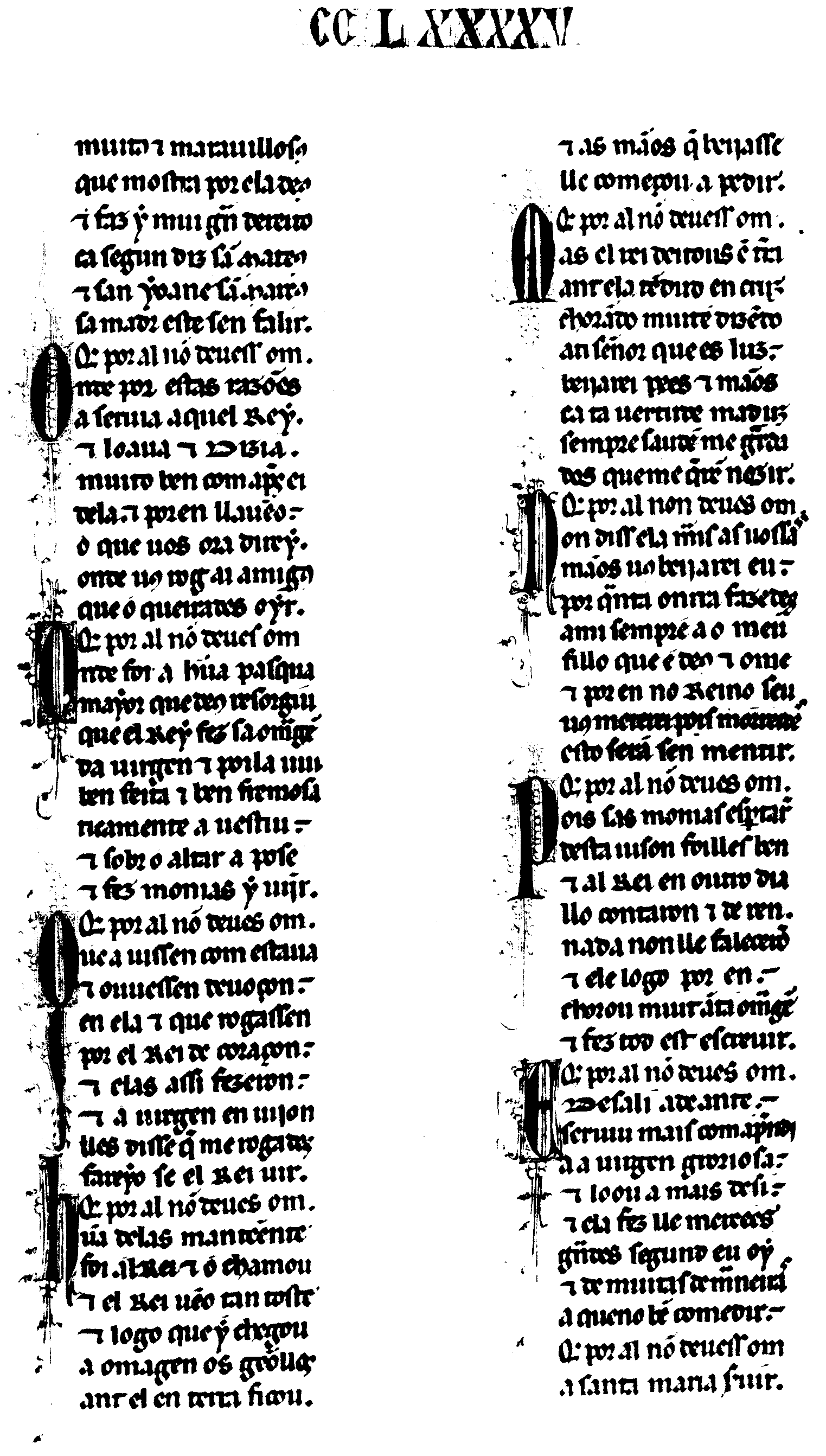
- a. 1284, Alfonso X of Castile, Cantigas de Santa Maria, Códice de los músicos, cantiga 295 (facsimile):
- a ti ſeñor que es luz / beijarei pees ⁊ mãos ca ta uertude maduz / ſempre ſaude me g(ua)rda dos que me q̇rẽ nozir.
- My Lady, full of light, I shall kiss your feet and hands, because your virtue always brings me health and protects me from those who want to harm me.
- alternative form of te
References
- Seoane, Ernesto Xosé González; Granja, María Álvarez de la; Agrelo, Ana Isabel Boullón (2006–2022), “ti”, in Dicionario de Dicionarios do galego medieval [Dictionary of dictionaries of Medieval Galician] (in Galician), Santiago de Compostela: Instituto da Lingua Galega
Old High German
Preposition
ti
- alternative form of zi
Old Spanish
Etymology
Inherited from Latin tibi, dative of tu.
Pronoun
ti
- prepositional of tu
- c. 1200, Almerich, Fazienda de Ultramar, f. 20v:
- Dixo nr̃o ſẽnor amoyſen ſub aq̃ tu e el pueblo que ſaq̃ſt de egipto ala tierra q̃ iure aabraã á yſaac a iacob ẽ dix ato liñaie la dare trametre mio angel delante ti e detroyra tos eñemigos […]
- [Then] Our Lord said to Moses, “Go up from here, you and the people whom you brought out of Egypt, to the land I swore to Abraham, to Isaac and to Jacob when I said ‘I will give it to your descendants.’ I will send my angel before you and he will destroy your enemies. […] ”
References
- Ralph Steele Boggs et al. (1946), “ti”, in Tentative Dictionary of Medieval Spanish, volume II, Chapel Hill, page 495
Pali
| < 2 | 3 | 4 > |
|---|---|---|
| Cardinal : ti Ordinal : tatiya | ||
Alternative forms
Etymology
Inherited from Sanskrit त्रि (tri).
Numeral
ti
Declension
Particle
ti
- elided form of iti
References
- Pali Text Society (1921–1925), “ti”, in Pali-English Dictionary, London: Chipstead
Pattani
Noun
ti
References
- 1972, Paul Benedict, Sino-Tibetan: A Conspectus, p. 26 (as Manchati)
Piedmontese
Pronunciation
- IPA(key): /ti/
Pronoun
ti
Pirahã
Etymology
Possibly borrowed from Nheengatu se.
Pronunciation
- IPA(key): /t͡ʃɪ̀/
Pronoun
ti
Portuguese
Etymology 1
Inherited from Old Galician-Portuguese ti, from Latin tibi, from Proto-Indo-European *tébʰye, dative of *túh₂ (“you”).
Pronunciation
- (Brazil) IPA(key): /ˈt͡ʃi/
- (Portugal) IPA(key): /ˈti/
- (Northeast Brazil) IPA(key): /ti/
- Rhymes: -i
Pronoun
ti
- prepositional of tu
- Dá-los-ei a ti.
- I will give them to you.
Usage notes
In everyday parlance, this pronoun is often replaced by tu in many Brazilian dialects that use "tu".
See also
| number | person | nominative (subject) |
accusative (direct object) |
dative (indirect object) |
prepositional | prepositional with com |
non-declining | |
|---|---|---|---|---|---|---|---|---|
| singular | first | eu | me | mim | comigo | — | ||
| second | tu | te | ti | contigo | você o senhor m a senhora f | |||
| third | m | ele | o (lo, no) | lhe | ele | com ele | o mesmo | |
| f | ela | a (la, na) | ela | com ela | a mesma | |||
| plural | first | nós | nos | nós | connosco (Portugal) conosco (Brazil) |
a gente | ||
| second | vós | vos | vós | convosco com vós |
vocês os senhores m as senhoras f | |||
| third | m | eles | os (los, nos) | lhes | eles | com eles | os mesmos | |
| f | elas | as (las, nas) | elas | com elas | as mesmas | |||
| reflexive third / indefinite |
— | se | si | consigo | o mesmo etc. (reflexive) | |||
Etymology 2
Adjective
ti (invariable)
- (lexicography) initialism of transitivo indireto
Further reading
- “ti”, in Dicionário Aulete Digital (in Portuguese), Rio de Janeiro: Lexikon Editora Digital, 2008–2026
Romansh
Etymology
Pronoun
ti
- you (singular familiar)
Sassarese
Pronunciation
- IPA(key): /ti/
Etymology 1
Derived from Latin tē (the name of the letter T).
Noun
ti f (invariable)
Etymology 2
Inherited from Latin tē (accusative of tū), from Proto-Indo-European *twé, *te, accusative of *túh₂ (“you”). As a dative, in part from Latin tibi, dative of tū, through a Vulgar Latin *ti.
Alternative forms
Pronoun
ti
- (reflexive pronoun) yourself
- Cumenti ti ciami? ― What's your name? (literally, “How do you call yourself?”)
- dative of tu: to you
- Abà ti lu diggu ― Now I'll tell you. (literally, “Now I tell it to you”)
References
- Rubattu, Antoninu (2006), Dizionario universale della lingua di Sardegna, 2nd edition, Sassari: Edes
Scots
Particle
ti
Preposition
ti
Serbo-Croatian
Etymology 1
Inherited from Proto-Slavic *ty, from Proto-Balto-Slavic *tūˀ, from Proto-Indo-European *túh₂.
Pronunciation
- IPA(key): /tîː/
Audio (Central Serbia): (file)
Pronoun
tȋ ? (Cyrillic spelling ти̑)
Declension
| singular | plural | |
|---|---|---|
| nominative | tȋ | vȋ |
| genitive | tȅbe, te | vȃs |
| dative | tȅbi, ti | vȁma, vam |
| accusative | tȅbe, te | vȃs |
| vocative | tî | vȋ |
| locative | tȅbi | vȁma |
| instrumental | tȍbōm | vȁma |
See also
| singular | plural | ||
|---|---|---|---|
| 1st person | ja | mi | |
| 2nd person | familiar | ti | vi |
| polite | Vi | ||
| 3rd person | m | on | oni |
| f | ona | one | |
| n | ono | ona | |
Etymology 2
See the etymology of the corresponding lemma form.
Pronoun
ti
- to you (clitic dative singular of tȋ (“you”))
- you (vocative singular of tȋ (“you”))
- (emphatic, possessive, dative) your, of yours (clitic dative singular of tȋ (“you”))
- Želiš još?! Gdje ti je granica?! ― You want more?! Where's your limit?!
- Gdje ti je auto? ― Where is your car?
Etymology 3
See the etymology of the corresponding lemma form.
Pronoun
tȋ
Etymology 4
Adverb
ti (Cyrillic spelling ти)
- (emphatic, informal) Used to reinforce a statement that is thought to be of interest to the listener, usually referring to oneself or third parties.
- Ja ti radim i vikendom. ― I work on the weekends as well.
- On ti se odselio još davno. ― He moved away a long time ago.
Slovak
Alternative forms
Etymology
Inherited from Proto-Slavic *ti.
Pronoun
ti
- dative of ty
Slovene
Etymology 1
Inherited from Proto-Slavic *ty, from Proto-Indo-European *túh₂.
Pronunciation
- IPA(key): /tíː/
Pronoun
tȋ
Declension
| Second masculine/first feminine/second neuter declension (a-stem), mixed accent, suppletive, highly irregular Stressed ("naglasne") forms | |||
|---|---|---|---|
| nominative imenovȃlnik |
tȋ | vȋdva m; vȋdve, vẹ̑dve f or n | vȋ m; vẹ̑ f or n |
| genitive rodȋlnik |
tébe | vȃju, vȁs | vȁs |
| dative dajȃlnik |
tébi | vȃma | vȁm |
| accusative tožȋlnik |
tébe | vȃju | vȁs |
| locative mẹ̑stnik |
tébi | nȃju, nȁs | nȁs |
| instrumental orọ̑dnik |
tȃbo, tebọ́j | vȃma | vȃmi |
| (vocative) (ogȏvorni imenovȃlnik) |
tȋ | vȋdva m; vȋdve, vẹ̑dve f or n | vȋ m; vẹ̑ f or n |
| Unstressed ("naslonske") forms | |||
|---|---|---|---|
| singular | dual | plural | |
| genitive rodȋlnik |
te | vaju, vas | vas |
| dative dajȃlnik |
ti | vama | vam |
| accusative tožȋlnik |
ve | vaju | vas |
| Binding ("navezne / predložne") accusative forms | |||
|---|---|---|---|
| singular | dual | plural | |
| unstressed | -te | – | – |
| stressed | tẹ̑ | – | – |
Noun
tȋ m animacy unspecified
- (only used in set phrases) use of familiar personal pronouns instead of polite ones
- S svojo šefico sva prešli na ti. ― My boss and I have started to use familiar personal pronouns.
Declension
acc=1Please see Module:checkparams for help with this warning.
| Third masculine declension (no endings) (singularia tantum) | |||
|---|---|---|---|
| nom. sing. | tȋ | ||
| gen. sing. | tȋ | ||
| singular | |||
| nominative imenovȃlnik |
tȋ | ||
| genitive rodȋlnik |
tȋ | ||
| dative dajȃlnik |
tȋ | ||
| accusative tožȋlnik |
tȋ | ||
| locative mẹ̑stnik |
tȋ | ||
| instrumental orọ̑dnik |
tȋ | ||
| (vocative) (ogȏvorni imenovȃlnik) |
tȋ | ||
Derived terms
- biti na ti
- preiti na ti
- priti na ti
- tīkati
Etymology 2
see tȃ
Pronunciation 1
- IPA(key): /tíː/
Determiner
ti
- nominative dual feminine/neuter of tȃ
- accusative dual feminine/neuter of tȃ
- nominative plural masculine of tȃ
Pronunciation 2
- IPA(key): /tí/
Determiner
ti
Etymology 3
Pronunciation
- IPA(key): /tíː/
Noun
tȋ m inan
Usage notes
Name ti is not officially recognized as a synonym of si.[→SSKJ, SP]
Declension
acc=1Please see Module:checkparams for help with this warning.
| Third masculine declension (no endings) | |||
|---|---|---|---|
| nom. sing. | tȋ | ||
| gen. sing. | tȋ | ||
| singular | dual | plural | |
| nominative imenovȃlnik |
tȋ | tȋ | tȋ |
| genitive rodȋlnik |
tȋ | tȋ | tȋ |
| dative dajȃlnik |
tȋ | tȋ | tȋ |
| accusative tožȋlnik |
tȋ | tȋ | tȋ |
| locative mẹ̑stnik |
tȋ | tȋ | tȋ |
| instrumental orọ̑dnik |
tȋ | tȋ | tȋ |
| (vocative) (ogȏvorni imenovȃlnik) |
tȋ | tȋ | tȋ |
acc=1Please see Module:checkparams for help with this warning.
| First masculine declension (soft o-stem, inanimate) , -j- infix | |||
|---|---|---|---|
| nom. sing. | tȋ | ||
| gen. sing. | tȋja | ||
| singular | dual | plural | |
| nominative imenovȃlnik |
tȋ | tȋja | tȋji |
| genitive rodȋlnik |
tȋja | tȋjev | tȋjev |
| dative dajȃlnik |
tȋju, tȋji | tȋjema | tȋjem |
| accusative tožȋlnik |
tȋ | tȋja | tȋje |
| locative mẹ̑stnik |
tȋju, tȋji | tȋjih | tȋjih |
| instrumental orọ̑dnik |
tȋjem | tȋjema | tȋji |
| (vocative) (ogȏvorni imenovȃlnik) |
tȋ | tȋja | tȋji |
- dialectal
acc=1Please see Module:checkparams for help with this warning.
| First masculine declension (hard o-stem, inanimate) , -j- infix | |||
|---|---|---|---|
| nom. sing. | tȋ | ||
| gen. sing. | tȋja | ||
| singular | dual | plural | |
| nominative imenovȃlnik |
tȋ | tȋja | tȋji |
| genitive rodȋlnik |
tȋja | tȋjev | tȋjev |
| dative dajȃlnik |
tȋju, tȋji | tȋjoma | tȋjom |
| accusative tožȋlnik |
tȋ | tȋja | tȋje |
| locative mẹ̑stnik |
tȋju, tȋji | tȋjih | tȋjih |
| instrumental orọ̑dnik |
tȋjom | tȋjoma | tȋji |
| (vocative) (ogȏvorni imenovȃlnik) |
tȋ | tȋja | tȋji |
See also
| singular | dual | plural | ||||||||||||||||||||||||||||||||||||||||||||||||||||||||||||||||||||||||||||||||||||||||||||||||||||||||||||||||||||||||||||||||||||||||||||||||||||||||||||||||||||||||||||||||||||||||||||||||||||||||||||||||||||||||||||||||||||||||||||||||||||||||||||||||||||||||||||||||||||||||||||||||||||||||||||||||||||||||||||||||||||||||||||||||||||||||||||||||||||||||||||||||||||||||||||||||||||||||||||||||||||||||||||||||||||||||||||||||||||||||||||||||||||||||||||||||||||||||||||||||||||||||||||||||||||||||||||||||||||||||||||||||||||||||||||||||||||||||||||||||||||||||||||||||||||||||||||||||||||||||||||||||||||||||||||||||||||||||||||||||||||||||||||||||||||||||||||||||||||||||||||||||||||||||||||||||||||||||||||||||||||||||||||||||||||||||||||||||||||||||||||||||||||||||||||||||||||||||||||||||||||||||||||||||||||||||||||||||||||||||||||||||||||||||||||||||||||||||||||||||||||||||||||||||||||||||||||||||||||||||||||||||||||||||||||||||||||||||||||||||||||||||||||||||||||||||||||||||||||
|---|---|---|---|---|---|---|---|---|---|---|---|---|---|---|---|---|---|---|---|---|---|---|---|---|---|---|---|---|---|---|---|---|---|---|---|---|---|---|---|---|---|---|---|---|---|---|---|---|---|---|---|---|---|---|---|---|---|---|---|---|---|---|---|---|---|---|---|---|---|---|---|---|---|---|---|---|---|---|---|---|---|---|---|---|---|---|---|---|---|---|---|---|---|---|---|---|---|---|---|---|---|---|---|---|---|---|---|---|---|---|---|---|---|---|---|---|---|---|---|---|---|---|---|---|---|---|---|---|---|---|---|---|---|---|---|---|---|---|---|---|---|---|---|---|---|---|---|---|---|---|---|---|---|---|---|---|---|---|---|---|---|---|---|---|---|---|---|---|---|---|---|---|---|---|---|---|---|---|---|---|---|---|---|---|---|---|---|---|---|---|---|---|---|---|---|---|---|---|---|---|---|---|---|---|---|---|---|---|---|---|---|---|---|---|---|---|---|---|---|---|---|---|---|---|---|---|---|---|---|---|---|---|---|---|---|---|---|---|---|---|---|---|---|---|---|---|---|---|---|---|---|---|---|---|---|---|---|---|---|---|---|---|---|---|---|---|---|---|---|---|---|---|---|---|---|---|---|---|---|---|---|---|---|---|---|---|---|---|---|---|---|---|---|---|---|---|---|---|---|---|---|---|---|---|---|---|---|---|---|---|---|---|---|---|---|---|---|---|---|---|---|---|---|---|---|---|---|---|---|---|---|---|---|---|---|---|---|---|---|---|---|---|---|---|---|---|---|---|---|---|---|---|---|---|---|---|---|---|---|---|---|---|---|---|---|---|---|---|---|---|---|---|---|---|---|---|---|---|---|---|---|---|---|---|---|---|---|---|---|---|---|---|---|---|---|---|---|---|---|---|---|---|---|---|---|---|---|---|---|---|---|---|---|---|---|---|---|---|---|---|---|---|---|---|---|---|---|---|---|---|---|---|---|---|---|---|---|---|---|---|---|---|---|---|---|---|---|---|---|---|---|---|---|---|---|---|---|---|---|---|---|---|---|---|---|---|---|---|---|---|---|---|---|---|---|---|---|---|---|---|---|---|---|---|---|---|---|---|---|---|---|---|---|---|---|---|---|---|---|---|---|---|---|---|---|---|---|---|---|---|---|---|---|---|---|---|---|---|---|---|---|---|---|---|---|---|---|---|---|---|---|---|---|---|---|---|---|---|---|---|---|---|---|---|---|---|---|---|---|---|---|---|---|---|---|---|---|---|---|---|---|---|---|---|---|---|---|---|---|---|---|---|---|---|---|---|---|---|---|---|---|---|---|---|---|---|---|---|---|---|---|---|---|---|---|---|---|---|---|---|---|---|---|---|---|---|---|---|---|---|---|---|---|---|---|---|---|---|---|---|---|---|---|---|---|---|---|---|---|---|---|---|---|---|---|---|---|---|---|---|---|---|---|---|---|---|---|---|---|---|---|---|---|---|---|---|---|---|---|---|---|---|---|---|---|---|---|---|---|---|---|---|---|---|---|---|---|---|---|---|---|---|---|---|---|---|---|---|---|---|---|---|---|---|---|---|---|---|---|---|---|---|---|---|---|---|---|---|---|---|---|---|---|---|---|---|---|---|---|---|---|---|---|---|---|---|---|---|---|---|---|---|---|---|---|---|---|---|---|---|---|---|---|---|---|---|---|---|---|---|---|---|---|---|---|---|---|---|---|---|---|---|---|---|---|---|---|---|---|---|---|---|---|---|---|---|---|---|---|---|---|---|---|---|---|---|---|---|---|---|---|---|---|---|---|---|---|---|---|---|---|---|---|---|---|---|---|---|---|---|---|---|---|---|---|---|---|---|---|---|---|---|---|---|---|---|---|---|---|---|---|---|---|---|---|---|---|---|---|---|---|---|---|---|---|---|---|---|---|---|---|---|---|---|---|---|---|---|---|---|---|---|---|---|---|---|---|---|---|---|---|---|---|---|---|---|---|---|---|---|---|---|---|---|---|---|---|---|---|---|---|---|---|---|---|---|---|---|---|---|---|---|---|---|---|---|---|---|---|---|---|---|---|---|---|---|---|---|---|---|---|---|---|---|---|---|---|---|---|---|---|---|---|---|---|---|---|---|---|---|---|---|---|---|---|---|---|---|---|---|---|---|---|---|---|---|---|---|---|---|---|---|---|---|---|---|---|---|---|---|---|---|---|---|---|---|---|---|---|---|---|---|---|---|---|---|---|---|---|---|---|---|---|---|---|---|---|---|
| 1st person | m | jaz | midva | mi | ||||||||||||||||||||||||||||||||||||||||||||||||||||||||||||||||||||||||||||||||||||||||||||||||||||||||||||||||||||||||||||||||||||||||||||||||||||||||||||||||||||||||||||||||||||||||||||||||||||||||||||||||||||||||||||||||||||||||||||||||||||||||||||||||||||||||||||||||||||||||||||||||||||||||||||||||||||||||||||||||||||||||||||||||||||||||||||||||||||||||||||||||||||||||||||||||||||||||||||||||||||||||||||||||||||||||||||||||||||||||||||||||||||||||||||||||||||||||||||||||||||||||||||||||||||||||||||||||||||||||||||||||||||||||||||||||||||||||||||||||||||||||||||||||||||||||||||||||||||||||||||||||||||||||||||||||||||||||||||||||||||||||||||||||||||||||||||||||||||||||||||||||||||||||||||||||||||||||||||||||||||||||||||||||||||||||||||||||||||||||||||||||||||||||||||||||||||||||||||||||||||||||||||||||||||||||||||||||||||||||||||||||||||||||||||||||||||||||||||||||||||||||||||||||||||||||||||||||||||||||||||||||||||||||||||||||||||||||||||||||||||||||||||||||||||||||||||||||||
| f or n | medve, midve | me | ||||||||||||||||||||||||||||||||||||||||||||||||||||||||||||||||||||||||||||||||||||||||||||||||||||||||||||||||||||||||||||||||||||||||||||||||||||||||||||||||||||||||||||||||||||||||||||||||||||||||||||||||||||||||||||||||||||||||||||||||||||||||||||||||||||||||||||||||||||||||||||||||||||||||||||||||||||||||||||||||||||||||||||||||||||||||||||||||||||||||||||||||||||||||||||||||||||||||||||||||||||||||||||||||||||||||||||||||||||||||||||||||||||||||||||||||||||||||||||||||||||||||||||||||||||||||||||||||||||||||||||||||||||||||||||||||||||||||||||||||||||||||||||||||||||||||||||||||||||||||||||||||||||||||||||||||||||||||||||||||||||||||||||||||||||||||||||||||||||||||||||||||||||||||||||||||||||||||||||||||||||||||||||||||||||||||||||||||||||||||||||||||||||||||||||||||||||||||||||||||||||||||||||||||||||||||||||||||||||||||||||||||||||||||||||||||||||||||||||||||||||||||||||||||||||||||||||||||||||||||||||||||||||||||||||||||||||||||||||||||||||||||||||||||||||||||||||||||||||
| 2nd person familiar (tikanje) |
m | ti | vidva | vi | ||||||||||||||||||||||||||||||||||||||||||||||||||||||||||||||||||||||||||||||||||||||||||||||||||||||||||||||||||||||||||||||||||||||||||||||||||||||||||||||||||||||||||||||||||||||||||||||||||||||||||||||||||||||||||||||||||||||||||||||||||||||||||||||||||||||||||||||||||||||||||||||||||||||||||||||||||||||||||||||||||||||||||||||||||||||||||||||||||||||||||||||||||||||||||||||||||||||||||||||||||||||||||||||||||||||||||||||||||||||||||||||||||||||||||||||||||||||||||||||||||||||||||||||||||||||||||||||||||||||||||||||||||||||||||||||||||||||||||||||||||||||||||||||||||||||||||||||||||||||||||||||||||||||||||||||||||||||||||||||||||||||||||||||||||||||||||||||||||||||||||||||||||||||||||||||||||||||||||||||||||||||||||||||||||||||||||||||||||||||||||||||||||||||||||||||||||||||||||||||||||||||||||||||||||||||||||||||||||||||||||||||||||||||||||||||||||||||||||||||||||||||||||||||||||||||||||||||||||||||||||||||||||||||||||||||||||||||||||||||||||||||||||||||||||||||||||||||||||
| f or n | vedve, vidve | ve | ||||||||||||||||||||||||||||||||||||||||||||||||||||||||||||||||||||||||||||||||||||||||||||||||||||||||||||||||||||||||||||||||||||||||||||||||||||||||||||||||||||||||||||||||||||||||||||||||||||||||||||||||||||||||||||||||||||||||||||||||||||||||||||||||||||||||||||||||||||||||||||||||||||||||||||||||||||||||||||||||||||||||||||||||||||||||||||||||||||||||||||||||||||||||||||||||||||||||||||||||||||||||||||||||||||||||||||||||||||||||||||||||||||||||||||||||||||||||||||||||||||||||||||||||||||||||||||||||||||||||||||||||||||||||||||||||||||||||||||||||||||||||||||||||||||||||||||||||||||||||||||||||||||||||||||||||||||||||||||||||||||||||||||||||||||||||||||||||||||||||||||||||||||||||||||||||||||||||||||||||||||||||||||||||||||||||||||||||||||||||||||||||||||||||||||||||||||||||||||||||||||||||||||||||||||||||||||||||||||||||||||||||||||||||||||||||||||||||||||||||||||||||||||||||||||||||||||||||||||||||||||||||||||||||||||||||||||||||||||||||||||||||||||||||||||||||||||||||||||
| 3rd person | m | on | onadva | oni | ||||||||||||||||||||||||||||||||||||||||||||||||||||||||||||||||||||||||||||||||||||||||||||||||||||||||||||||||||||||||||||||||||||||||||||||||||||||||||||||||||||||||||||||||||||||||||||||||||||||||||||||||||||||||||||||||||||||||||||||||||||||||||||||||||||||||||||||||||||||||||||||||||||||||||||||||||||||||||||||||||||||||||||||||||||||||||||||||||||||||||||||||||||||||||||||||||||||||||||||||||||||||||||||||||||||||||||||||||||||||||||||||||||||||||||||||||||||||||||||||||||||||||||||||||||||||||||||||||||||||||||||||||||||||||||||||||||||||||||||||||||||||||||||||||||||||||||||||||||||||||||||||||||||||||||||||||||||||||||||||||||||||||||||||||||||||||||||||||||||||||||||||||||||||||||||||||||||||||||||||||||||||||||||||||||||||||||||||||||||||||||||||||||||||||||||||||||||||||||||||||||||||||||||||||||||||||||||||||||||||||||||||||||||||||||||||||||||||||||||||||||||||||||||||||||||||||||||||||||||||||||||||||||||||||||||||||||||||||||||||||||||||||||||||||||||||||||||||||
| f | ona | onedve, onidve | one | |||||||||||||||||||||||||||||||||||||||||||||||||||||||||||||||||||||||||||||||||||||||||||||||||||||||||||||||||||||||||||||||||||||||||||||||||||||||||||||||||||||||||||||||||||||||||||||||||||||||||||||||||||||||||||||||||||||||||||||||||||||||||||||||||||||||||||||||||||||||||||||||||||||||||||||||||||||||||||||||||||||||||||||||||||||||||||||||||||||||||||||||||||||||||||||||||||||||||||||||||||||||||||||||||||||||||||||||||||||||||||||||||||||||||||||||||||||||||||||||||||||||||||||||||||||||||||||||||||||||||||||||||||||||||||||||||||||||||||||||||||||||||||||||||||||||||||||||||||||||||||||||||||||||||||||||||||||||||||||||||||||||||||||||||||||||||||||||||||||||||||||||||||||||||||||||||||||||||||||||||||||||||||||||||||||||||||||||||||||||||||||||||||||||||||||||||||||||||||||||||||||||||||||||||||||||||||||||||||||||||||||||||||||||||||||||||||||||||||||||||||||||||||||||||||||||||||||||||||||||||||||||||||||||||||||||||||||||||||||||||||||||||||||||||||||||||||||||||||
| n | ono | onedve, onidve | ona | |||||||||||||||||||||||||||||||||||||||||||||||||||||||||||||||||||||||||||||||||||||||||||||||||||||||||||||||||||||||||||||||||||||||||||||||||||||||||||||||||||||||||||||||||||||||||||||||||||||||||||||||||||||||||||||||||||||||||||||||||||||||||||||||||||||||||||||||||||||||||||||||||||||||||||||||||||||||||||||||||||||||||||||||||||||||||||||||||||||||||||||||||||||||||||||||||||||||||||||||||||||||||||||||||||||||||||||||||||||||||||||||||||||||||||||||||||||||||||||||||||||||||||||||||||||||||||||||||||||||||||||||||||||||||||||||||||||||||||||||||||||||||||||||||||||||||||||||||||||||||||||||||||||||||||||||||||||||||||||||||||||||||||||||||||||||||||||||||||||||||||||||||||||||||||||||||||||||||||||||||||||||||||||||||||||||||||||||||||||||||||||||||||||||||||||||||||||||||||||||||||||||||||||||||||||||||||||||||||||||||||||||||||||||||||||||||||||||||||||||||||||||||||||||||||||||||||||||||||||||||||||||||||||||||||||||||||||||||||||||||||||||||||||||||||||||||||||||||||
| Polite forms | singular (not differentiated in dual and plural) | |||||||||||||||||||||||||||||||||||||||||||||||||||||||||||||||||||||||||||||||||||||||||||||||||||||||||||||||||||||||||||||||||||||||||||||||||||||||||||||||||||||||||||||||||||||||||||||||||||||||||||||||||||||||||||||||||||||||||||||||||||||||||||||||||||||||||||||||||||||||||||||||||||||||||||||||||||||||||||||||||||||||||||||||||||||||||||||||||||||||||||||||||||||||||||||||||||||||||||||||||||||||||||||||||||||||||||||||||||||||||||||||||||||||||||||||||||||||||||||||||||||||||||||||||||||||||||||||||||||||||||||||||||||||||||||||||||||||||||||||||||||||||||||||||||||||||||||||||||||||||||||||||||||||||||||||||||||||||||||||||||||||||||||||||||||||||||||||||||||||||||||||||||||||||||||||||||||||||||||||||||||||||||||||||||||||||||||||||||||||||||||||||||||||||||||||||||||||||||||||||||||||||||||||||||||||||||||||||||||||||||||||||||||||||||||||||||||||||||||||||||||||||||||||||||||||||||||||||||||||||||||||||||||||||||||||||||||||||||||||||||||||||||||||||||||||||||||||||||||
| polite (vikanje) | vi, Vi + 2nd person plural masculine | |||||||||||||||||||||||||||||||||||||||||||||||||||||||||||||||||||||||||||||||||||||||||||||||||||||||||||||||||||||||||||||||||||||||||||||||||||||||||||||||||||||||||||||||||||||||||||||||||||||||||||||||||||||||||||||||||||||||||||||||||||||||||||||||||||||||||||||||||||||||||||||||||||||||||||||||||||||||||||||||||||||||||||||||||||||||||||||||||||||||||||||||||||||||||||||||||||||||||||||||||||||||||||||||||||||||||||||||||||||||||||||||||||||||||||||||||||||||||||||||||||||||||||||||||||||||||||||||||||||||||||||||||||||||||||||||||||||||||||||||||||||||||||||||||||||||||||||||||||||||||||||||||||||||||||||||||||||||||||||||||||||||||||||||||||||||||||||||||||||||||||||||||||||||||||||||||||||||||||||||||||||||||||||||||||||||||||||||||||||||||||||||||||||||||||||||||||||||||||||||||||||||||||||||||||||||||||||||||||||||||||||||||||||||||||||||||||||||||||||||||||||||||||||||||||||||||||||||||||||||||||||||||||||||||||||||||||||||||||||||||||||||||||||||||||||||||||||||||||||
| very polite (onikanje) | oni + 3rd person plural masculine (archaic) | |||||||||||||||||||||||||||||||||||||||||||||||||||||||||||||||||||||||||||||||||||||||||||||||||||||||||||||||||||||||||||||||||||||||||||||||||||||||||||||||||||||||||||||||||||||||||||||||||||||||||||||||||||||||||||||||||||||||||||||||||||||||||||||||||||||||||||||||||||||||||||||||||||||||||||||||||||||||||||||||||||||||||||||||||||||||||||||||||||||||||||||||||||||||||||||||||||||||||||||||||||||||||||||||||||||||||||||||||||||||||||||||||||||||||||||||||||||||||||||||||||||||||||||||||||||||||||||||||||||||||||||||||||||||||||||||||||||||||||||||||||||||||||||||||||||||||||||||||||||||||||||||||||||||||||||||||||||||||||||||||||||||||||||||||||||||||||||||||||||||||||||||||||||||||||||||||||||||||||||||||||||||||||||||||||||||||||||||||||||||||||||||||||||||||||||||||||||||||||||||||||||||||||||||||||||||||||||||||||||||||||||||||||||||||||||||||||||||||||||||||||||||||||||||||||||||||||||||||||||||||||||||||||||||||||||||||||||||||||||||||||||||||||||||||||||||||||||||||||||
| hyper polite (onokanje) | ono + 3rd person singular neuter (obsolete) | |||||||||||||||||||||||||||||||||||||||||||||||||||||||||||||||||||||||||||||||||||||||||||||||||||||||||||||||||||||||||||||||||||||||||||||||||||||||||||||||||||||||||||||||||||||||||||||||||||||||||||||||||||||||||||||||||||||||||||||||||||||||||||||||||||||||||||||||||||||||||||||||||||||||||||||||||||||||||||||||||||||||||||||||||||||||||||||||||||||||||||||||||||||||||||||||||||||||||||||||||||||||||||||||||||||||||||||||||||||||||||||||||||||||||||||||||||||||||||||||||||||||||||||||||||||||||||||||||||||||||||||||||||||||||||||||||||||||||||||||||||||||||||||||||||||||||||||||||||||||||||||||||||||||||||||||||||||||||||||||||||||||||||||||||||||||||||||||||||||||||||||||||||||||||||||||||||||||||||||||||||||||||||||||||||||||||||||||||||||||||||||||||||||||||||||||||||||||||||||||||||||||||||||||||||||||||||||||||||||||||||||||||||||||||||||||||||||||||||||||||||||||||||||||||||||||||||||||||||||||||||||||||||||||||||||||||||||||||||||||||||||||||||||||||||||||||||||||||||||
| patriarchal (onkanje) | on + 3rd person singular masculine (obsolete) | |||||||||||||||||||||||||||||||||||||||||||||||||||||||||||||||||||||||||||||||||||||||||||||||||||||||||||||||||||||||||||||||||||||||||||||||||||||||||||||||||||||||||||||||||||||||||||||||||||||||||||||||||||||||||||||||||||||||||||||||||||||||||||||||||||||||||||||||||||||||||||||||||||||||||||||||||||||||||||||||||||||||||||||||||||||||||||||||||||||||||||||||||||||||||||||||||||||||||||||||||||||||||||||||||||||||||||||||||||||||||||||||||||||||||||||||||||||||||||||||||||||||||||||||||||||||||||||||||||||||||||||||||||||||||||||||||||||||||||||||||||||||||||||||||||||||||||||||||||||||||||||||||||||||||||||||||||||||||||||||||||||||||||||||||||||||||||||||||||||||||||||||||||||||||||||||||||||||||||||||||||||||||||||||||||||||||||||||||||||||||||||||||||||||||||||||||||||||||||||||||||||||||||||||||||||||||||||||||||||||||||||||||||||||||||||||||||||||||||||||||||||||||||||||||||||||||||||||||||||||||||||||||||||||||||||||||||||||||||||||||||||||||||||||||||||||||||||||||||||
Further reading
- “ti”, in Slovarji Inštituta za slovenski jezik Frana Ramovša ZRC SAZU, portal Fran
- “ti”, in Termania, Amebis
- See also the general references
South Slavey
Pronunciation
- IPA(key): [tʰì(ʔ)]
- Hyphenation: ti
Noun
ti (stem -ti-)
- Jean Marie River form of tu
Inflection
| singular | plural | ||
|---|---|---|---|
| 1st person | setié | naxetié | |
| 2nd person | netié | ||
| 3rd person | 1) | — | gitié |
| 2) | metié | gotié | |
| 4th person | yetié | ||
| reflexive | sp. | ɂedetié | kedetié |
| unsp. | detié | ||
| reciprocal | — | ɂełetié | |
| indefinite | ɂetié | ||
| areal | gotié | ||
1) Used when the subject is a group of human beings
and the object is singular.
2) Used when the previous condition does not apply.
References
- Keren Rice (1989), A Grammar of Slave, Berlin, West Germany: Mouton de Gruyter, →ISBN, page 44
Spanish
Etymology
Inherited from Old Spanish ti (“te”), from Latin tibi, dative of tu.
Pronunciation
- IPA(key): /ˈti/ [ˈt̪i]
- Rhymes: -i
- Syllabification: ti
Pronoun
ti
- prepositional of tú
- ¡Felicidades a ti! ― Congratulations to you!
Derived terms
See also
| Nominative | Disjunctive | Dative | Accusative | Comitative | ||||
|---|---|---|---|---|---|---|---|---|
| First-person | Singular | yo | mí | me | conmigo | |||
| Plural | Masculine1 | nosotros | nos | — | ||||
| Feminine | nosotras | |||||||
| Second-person | Singular | Tuteo | tú | ti | te | contigo | ||
| Voseo | vos | — | ||||||
| Formal2 | Masculine1 | usted | le, se3 | lo | ||||
| Feminine | la | |||||||
| Plural | Familiar4 | Masculine1 | vosotros | os | ||||
| Feminine | vosotras | |||||||
| Formal/general2 | Masculine1 | ustedes | les, se3 | los | ||||
| Feminine | las | |||||||
| Third-person | Singular | Masculine1 | él | le, se3 | lo | |||
| Feminine | ella | la | ||||||
| Neuter | ello5 | lo | ||||||
| Plural | Masculine1 | ellos | les, se3 | los | ||||
| Feminine | ellas | las | ||||||
| Reflexive | — | sí | se | consigo | ||||
- Like other masculine words, masculine pronouns can be used when the gender of the subject is unknown or when the subject is plural and of mixed gender.
- Treated as if it were third person for purposes of conjugation and reflexivity.
- If le or les precedes lo, la, los, or las in a clause, it is replaced with se (e.g. se lo dije instead of *le lo dije).
- Used primarily in Spain.
- Only used in certain circumstances and rarely as a subject pronoun.
Further reading
- “ti”, in Diccionario de la lengua española [Dictionary of the Spanish Language] (in Spanish), online version 23.8.1, Royal Spanish Academy [Spanish: Real Academia Española], 15 December 2025
Sumerian
Romanization
ti
- romanization of 𒋾
Tagalog
Etymology
Borrowed from English tee, the English name of the letter T / t.
Pronunciation
- (Standard Tagalog) IPA(key): /ti/ [t̪ɪ]
- Rhymes: -i
- Syllabification: ti
Noun
ti (Baybayin spelling ᜆᜒ)
- the name of the Latin script letter T/t, in the Filipino alphabet
See also
- (Latin-script letter names) titik; ey, bi, si, di, i, ef, dyi, eyts, ay, dyey, key, el, em, en, enye, en dyi, o, pi, kyu, ar, es, ti, yu, vi, dobolyu, eks, way, zi
Further reading
- “ti”, in Pambansang Diksiyonaryo | Diksiyonaryo.ph, 2018
Tapayuna
Etymology
Inherited from Proto-Northern Jê *ci (“bone”).
Pronunciation
- IPA(key): [ˈt̪i]
Noun
ti
Tiwa
Etymology
From Proto-Bodo-Garo *tɯi¹ (“water”), from Proto-Sino-Tibetan *s-turʔ (“water; fluid; liquid; river; to soak; to spit”).
Noun
ti
References
- The Bodos in Assam: a socio-cultural study, year 2005-2006 (2007)
Tok Pisin
Etymology
Noun
ti
Tooro
Etymology
Inherited from Common Bantu *tì (“say; quote; that, namely”).
Pronunciation
- IPA(key): /ti/
Adverb
-ti
- like this
- abantu bakora bati ― people do this; people work like this
- Used to introduce direct speech or writing.
- 2008, Ekitabu Ekirukwera N'Ebitabu Ebyeetwa Deturokanoniko/Apokurifa [Bible in Runyoro/Rutooro Interconfessional Translation], Bible Society of Uganda, Yohaana 19:19:
- Pilaato yahandiika ekirango, yakita ha musaraba. Kihandiikirweho kiti: “Yesu owa Nazareeti, Omukama w'Abayudaaya.”
- Pilate had a notice prepared and fastened to the cross. It read: Jesus of Nazareth, the king of the Jews.
- 2008, Ekitabu Ekirukwera N'Ebitabu Ebyeetwa Deturokanoniko/Apokurifa [Bible in Runyoro/Rutooro Interconfessional Translation], Bible Society of Uganda, Yohaana 19:21-22:
- Baanyakatagara abakuru b'Abayudaaya nukwo kugambira Pilaato bati: “Otahandiika oti: ‘Omukama w'Abayudaaya’; baitu handiika oti: ‘Omuntu onu akeeyeta Omukama w'Abayudaaya.’ ” Pilaato yabagarukamu ati: “Eki mpandiikire, nikyo mpandiikire.”
- The chief priests of the Jews protested to Pilate, “Do not write ‘The King of the Jews,’ but that this man claimed to be king of the Jews.” Pilate answered, “What I have written, I have written.”
Inflection
See also
References
- Kaji, Shigeki (2007), A Rutooro Vocabulary[6], Tokyo: Research Institute for Languages and Cultures of Asia and Africa (ILCAA), →ISBN, pages 438-439
- Entry 2879 at Bantu Lexical Reconstructions 3
Vayu
Noun
ti
References
- Paul K. Benedict, Sino-Tibetan: A Conspectus (1972, →ISBN, page 26
Vietnamese
Alternative forms
Pronunciation
Etymology 1
Sino-Vietnamese word from 司.
Noun
ti
- (obsolete) department, division of a ministry
Synonyms
Derived terms
Etymology 2
Noun
ti
Etymology 3
Romanization
ti
- Sino-Vietnamese reading of 卑
Derived terms
- ti tiện
- tự ti
Wancho
Pronunciation
- IPA(key): /ti⁵²/
Noun
ti
References
- Robbins Burling, Mankai Wangsu, Wancho Phonology and word list, Linguistics of the Tibeto-Burman Area 21.2 (1998)
Wastek
Adverb
ti
References
Welsh
Pronunciation
Etymology 1
Inherited from Proto-Brythonic *ti, from Proto-Celtic *tū, from Proto-Indo-European *túh₂.
Alternative forms
Pronoun
ti
Usage notes
The pronoun ti can be used by itself colloquially where the affirmative second-person singular present tense of the verb ‘to be’ (rwyt) would be expected, e.g. Ti’n edrych yn union fel dy dad (‘You look just like your father’) instead of Rwyt ti’n edrych....
Mutation
| radical | soft | nasal | aspirate |
|---|---|---|---|
| ti | di | unchanged△ | thi |
△Irregular.
Note: Certain mutated forms of some words can never occur in standard Welsh.
All possible mutated forms are displayed for convenience.
Mutation
The soft mutation di is used after verb forms ending in a vowel, and as an emphatic after dy (“your”) (except with dy (“bod”) when introducing a content clause. The nasal mutation does not occur, and the aspirate mutation is often ignored more so than is the case in normal colloquial language.
Etymology 2
Noun
ti m (plural tiau)
Mutation
| radical | soft | nasal | aspirate |
|---|---|---|---|
| ti | di | nhi | thi |
Note: Certain mutated forms of some words can never occur in standard Welsh.
All possible mutated forms are displayed for convenience.
Etymology 3
Pronunciation
- IPA(key): /tiː/
Noun
ti f (plural tiau)
Mutation
This word cannot be mutated.
See also
- (Latin-script letter names) llythyren; a, bi, ec, èch, di, èdd, e, èf, èff, èg, eng, aetsh, i / i dot, je, ce, el, èll, em, en, o, pi, ffi, ciw, er, rhi, ès, ti, èth, u / u bedol / u gwpan, fi, w, ecs, y, sèd
Western Yugur
Alternative forms
- tʃi
Etymology
Inherited from Proto-Turkic *tebe (“camel”).
Noun
ti
References
- 雷选春 [Lei Xuanchun]; 陈宗振 [Chen Zongzhen] (1985), “ti”, in 西部裕固语简志 [A Brief Description of Western Yugur][7], Beijing: 民族出版社, →OCLC, page 159
Yoruba
Pronunciation
Etymology 1
Noun
tí
See also
- (Latin-script letter names) lẹ́tà; á, bí, dí, é, ẹ́, fí, gí, gbì, hí, í, jí, kí, lí, mí, ní, ó, ọ́, pí, rí, sí, ṣí, tí, ú, wí, yí
Etymology 2
Pronoun
tí
- (relative) which, who, that
- Synonym: (Oǹdó, Ìkálẹ̀, Ìlàjẹ) yí
- Adìyẹ tí mo rà. ― The chicken that I bought.
Synonyms
| Language Family | Variety Group | Variety | Words |
|---|---|---|---|
| Proto-Itsekiri-SEY | Southeast Yoruba | Ìjẹ̀bú | rìí, kí, rèé |
| Ìkálẹ̀ | yí | ||
| Ìlàjẹ | yí | ||
| Oǹdó | yí | ||
| Ọ̀wọ̀ | - | ||
| Usẹn | - | ||
| Proto-Yoruba | Central Yoruba | Èkìtì | kí |
| Ifẹ̀ | - | ||
| Ìgbómìnà | - | ||
| Ìjẹ̀ṣà | - | ||
| Western Àkókó | - | ||
| Northwest Yoruba | Àwórì | tí | |
| Ẹ̀gbá | - | ||
| Ìbàdàn | tí | ||
| Òǹkò | - | ||
| Ọ̀yọ́ | tí | ||
| Standard Yorùbá | tí | ||
| Northeast Yoruba/Okun | Ìbùnú | - | |
| Ìjùmú | - | ||
| Ìyàgbà | - | ||
| Owé | - | ||
| Ọ̀wọ̀rọ̀ | - |
Etymology 3
Alternative forms
Particle
ti
- Marks the relational aspect (see table below). By itself, it may refer to an action that has already occurred, but it implies that the relevance or effect of said action is still ongoing.
- Mo ti ṣe é tán. ― I have completed it.
- Wọn ò tí ì ka ìwé tí olùkọ́ fún wọn. ― They have not read the book that the teacher gave them.
See also
| Aspect markers in Yoruba | ||||||||||||||||||||||||||||||||||||||||||||||||||||||||||||||
|---|---|---|---|---|---|---|---|---|---|---|---|---|---|---|---|---|---|---|---|---|---|---|---|---|---|---|---|---|---|---|---|---|---|---|---|---|---|---|---|---|---|---|---|---|---|---|---|---|---|---|---|---|---|---|---|---|---|---|---|---|---|---|
| Aspects in Yoruba (Ajani, 2001) | ||||||||||||||||||||||||||||||||||||||||||||||||||||||||||||||
| Realis | Irrealis | |||||||||||||||||||||||||||||||||||||||||||||||||||||||||||||
| Unmarked (Completive) | Progressive | Relational | Anticipative | Intentional | ||||||||||||||||||||||||||||||||||||||||||||||||||||||||||
| ∅ | ń | ti | máa | yóò ¹ | ||||||||||||||||||||||||||||||||||||||||||||||||||||||||||
| ||||||||||||||||||||||||||||||||||||||||||||||||||||||||||||||
Etymology 4
Verb
tì
Etymology 5
Verb
ti
- (intransitive) to arrive at
Etymology 6
Verb
tì
Derived terms
- ó tì (“no”, interjection)
Etymology 7
Verb
tì
- to feel shame, embarrassment, shyness
Usage notes
- Ti before a direct object noun.
- This verb is usually used with ojú (“face, eyes”) or ara (“body”) in the following constructions:
- ojú tì... ― for ... to feel shy/embarrassed
- ara tì... ― for the body of ... to shudder
Derived terms
- tijú (“to show shame, embarrassment”)
References
- Awoyale, Yiwola (19 December 2008), “tì1”, in Global Yoruba Lexical Database v. 1.0[8] (in Yoruba), volume LDC2008L03, Philadelphia: Linguistic Data Consortium, , →ISBN
Zacatepec Chatino
Etymology 1
Adjective
ti
- alternative form of lti
Etymology 2
Noun
ti
- alternative form of lti
Etymology 3
(This etymology is missing or incomplete. Please add to it, or discuss it at the Etymology scriptorium.)
Noun
ti