all
Albanian • Breton • Catalan • Estonian • German • Gothic • Hunsrik • Luxembourgish • Middle English • Norwegian Bokmål • Norwegian Nynorsk • Old English • Old Irish • Pennsylvania German • Swedish • Welsh • Yola
Page categories
Translingual
Etymology
Symbol
all
See also
- Wiktionary’s coverage of Allar terms
English
Alternative forms
Etymology
From Middle English all, from Old English eall, from Proto-West Germanic *all, from Proto-Germanic *allaz, of uncertain origin[1] but perhaps from Proto-Indo-European *h₂el- (“all”).
Cognate with Scots a, a', aa, aal, aw (“all”), Yola aal, al, all, aul (“all”), North Frisian aal, aale, ale, ali, åle (“all”), Saterland Frisian al (“already”), aal (“all”), West Frisian alle (“all”), Dutch al (“all”), German and Luxembourgish all (“all”), Vilamovian oły, ołły (“all”), Yiddish אַלע (ale, “all”), Danish al (“all”), Faroese and Icelandic allur (“all”), Norwegian Bokmål and Swedish all (“all”), Norwegian Nynorsk aillj, all (“all”), Gothic 𐌰𐌻𐌻𐍃 (alls, “all”); also Breton and Welsh holl (“all”), Cornish oll (“all”), Irish alig, eile, uile, uileag, uilig (“all”), Manx ooilley (“all”), Scottish Gaelic uile, uileag (“all”), Albanian lloj (“kind, sort, type”), Lithuanian aliái (“every”), Armenian ողջ (oġǰ, “entire, whole”).
The dialectal sense “all gone” is a calque of German alle. The use in [Term?] (“who all, where all”) etc. also has equivalents in German (see alles).
Pronunciation
- (UK)
- (Received Pronunciation) IPA(key): /ɔːl/, [oːɫ], enPR: ôl
Audio (London): (file)
- (MLE) IPA(key): /u(ɫ)/
- (Northumbria) IPA(key): /aːl/
- (Received Pronunciation) IPA(key): /ɔːl/, [oːɫ], enPR: ôl
- (Canada, US)
- (General American, without the cot–caught merger) IPA(key): /ɔl/, [ɔɫ]
- (General American, cot–caught merger, dialects of Canada) IPA(key): /ɑl/, [ɑɫ]
Audio (California): (file)
- (Canada, dialects of the US) IPA(key): /ɒl/, [ɒɫ]
- (General Australian, New Zealand) IPA(key): /oːl/, [oːɫ]
- Homophones: awl, I'll (some dialects)
- Rhymes: -ɔːl
Determiner
all
- Every individual or anything of the given class, with no exceptions (the noun or noun phrase denoting the class must be plural or uncountable).
- All contestants must register for the footrace: we've arranged numbers for them all.
- List all books of which you were the sole or co-author.
- All flesh is originally grass.
- All (the) three of my nephews adore classical music.
- 1638, Democritus Junior [pseudonym; Robert Burton], The Anatomy of Melancholy. […], 5th edition, Oxford, Oxfordshire: […] [Robert Young, Miles Flesher, and Leonard Lichfield and William Turner] for Henry Cripps, →OCLC, partition II, section 2, member 6, subsection iv, page 298:
- Beautie alone is a ſoveraigne remedy againſt feare,griefe,and all melancholy fits; a charm,as Peter de la Seine and many other writers affirme,a banquet it ſelfe;he gives inſtance in diſcontented Menelaus that was ſo often freed by Helenas faire face: and hTully, 3 Tusc. cites Epicurus as a chiefe patron of this Tenent.
- 1892, Walter Besant, chapter III, in The Ivory Gate […], New York, N.Y.: Harper & Brothers, […], →OCLC:
- In former days every tavern of repute kept such a room for its own select circle, a club, or society, of habitués, who met every evening, for a pipe and a cheerful glass. In this way all respectable burgesses, down to fifty years ago, spent their evenings.
- 1913, Joseph C[rosby] Lincoln, chapter I, in Mr. Pratt’s Patients, New York, N.Y.; London: D[aniel] Appleton and Company, →OCLC:
- Pretty soon I struck into a sort of path […]. It twisted and turned, […] and opened out into a big clear space like a lawn. And, back of the lawn, was a big, old-fashioned house, with piazzas stretching in front of it, and all blazing with lights.
- 2011 November 9, Susanne Gargiulo, “Emotional intelligence in the workplace”, in CNN[1]:
- Now, Nielsen is sending all hotel employees through EI training to help them become more open and confident, understand their own limitations and fears, and to boost their self-worth and comfort in dealing with other people.
- 2019 March 6, Drachinifel, 25:58 from the start, in The Battle of Samar (Alternate History) - Bring on the Battleships![2], archived from the original on 4 July 2022:
- On the one hand, we had a scenario where, effectively, the American admiral just went "You know what, all the destroyers attack", at which point they mowed through the Japanese destroyers like a Grim Reaper through a harvest of very, very dead gorn, especially with the Brooklyns in support.
- Throughout the whole of (a stated period of time; generally used with units of a day or longer).
- The store is open all day and all night.(= through the whole of the day and the whole of the night.)
- I’ve been working on this all year.(= from the beginning of the year until now.)
- Only; alone; nothing but.
- He's all talk; he never puts his ideas into practice.
- 1598–1599 (first performance), William Shakespeare, “Much Adoe about Nothing”, in Mr. William Shakespeares Comedies, Histories, & Tragedies […] (First Folio), London: […] Isaac Iaggard, and Ed[ward] Blount, published 1623, →OCLC, [Act II, scene i]:
- I was born to speak all mirth and no matter.
- (obsolete) Any.
- c. 1606 (date written), William Shakespeare, “The Tragedie of Macbeth”, in Mr. William Shakespeares Comedies, Histories, & Tragedies […] (First Folio), London: […] Isaac Iaggard, and Ed[ward] Blount, published 1623, →OCLC, [Act III, scene ii]:
- without all remedy
Translations
|
|
- The translations below need to be checked and inserted above into the appropriate translation tables. See instructions at Wiktionary:Entry layout § Translations.
|
Pronoun
all
- Everything.
- Some gave all they had.
- She knows all and sees all.
- All of Jones’s maneuvers to trounce Kennedy.
- All is not well at home lately.
- Those who think they know it all are annoying to those of us who do.
- 1897 December (indicated as 1898), Winston Churchill, chapter III, in The Celebrity: An Episode, New York, N.Y.: The Macmillan Company; London: Macmillan & Co., Ltd., →OCLC:
- Now all this was very fine, but not at all in keeping with the Celebrity's character as I had come to conceive it. The idea that adulation ever cloyed on him was ludicrous in itself. In fact I thought the whole story fishy, and came very near to saying so.
- Everyone.
- A good time was had by all (of you/us/them).
- We all enjoyed the movie.
- I've got three children, of whom all are studying medicine.
- The only thing(s).
- All that was left was a small pile of ash.
- We ate potatoes and ziti .... that's all.
- (chiefly Southern US, South Midland US, Midland US, Scotland, Northern Ireland, India) Used after who, what, where, how and similar words, either without changing their meaning, or indicating that one expects that they cover more than one element, e.g. that "Who all attended?" is more than one person. (Some dialects only allow this to follow some words and not others.)
- 1904 October 10, Shea v. Nilima, [US] Ninth Circuit Court of Appeals, in 1905, Reports Containing the Cases Determined in All the Circuits from the Organization of the Courts, page 266:
- Q. Now, then, when you started to go to stake the claims, who all went along?
- A. I and Johan Peter Johansen, Otto Greiner, and Thorulf Kjelsberg.
- 1998, Paul D. Staudohar, editor, Football's Best Short Stories[4], section 107:
- "I mean, you could have called us—collect, o'course—jes' to let us know how-all it's a-goin'."
- 2002, Richard Haddock, Arkalalah, iUniverse, →ISBN, page 73:
- "Where all did he go? What exactly was his job?" Gary shrugged and produced a weak laugh. "I reckon the Middle East. Ain't that where all the oil is?"
- 2011, Moni Mohsin, Tender Hooks, Random House India, →ISBN:
- "Do you ever ask me what I want to see? Or ask me about where all I've gone, who all I've met, what all I've done? Never. Not for one second. And why? Because you don't give two hoops about me."
- 1904 October 10, Shea v. Nilima, [US] Ninth Circuit Court of Appeals, in 1905, Reports Containing the Cases Determined in All the Circuits from the Organization of the Courts, page 266:
Translations
Adverb
all (not comparable)
- (intensifier, sometimes childish) Wholly; entirely; completely; totally.
- She was sitting all alone.
It suddenly went all quiet.
I'm all done, Mommy! I did it all by myself.
- 1738, Charles Wesley, “And can it be that I should gain”, in John Wesley, editor, A Collection of Psalms and Hymns, Charlestown: Lewis Timothy, →OCLC:
- 'Tis mystery all: th'Immortal dies
- 1930, Norman Lindsay, Redheap, Sydney, N.S.W.: Ure Smith, →OCLC, page 127:
- The parson, all unaware, dully pursued his calling, perched above the exquisite derision of their glances.
- Apiece; each.
- The score was 30 all when the rain delay started.
- (degree) So much; used with "the" and a comparative.
- Don't want to go? All the better since I lost the tickets.
- If he leave the company, I'll have to work all the harder.
- (obsolete, poetic) Even; just.
- A quotative particle, compare like.
- She was all, “Whatever.”
Synonyms
Translations
|
- The translations below need to be checked and inserted above into the appropriate translation tables. See instructions at Wiktionary:Entry layout § Translations.
Noun
all (countable and uncountable, plural alls)
- (with a possessive pronoun) Everything that one is capable of.
- She gave her all, and collapsed at the finish line.
- (countable) The totality of one's possessions.
- 1749, Henry Fielding, The History of Tom Jones, a Foundling, volume (please specify |volume=I to VI), London: A[ndrew] Millar, […], →OCLC:Folio Society 1973, pp. 37-8:
- she therefore ordered Jenny to pack up her alls and begone, for that she was determined she should not sleep that night within her walls. […] I packed up my little all as well as I could, and went off.
- Everything in general; all that matters.
- I will die fighting for my people, because my people are all.
- 1992, Bruce Coville, My Teacher Flunked the Planet:
- All are one and one is all.
Translations
|
Conjunction
all
- (obsolete) Although.
- 1596, Edmund Spenser, The Faerie Queene, volume 2, London: Ponsonbie, →OCLC:
- And those two froward sisters, their faire loves, / Came with them eke, all they were wondrous loth.
Derived terms
- abandon hope, all ye who enter here
- a bit of all right
- above all
- after all
- after all is said and done
- against all odds
- albe
- algate
- alkin
- all aboard
- all about
- all ages
- all along
- all-American
- all-Americanness
- all-a-mort
- all and some
- all and sundry
- all around
- all-around
- all-arounder
- all as one
- all-as-one
- all a taunto
- all at once
- all bark and no bite
- all bark but no bite
- all bark no bite
- all-becrushing
- all bedlam breaks loose
- all bets are off
- All Blacks
- all bluff and bluster
- all-boys
- all but
- all-but
- all but dissertation
- all but thesis
- all-caps
- all caps
- all-cargo
- all cats are beautiful
- all cats are gray at night
- all cats are gray in the dark
- all cats are grey at night
- all cats are grey by night
- all cats are grey in the dark
- all change
- all clear, all-clear
- all comers
- all-comers
- all-conquering
- all-consuming
- all correct
- all-court
- all-courter
- all-court press
- all cows eat grass
- all cry and no wool
- all day, all-day
- all-day breakfast
- all-dayer
- all-day sucker
- all-devouring
- all dogged up
- all dogged-up
- all-dressed
- all dressed
- all dressed up and no place to go, [Term?]
- all dressed up and nowhere to go, all dressed up with no place to go, all dressed up with nowhere to go
- all duck or no dinner
- all ears
- all-eating
- all elbows
- all-electric
- all else being equal
- all else the same
- all-embracing
- allenarly
- all-encompassing
- all ends up
- all-englobing
- all even
- all-everything
- all-expense
- all expenses paid
- all-expenses-paid
- all eyes
- all eyes and ears
- all eyes are on
- all fall down
- all fart and no poo
- all fart and no shit
- All-Father
- all-female
- all-figure number
- all fingers and thumbs
- all-fire
- all-fired
- all-firedly
- all flags flying
- all foam and no beer
- All Fools' Day
- all for
- all for nought
- all found
- all fours
- all-fours
- all fur coat and no knickers
- all garnish and no meat
- all-gender
- all-girls
- all-good, all good
- all good in the hood
- all good things come to an end
- all-hail, all hail
- All Hallows
- All Hallows' Day
- All Hallows' Eve
- all hands
- all-hands
- all hands on deck
- all hands to the deck
- all hands to the pump
- all-hang-out
- all hat and no cattle
- all hat and no cowboy
- allheal, all-heal
- all-healing
- all heart
- all hell breaks loose
- all holiday
- all hollow
- all hope abandon ye who enter here
- all-important
- all-in
- all in
- all in a day's work
- all in all
- all-inclusive
- all inclusive
- all in good time
- all-in-one
- all-in-one diaper
- all-in-one nappy
- all in one piece
- all in the family
- all-in-two
- all-in-two diaper
- all-in-two nappy
- all-in wrestling
- all-Ireland
- all is fair in love and war
- all is fish that comes to the net
- Allism
- all is not lost
- allist
- all it's cracked up to be
- all jokes aside
- all joking aside
- all kidding aside
- all-kill
- all kinds of
- all-knowing
- all lives matter
- all-loving
- all-male
- all manner of
- all-mighty
- all mops and brooms
- all motion and no meat
- allmouth
- all mouth and no trousers
- all mouth and trousers
- all my eye
- all my eye and Betty Martin
- all-natural
- allness
- all-new
- all night
- all-night
- all nighter
- all-nighter
- all-night-man
- all-nite
- all of
- all of a doodah
- all of a heap
- all of a sudden
- all of one's taste is in one's mouth
- all of the sudden
- all of y'all
- all on a sudden
- all one
- all one likes
- all-one polynomial
- all one's born days
- all one's eggs in one basket
- all one's life is worth
- all one's life's worth
- all one's taste is in one's mouth
- all one wants
- all one word
- all-operator
- all-or-none
- all-or-nothing
- all or nothing
- allose
- all other things being equal
- all out
- all-out
- all-outer
- all over
- all-over
- all over again
- all over but the crying
- all over but the shouting
- all over hell's half acre
- all-overish
- all-overishness
- all-overness
- all over oneself
- all-over painting
- all-overs
- all over someone like a rash
- all over the ballpark
- all over the board
- all over the gaff
- all over the lot
- all over the map
- all over the place
- all over the place like a mad woman's custard
- all over the shop
- all over the show
- all over with
- all o' y'all
- all-party
- all-perfect
- all-pervading
- all-play-all
- all-points
- all-points bulletin
- all points of the compass
- all politics are local
- all politics is local
- all-ports warning
- all-powerful
- all-present
- all publicity is good publicity
- all-purpose
- all-purpose cleaner
- all-purpose flour
- all quiet on the Western Front
- all right
- all rightie
- all righto
- all rights
- all rights reserved
- all righty
- all-risks
- all-roader
- all roads lead to Mecca
- all roads lead to Rome
- all roads lead to Sydney
- all-round
- all-round education
- all rounder, all-rounder
- all-run four
- All Saints
- All Saints' Day
- all-season tire
- all-seater
- all-seater stadium
- allseed
- all-seeing
- all-seeing eye
- all-seeingness
- all serene
- all set
- all show and no go
- all singing, all dancing, all-singing all-dancing
- all Sir Garnet
- all sixes and nines
- all sixes and sevens
- all sizzle and no steak
- all skin and bones
- all-sliming
- all smiles
- allsorts
- All Souls' Day
- allspice
- all square
- all standing
- all-star
- all-state
- all students take calculus
- all style and no substance
- all systems go
- all talk and no action
- all talk and no cider
- all talk and trousers
- all-terrain
- all-terrain vehicle
- all that
- all that and a bag of chips
- all that and a bag of potato chips
- all that glisters is not gold
- all that glitters
- all that glitters is not gold
- all that jazz
- all that one's life is worth
- all that one's life's worth
- all the best
- all the gear and no idea
- all the go
- all the hours God sends
- all the less
- all the marbles
- all the more
- all the rage
- all there
- all the same
- all the sudden
- all the tea in China
- all the time
- all the way
- all the way to Egery and back
- all the way to Sunday
- all the while
- all the world
- all the world and his wife
- all the world and Little Billing
- all the world's a stage
- all things being equal
- all things come to those who wait
- all things considered
- all things to all men
- all things to all people
- all-through school
- all thumbs
- all-ticket
- all-time
- all to
- all together
- all together now
- all told
- all too
- all-too-familiar
- all to one
- all to smash
- all to the better
- all-trans retinoic acid
- all-up
- all-up service
- all-up weight
- all up with
- all very well
- all wax and no wick
- all-way stop
- all-weather
- all-weather friend
- all-weather tire
- all-weather tyre
- all-welded
- all wet
- all-wheel
- all-wheel drive
- allwhere
- all whithers
- all-woman
- all wool and a yard wide
- allwork
- all work and no play makes Jack a dull boy
- all y'all
- all y'all's
- all y'all's asses
- all-year-round
- allyou
- all-you-can-eat
- all your base are belong to us
- almost all
- alnight
- alwhite
- alwise
- alwrong
- an all
- and all
- and all that
- and all the rest of it
- and all this
- and so say all of us
- an insult to one is an insult to all
- any and all
- any-and-all
- a rising tide lifts all boats
- as all fuck
- as all get-out
- as all get out
- as all hell
- at all
- at all adventures
- at all costs
- at all events
- at all hands
- at all hours
- at all points
- at all risks
- at all times
- bare all
- barefoot all over
- bare it all
- be-all
- be all about
- be-all and end-all
- be all ears
- be-all end-all
- beat all
- boots and all
- bugger all
- by all accounts
- by all appearances
- by all means
- by all reports
- can do this all day
- cap it all
- cap it all off
- carry all before one
- catch-all
- catchall
- catch-all party
- check all the boxes
- come-all-ye
- come-all-you
- could go all day
- coverall
- cover all of one's bases
- cover all of the bases
- coveralls
- cover all the bases
- crown it all
- cry all the way to the bank
- cure-all
- dammit all to hell
- damn all
- damn you all to hell
- dash it all
- dick all
- do-all
- don't put all your eggs in one basket
- don't spend it all at once
- don't spend it all in one place
- don't that beat all
- driveway doesn't go all the way to the road
- eat-all-you-can
- eff all
- end-all and be-all
- end-all be-all
- end it all
- Father of all Bombs
- fire on all cylinders
- first of all
- font of all wisdom
- for all
- for all intended purposes
- for all intense and purposes
- for all intense purposes
- for all intensive purposes
- for all intents and purposes
- for all intrinsic purposes
- for all money
- for all of someone
- for all one is worth
- for all one knows
- for all practical purposes
- for all someone cares
- for all the world
- for all the world to see
- for good and all
- for once and for all
- for the love of all that is good
- for the love of all that is holy
- fount of all wisdom
- free-for-all
- from all accounts
- from all reports
- fuck-all
- fuck all
- given enough eyeballs, all bugs are shallow
- give one's all
- go all around the houses
- go all around the Wrekin
- go all out
- go all round the houses
- go all the way
- gosh all hemlock
- go the way of all flesh
- go the way of all the earth
- have-all
- have one's fingers all thumbs
- have one's name written all over
- heal-all
- hide-all
- hit on all cylinders
- hit on all six
- hold-all
- hold all of the aces
- hold all of the cards
- hold all the aces
- hold all the cards
- I don't have all day
- if all else fails
- if at all
- if it's all the same
- if that doesn't beat all
- if that don't beat all
- ignore all previous instructions
- ignore all rules
- I haven't got all day
- I'm here all week
- in all
- in all but name
- in all conscience
- in all fairness
- in all honesty
- in all its branches
- in all likelihood
- in all modesty
- in all one's born days
- in all one's glory
- in all probability
- in all weather
- in all weathers
- in the name of all that is holy
- is all
- it'll be all right on the night
- it's all Chinese to me
- it's all fun and games until someone loses an eye
- it's all G
- it's all g
- it's all go
- it's all good
- it's all Greek to me
- it's all over my screen
- it's all relative
- it takes all kinds
- it takes all kinds to make a world
- it takes all sorts
- it takes all sorts to make a world
- jack all
- jack-all
- jackass of all trades
- Jack-at-all-trades
- Jack-of-all-trades
- Jack of all Trades
- Jack of all trades
- jack-of-all-trades
- jack of all trades
- Jill of all trades
- jill-of-all-trades
- Jill-of-all-trades
- jill of all trades
- Jill-of-all-trades and mistress of none
- Jill of all trades and mistress of none
- Jill of all trades but mistress of none
- jump all over
- king of all one surveys
- know-all
- know-it-all
- lack-all
- laugh all the way to the bank
- least of all
- leave it all on the field
- leave it all out there
- legs all the way to one's neck
- let it all hang out
- life is not all beer and skittles
- lift all boats
- lord of all one surveys
- lost with all hands
- love conquers all
- maid-of-all-work
- make all the difference
- make all the running
- man is the measure of all things
- mar-all
- master of all one surveys
- monarch of all one surveys
- money is the root of all evil
- most of all
- mother of all
- Mother of all Bombs
- Mother of all Budgets
- naff all
- not all heroes wear capes
- not all it's cracked up to be
- not all there
- not at all
- of all
- of all conscience
- of all loves
- of all people
- of all places
- of all things
- of all time
- on all counts
- on all fours
- on all-fours
- on all hands
- once and for all
- once for all
- one and all
- one's elevator doesn't go all the way to the top
- one-size-fits-all
- out of all proportion
- overall
- overalls
- peace that passes all understanding
- peace that passeth all understanding
- peace which passes all understanding
- peace which passeth all understanding
- perfect all-kill
- piss all
- piss-all
- piss all over
- play all one's cards
- play it for all it's worth
- Provo all-star
- pull an all-nighter
- pull out all the stops
- put all one's eggs in one basket
- reply all storm
- root of all evil
- save-all
- say it all
- screw all
- shit all
- sod all
- someone's driveway doesn't go all the way to the road
- some people have all the luck
- spend-all
- square root of fuck all
- still and all
- suck all the air out of
- suck all the oxygen out of
- suck up all the air in
- suck up all the oxygen in
- sweet fuck all
- take-all
- take someone for all they've got
- tell all, tell-all
- thank you all
- that's all
- that's all Greek to me
- that's all she wrote
- that's all there is to it
- Theddlethorpe All Saints
- the first turn of the screw pays all debts
- the love of money is the root of all evil
- the pleasure is all mine
- the winner takes it all
- think all one's Christmases have come at once
- third time pays for all
- tick all the boxes
- till all hours
- time heals all hurts
- time heals all sorrows
- time heals all things
- time heals all wounds
- time is a great healer of all wounds
- to all appearance
- to all appearances
- to all intents and purposes
- today we are all
- top it all
- top it all off
- touch 'em all
- turtles all the way down
- Uncle Tom Cobley and all
- until all hours
- walk all over
- war to end all war
- war to end all wars
- warts and all
- warts-and-all
- way of all flesh
- we all bleed red
- we all make mistakes
- we haven't got all day
- when all is said and done
- who ate all the pies
- winners take all
- winner take all
- winner-take-all
- winner takes all
- winner-takes-all
- with all due respect
- with all of one's heart
- with all one's heart
- with all one's might
- with all the salt in the Dead Sea
- written all over it
- written all over someone's face
- you-all
- you all
- your all's
- you're all right
Adjective
all
- (Pennsylvania, dialect) All gone; dead.
- The butter is all.
Derived terms
Related terms
See also
References
- “all”, in OneLook Dictionary Search.
- ^ Douglas Harper (2001–2026), “all”, in Online Etymology Dictionary.
Anagrams
Albanian
Etymology
From Ottoman Turkish آل (al).[1]
Adjective
all (feminine alle)
Derived terms
References
Further reading
- Newmark, Leonard (1999), “all”, in Oxford Albanian-English Dictionary[5]
- “all”, in FGJSH: Fjalor i gjuhës shqipe [Dictionary of the Albanian language] (in Albanian), 2006
Breton
Etymology
See arall (“other”)
Pronunciation
- IPA(key): /ˈalː/, /ˈɛl/
Adjective
all
Derived terms
Catalan
Etymology
Inherited from Latin allium. Compare Occitan alh, French ail, Spanish ajo.
Pronunciation
Noun
all m (plural alls)
Derived terms
- all bord
- all carenat
- all columbí
- all cremat
- all d'olor
- all d'os
- all daurat
- all de bruguera
- all de bruixa
- all de colobra
- all romà
- allassa
- allenc
- allioli
- allipebre
- herba d'all
Further reading
- “all”, in Diccionari de la llengua catalana [Dictionary of the Catalan Language] (in Catalan), second edition, Institute of Catalan Studies [Catalan: Institut d'Estudis Catalans], April 2007
- “all”, in Gran Diccionari de la Llengua Catalana, Grup Enciclopèdia Catalana, 2026
- “all” in Diccionari normatiu valencià, Acadèmia Valenciana de la Llengua.
- “all” in Diccionari català-valencià-balear, Antoni Maria Alcover and Francesc de Borja Moll, 1962.
Estonian
Etymology
From Proto-Finnic *alla.
Postposition
all
Derived terms
German
Etymology
From Middle High German al, from Old High German al, from Proto-West Germanic *all, from Proto-Germanic *allaz.
Pronunciation
Determiner
all
- all
- Alle Menschen sind gleich.
- All people are equal.
- Du musst doch nicht allen Unsinn nachmachen, den du hörst!
- You needn't reproduce all nonsense that you hear!
- 1843, Karl Ludwig Kannegießer (translation from Italian into German), Die göttliche Komödie des Dante Alighieri, 4th edition, 1st part, Leipzig, p. 84:
- ... / Nachdem, von Wuth und Grausamkeit entbronnen, / Der Weiberschwarm die Männer all erschlug.
- (please add an English translation of this quotation)
- every (in time intervals, with plural noun)
- Wir treffen uns alle zwei Wochen.
- We meet up every two weeks.
Usage notes
- The bare form all is used with articles and pronouns, which it precedes (as in English). For instance: all die Sachen (“all the things”); all dies[es] Gerede (“all this chitchat”); all[e] meine Freunde (“all my friends”) (more common with the e). Colloquial German often uses the adjective ganz instead: die ganzen Sachen; dies[es] ganze Gerede; meine ganzen Freunde.
- If all is followed by an adjective, the adjective is declined weakly: alle guten Sachen (“all good things”), alles Gute (“all the best”)
Declension
| singular | plural | |||
|---|---|---|---|---|
| m | f | n | ||
| nominative | aller | alle | alles | alle |
| genitive | alles allen |
aller | alles allen |
aller |
| dative | allem | aller | allem | allen |
| accusative | allen | alle | alles | alle |
Derived terms
Further reading
Gothic
Romanization
all
- romanization of 𐌰𐌻𐌻
Hunsrik
Etymology
From Middle High German al, from Old High German al, from Proto-West Germanic *all, from Proto-Germanic *allaz. Cognate with German all.
Pronunciation
- IPA(key): /al/
Determiner
all
- all, every
- Alle Kinner schlofe jetz.
- All children are sleeping now.
- Aller Aanfang is schwäer.
- Every beginning is difficult.
Pronoun
all
- everyone
- All, wo dart waare, sin gestorreb.
- Everyone who was there died.
Adverb
all
- all, completely
- Das is all fertich.
- This is all finished.
Further reading
- Boll, Piter Kehoma (2021), “all”, in Dicionário Hunsriqueano Riograndense–Português, 3rd edition (overall work in Portuguese), Ivoti: Riograndenser Hunsrickisch
Luxembourgish
Etymology
From Middle High German and Old High German al, from Proto-Germanic *allaz.
Pronunciation
- IPA(key): [ɑl]
- Rhymes: -ɑl
Determiner
all
- (inflected, before plural or rarely singular noun) all
- All Kanner kënne matmaachen.
- All children may participate.
- D’Konschtwierk gouf vun alle Leit bewonnert.
- The artwork was admired by all people.
- mat aller Kraaft ― with all [available] force
- (invariable, before another determiner) all, the whole of
- Trotz all sengem Talent ass näischt aus him ginn.
- Despite all his talent he achieved nothing.
- (invariable, before singular noun) every, each
- Synonyms: jidder, jiddwer
- All Employé huet d’Recht op bezuelte Congé.
- Every employee has a right to paid leave.
- Et muss een net mat all Virschlag eens sinn.
- One needn’t agree to every proposition.
Pronoun
all
- all
- Meng Äntwerte waren all richteg.
- My answers were all correct.
Usage notes
- The pronoun corresponds only to sense 1 of the determiner.
Derived terms
- alles (“everything”)
Middle English
Alternative forms
Etymology
From Old English eall, from Proto-West Germanic *all, from Proto-Germanic *allaz.
Pronunciation
- IPA(key): /al/
Adverb
all
- all (entirely, completely)
Determiner
all
- all, every
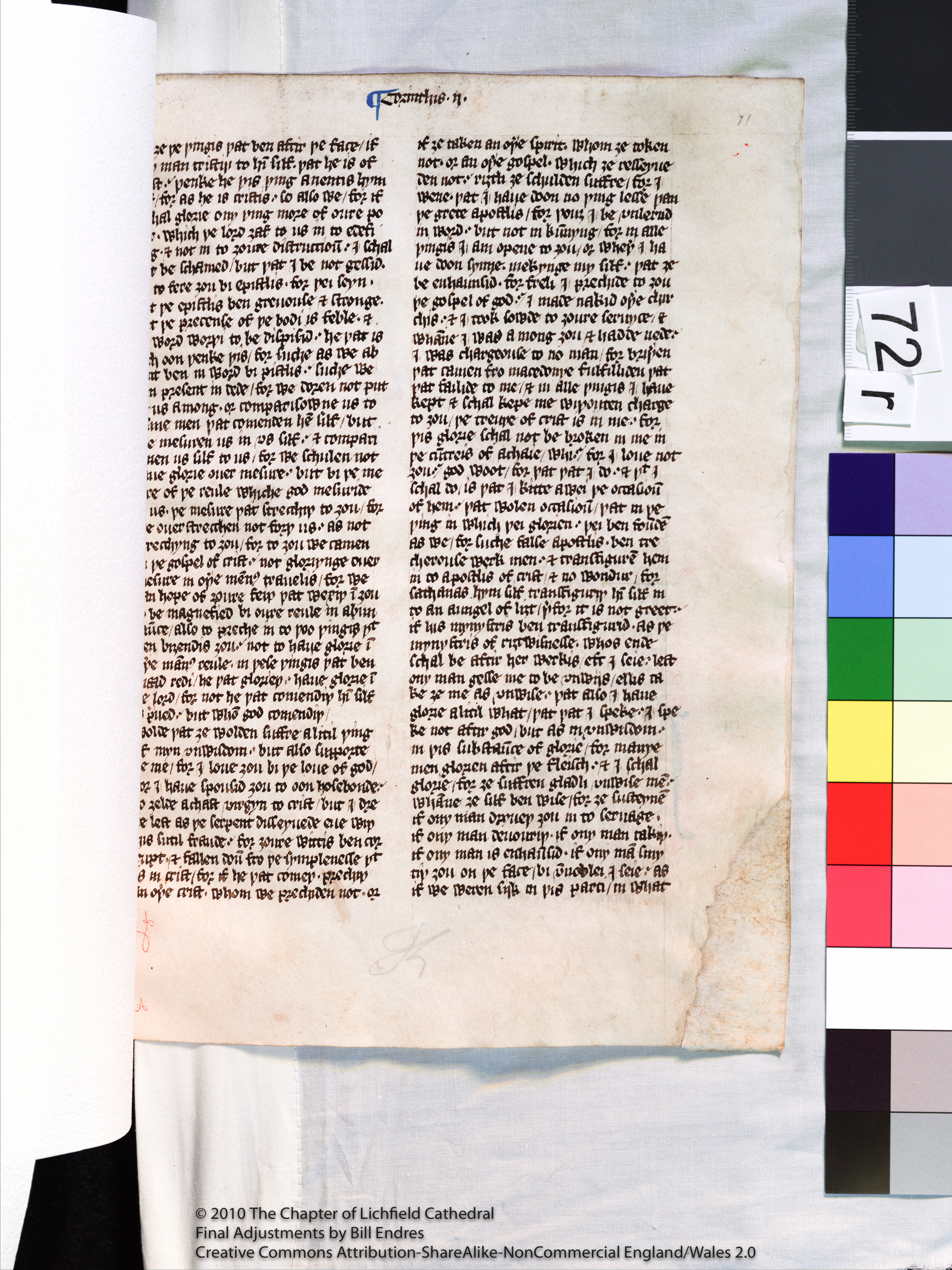
- c. 1395, John Wycliffe, John Purvey [et al.], transl., Bible (Wycliffite Bible (later version), MS Lich 10.)[6], published c. 1410, Coꝛinthis ·ii· 11:9, folio 72, recto, column 2; republished as Wycliffe's translation of the New Testament, Lichfield: Bill Endres, 2010:
- ⁊ whanne I was a mong ȝou ⁊ hadde nede .· I was chargeouſe to no man / foꝛ bꝛiþeren þat camen fro macedonye fulfilliden þat þat failide to me / ⁊ in alle þingis I haue kept and ſchal kepe me wiþouten charge to ȝou
- And when I was amongst you and felt need, I wasn't burdensome to anybody, because brothers who came from Macedonia provided whatever I didn't have. So in everything, I've kept, and will keep, myself from burdening you.
Derived terms
Descendants
References
- “al, adv. & conj.”, in MED Online, Ann Arbor, Mich.: University of Michigan, 2007.
Norwegian Bokmål
Etymology
Determiner
all (neuter singular alt, plural alle)
Derived terms
References
- “all” in The Bokmål Dictionary.
Norwegian Nynorsk
Alternative forms
- all’e, aill, aillj (dialectal)
- adl’u, add’e (differentiation)
Etymology
From Old Norse allr, from Proto-Germanic *allaz (“all”), from Proto-Indo-European *h₂el- (“all”). Cognate with Faroese and Icelandic allur, Swedish all and Danish al. Akin to English all.
Pronunciation
- IPA(key): /alː/
- IPA(key): /aʎː/ (dialectal palatalization, Trøndelag and Northern Norway)
- IPA(key): /adl/ (differentiation)
Adjective
all m or f (neuter alt, plural alle)
- all
- (in the plural) everybody
- over, at an end, finished
- Sumaren er all. ― The summer is at an end.
- 1773, E. Storm, Paa Kongjens Føssilsdag:
- Mæin kor tæk mid Drikkjen, Jula æ no oull, / Kagga vor aa Bolla æ baa tur aa koull?
- But where do we take the drink? Christmas is over, you know, / our keg and our bowl are both dry and cold.
- tired, exhausted, worn out; weak
- Skorne er alle ― The shoes are worn out.
- dead
- Han er mest all. ― He’s almost dead.
Declension
| singular | masculine | feminine | neuter | |||||||||||||||||||||||||||||||||||||||||||||||||||||||||||||||||||||||||||||||||||||||||||||||||||||||||||||||||||||||||||||||||||||||||||||||||||||||||||||||||||||||||||||||||||||||||||||||||||||||||||||||||||||||||||||||||||||||||||||||||||||||||||||||||||||||||||||||||||||||||||||||||||||||||||||||||||||||||||||||||||||||||||||||||||||||||||||||||||||||||||||||||||||||||||||||||||||||||||||||||||||||||||||||||||||||||||||||||||||||||||||||||||||||||||||||||||||||||||||||||||||||||||||||||||||||||||||||||||||||||||||||||||||||||||||||||||||||||||||||||||||||||||||||||||||||||||||||||||||||||||||||||||||||||||||||||||||||||||||||||||||||||||||||||||||||||||||||||||||||||||||||||||||||||||||||||||||||||||||||||||||||||||||||||||||||||||||||||||||||||||||||||||||||||||||||||||||||||||||||||||||||||||||||||||||||||||||||||||||||||||||||||||||||||||||||||||||||||||||||||||||||||||||||||||||||||||||||||||||||||||||||||||||||||||||||||||||||||||||||||||||||||||||||||||||||||||||||||||
|---|---|---|---|---|---|---|---|---|---|---|---|---|---|---|---|---|---|---|---|---|---|---|---|---|---|---|---|---|---|---|---|---|---|---|---|---|---|---|---|---|---|---|---|---|---|---|---|---|---|---|---|---|---|---|---|---|---|---|---|---|---|---|---|---|---|---|---|---|---|---|---|---|---|---|---|---|---|---|---|---|---|---|---|---|---|---|---|---|---|---|---|---|---|---|---|---|---|---|---|---|---|---|---|---|---|---|---|---|---|---|---|---|---|---|---|---|---|---|---|---|---|---|---|---|---|---|---|---|---|---|---|---|---|---|---|---|---|---|---|---|---|---|---|---|---|---|---|---|---|---|---|---|---|---|---|---|---|---|---|---|---|---|---|---|---|---|---|---|---|---|---|---|---|---|---|---|---|---|---|---|---|---|---|---|---|---|---|---|---|---|---|---|---|---|---|---|---|---|---|---|---|---|---|---|---|---|---|---|---|---|---|---|---|---|---|---|---|---|---|---|---|---|---|---|---|---|---|---|---|---|---|---|---|---|---|---|---|---|---|---|---|---|---|---|---|---|---|---|---|---|---|---|---|---|---|---|---|---|---|---|---|---|---|---|---|---|---|---|---|---|---|---|---|---|---|---|---|---|---|---|---|---|---|---|---|---|---|---|---|---|---|---|---|---|---|---|---|---|---|---|---|---|---|---|---|---|---|---|---|---|---|---|---|---|---|---|---|---|---|---|---|---|---|---|---|---|---|---|---|---|---|---|---|---|---|---|---|---|---|---|---|---|---|---|---|---|---|---|---|---|---|---|---|---|---|---|---|---|---|---|---|---|---|---|---|---|---|---|---|---|---|---|---|---|---|---|---|---|---|---|---|---|---|---|---|---|---|---|---|---|---|---|---|---|---|---|---|---|---|---|---|---|---|---|---|---|---|---|---|---|---|---|---|---|---|---|---|---|---|---|---|---|---|---|---|---|---|---|---|---|---|---|---|---|---|---|---|---|---|---|---|---|---|---|---|---|---|---|---|---|---|---|---|---|---|---|---|---|---|---|---|---|---|---|---|---|---|---|---|---|---|---|---|---|---|---|---|---|---|---|---|---|---|---|---|---|---|---|---|---|---|---|---|---|---|---|---|---|---|---|---|---|---|---|---|---|---|---|---|---|---|---|---|---|---|---|---|---|---|---|---|---|---|---|---|---|---|---|---|---|---|---|---|---|---|---|---|---|---|---|---|---|---|---|---|---|---|---|---|---|---|---|---|---|---|---|---|---|---|---|---|---|---|---|---|---|---|---|---|---|---|---|---|---|---|---|---|---|---|---|---|---|---|---|---|---|---|---|---|---|---|---|---|---|---|---|---|---|---|---|---|---|---|---|---|---|---|---|---|---|---|---|---|---|---|---|---|---|---|---|---|---|---|---|---|---|---|---|---|---|---|---|---|---|---|---|---|---|---|---|---|---|---|---|---|---|---|---|---|---|---|---|---|---|---|---|---|---|---|---|---|---|---|---|---|---|---|---|---|---|---|---|---|---|---|---|---|---|---|---|---|---|---|---|---|---|---|---|---|---|---|---|---|---|---|---|---|---|---|---|---|---|---|---|---|---|---|---|---|---|---|---|---|---|---|---|---|---|---|---|---|---|---|---|---|---|---|---|---|---|---|---|---|---|---|---|---|---|---|---|---|---|---|---|---|---|---|---|---|---|---|---|---|---|---|---|---|---|---|---|---|---|---|---|---|---|---|---|---|---|---|---|---|---|---|---|---|---|---|---|---|---|---|---|---|---|---|---|---|---|---|---|---|---|---|---|---|---|---|---|---|---|---|---|---|---|---|---|---|---|---|---|---|---|---|---|---|---|---|---|---|---|---|---|---|---|---|---|---|---|---|---|---|---|---|---|---|---|---|---|---|---|---|---|---|---|---|---|---|---|---|---|---|---|---|---|---|---|---|---|---|---|---|---|---|---|---|---|---|---|---|---|---|---|---|---|---|---|---|---|---|---|---|---|---|---|---|---|---|---|---|---|---|---|---|---|---|---|---|---|---|---|---|---|---|---|---|---|---|---|---|---|---|---|---|---|---|---|---|---|---|---|---|---|---|---|---|---|---|---|---|---|---|---|---|---|---|---|---|---|---|---|---|---|---|---|---|---|---|---|---|---|---|---|---|---|---|---|---|---|---|---|---|---|---|---|---|---|---|---|---|---|---|---|---|---|---|---|---|---|---|---|---|---|---|---|---|---|---|---|---|---|---|---|---|---|---|---|
| nominative-accusative | all | oll1 | alt | |||||||||||||||||||||||||||||||||||||||||||||||||||||||||||||||||||||||||||||||||||||||||||||||||||||||||||||||||||||||||||||||||||||||||||||||||||||||||||||||||||||||||||||||||||||||||||||||||||||||||||||||||||||||||||||||||||||||||||||||||||||||||||||||||||||||||||||||||||||||||||||||||||||||||||||||||||||||||||||||||||||||||||||||||||||||||||||||||||||||||||||||||||||||||||||||||||||||||||||||||||||||||||||||||||||||||||||||||||||||||||||||||||||||||||||||||||||||||||||||||||||||||||||||||||||||||||||||||||||||||||||||||||||||||||||||||||||||||||||||||||||||||||||||||||||||||||||||||||||||||||||||||||||||||||||||||||||||||||||||||||||||||||||||||||||||||||||||||||||||||||||||||||||||||||||||||||||||||||||||||||||||||||||||||||||||||||||||||||||||||||||||||||||||||||||||||||||||||||||||||||||||||||||||||||||||||||||||||||||||||||||||||||||||||||||||||||||||||||||||||||||||||||||||||||||||||||||||||||||||||||||||||||||||||||||||||||||||||||||||||||||||||||||||||||||||||||||||||||
| dative1 | ollom | ― | ollo | |||||||||||||||||||||||||||||||||||||||||||||||||||||||||||||||||||||||||||||||||||||||||||||||||||||||||||||||||||||||||||||||||||||||||||||||||||||||||||||||||||||||||||||||||||||||||||||||||||||||||||||||||||||||||||||||||||||||||||||||||||||||||||||||||||||||||||||||||||||||||||||||||||||||||||||||||||||||||||||||||||||||||||||||||||||||||||||||||||||||||||||||||||||||||||||||||||||||||||||||||||||||||||||||||||||||||||||||||||||||||||||||||||||||||||||||||||||||||||||||||||||||||||||||||||||||||||||||||||||||||||||||||||||||||||||||||||||||||||||||||||||||||||||||||||||||||||||||||||||||||||||||||||||||||||||||||||||||||||||||||||||||||||||||||||||||||||||||||||||||||||||||||||||||||||||||||||||||||||||||||||||||||||||||||||||||||||||||||||||||||||||||||||||||||||||||||||||||||||||||||||||||||||||||||||||||||||||||||||||||||||||||||||||||||||||||||||||||||||||||||||||||||||||||||||||||||||||||||||||||||||||||||||||||||||||||||||||||||||||||||||||||||||||||||||||||||||||||||||
| plural | masculine | feminine | neuter | |||||||||||||||||||||||||||||||||||||||||||||||||||||||||||||||||||||||||||||||||||||||||||||||||||||||||||||||||||||||||||||||||||||||||||||||||||||||||||||||||||||||||||||||||||||||||||||||||||||||||||||||||||||||||||||||||||||||||||||||||||||||||||||||||||||||||||||||||||||||||||||||||||||||||||||||||||||||||||||||||||||||||||||||||||||||||||||||||||||||||||||||||||||||||||||||||||||||||||||||||||||||||||||||||||||||||||||||||||||||||||||||||||||||||||||||||||||||||||||||||||||||||||||||||||||||||||||||||||||||||||||||||||||||||||||||||||||||||||||||||||||||||||||||||||||||||||||||||||||||||||||||||||||||||||||||||||||||||||||||||||||||||||||||||||||||||||||||||||||||||||||||||||||||||||||||||||||||||||||||||||||||||||||||||||||||||||||||||||||||||||||||||||||||||||||||||||||||||||||||||||||||||||||||||||||||||||||||||||||||||||||||||||||||||||||||||||||||||||||||||||||||||||||||||||||||||||||||||||||||||||||||||||||||||||||||||||||||||||||||||||||||||||||||||||||||||||||||||||
| nominative-accusative | alle | alla2 | alle, oll1 | |||||||||||||||||||||||||||||||||||||||||||||||||||||||||||||||||||||||||||||||||||||||||||||||||||||||||||||||||||||||||||||||||||||||||||||||||||||||||||||||||||||||||||||||||||||||||||||||||||||||||||||||||||||||||||||||||||||||||||||||||||||||||||||||||||||||||||||||||||||||||||||||||||||||||||||||||||||||||||||||||||||||||||||||||||||||||||||||||||||||||||||||||||||||||||||||||||||||||||||||||||||||||||||||||||||||||||||||||||||||||||||||||||||||||||||||||||||||||||||||||||||||||||||||||||||||||||||||||||||||||||||||||||||||||||||||||||||||||||||||||||||||||||||||||||||||||||||||||||||||||||||||||||||||||||||||||||||||||||||||||||||||||||||||||||||||||||||||||||||||||||||||||||||||||||||||||||||||||||||||||||||||||||||||||||||||||||||||||||||||||||||||||||||||||||||||||||||||||||||||||||||||||||||||||||||||||||||||||||||||||||||||||||||||||||||||||||||||||||||||||||||||||||||||||||||||||||||||||||||||||||||||||||||||||||||||||||||||||||||||||||||||||||||||||||||||||||||||||||
| dative1 | ollom | |||||||||||||||||||||||||||||||||||||||||||||||||||||||||||||||||||||||||||||||||||||||||||||||||||||||||||||||||||||||||||||||||||||||||||||||||||||||||||||||||||||||||||||||||||||||||||||||||||||||||||||||||||||||||||||||||||||||||||||||||||||||||||||||||||||||||||||||||||||||||||||||||||||||||||||||||||||||||||||||||||||||||||||||||||||||||||||||||||||||||||||||||||||||||||||||||||||||||||||||||||||||||||||||||||||||||||||||||||||||||||||||||||||||||||||||||||||||||||||||||||||||||||||||||||||||||||||||||||||||||||||||||||||||||||||||||||||||||||||||||||||||||||||||||||||||||||||||||||||||||||||||||||||||||||||||||||||||||||||||||||||||||||||||||||||||||||||||||||||||||||||||||||||||||||||||||||||||||||||||||||||||||||||||||||||||||||||||||||||||||||||||||||||||||||||||||||||||||||||||||||||||||||||||||||||||||||||||||||||||||||||||||||||||||||||||||||||||||||||||||||||||||||||||||||||||||||||||||||||||||||||||||||||||||||||||||||||||||||||||||||||||||||||||||||||||||||||||||||||
1 Rare or dialectal. 2 Unofficial today.
Derived terms
References
- “all” in The Nynorsk Dictionary.
Old English
Pronunciation
- IPA(key): /ɑll/, [ɑɫ]
Adjective
all (Anglian)
- alternative form of eall
Declension
| Singular | Masculine | Feminine | Neuter |
|---|---|---|---|
| Nominative | all | all | all |
| Accusative | alne | alle | all |
| Genitive | alles | alre | alles |
| Dative | allum | alre | allum |
| Instrumental | alle | alre | alle |
| Plural | Masculine | Feminine | Neuter |
| Nominative | alle | alla, alle | all |
| Accusative | alle | alla, alle | all |
| Genitive | alra | alra | alra |
| Dative | allum | allum | allum |
| Instrumental | allum | allum | allum |
Adverb
all
Old Irish
Etymology
From Proto-Celtic *ɸallom, from Proto-Indo-European *pels- (“stone”). Cognate with Old Norse fjall.[1]
Apparently originally a neuter o-stem, but forms indicating a neuter u-stem or a feminine ā-stem (the form that eventually won out in the later language) are also found.
Pronunciation
- IPA(key): /ˈal̪/
Noun
all n
Related terms
- ail (“boulder, rock”)
Descendants
Mutation
| radical | lenition | nasalization |
|---|---|---|
| all (pronounced with /h/ in h-prothesis environments) |
all | n-all |
Note: Certain mutated forms of some words can never occur in Old Irish.
All possible mutated forms are displayed for convenience.
References
- ^ Matasović, Ranko (2009), “fallo-”, in Etymological Dictionary of Proto-Celtic (Leiden Indo-European Etymological Dictionary Series; 9), Leiden: Brill, →ISBN, pages 120–21
Further reading
- Gregory Toner, Sharon Arbuthnot, Máire Ní Mhaonaigh, Marie-Luise Theuerkauf, Dagmar Wodtko, editors (2019), “1 all”, in eDIL: Electronic Dictionary of the Irish Language
Pennsylvania German
Etymology
From Middle High German and Old High German al. Compare German all, Dutch al, English all.
Adjective
all
Related terms
Swedish
Etymology
From Old Swedish alder, from Old Norse allr, from Proto-Germanic *allaz, from Proto-Indo-European *h₂el-.
Pronunciation
- IPA(key): /al/
Audio: (file)
Determiner
all (neuter allt, masculine alle, plural alla)
- all
- Drack du upp all mjölk?
- Did you drink all the milk?
Usage notes
All (with inflections) is used with mass nouns. The corresponding for nouns with ordinary plural is alla.
A masculine-looking form (alle) is virtually only retained in the fixed expressions alle man and allesamman (“everyone”).
See also
References
- all in Svensk ordbok (SO)
- all in Svenska Akademiens ordlista (SAOL)
- all in Svenska Akademiens ordbok (SAOB)
Welsh
Pronunciation
- (North Wales) IPA(key): /aɬ/
- (South Wales) IPA(key): /a(ː)ɬ/
Verb
all
- soft mutation of gall
Mutation
| radical | soft | nasal | aspirate |
|---|---|---|---|
| gall | all | ngall | unchanged |
Note: Certain mutated forms of some words can never occur in standard Welsh.
All possible mutated forms are displayed for convenience.
Yola
Adverb
all
- alternative form of aul
- 1867, “A YOLA ZONG”, in SONGS, ETC. IN THE DIALECT OF FORTH AND BARGY, number 1, page 84:
- Th’ weithest all curcagh, wafur, an cornee.
- You seem all snappish, uneasy, and fretful.
- 1867, “A YOLA ZONG”, in SONGS, ETC. IN THE DIALECT OF FORTH AND BARGY, number 7, page 86:
- Th' heiftem o' pley vell all ing to lug;
- The weight of the play fell into the hollow;
- 1867, “A YOLA ZONG”, in SONGS, ETC. IN THE DIALECT OF FORTH AND BARGY, number 9, page 88:
- A clugercheen gother: all, ing pile an in heep,
- A crowd gathered up: all, in pile and in heap,
- 1867, “A YOLA ZONG”, in SONGS, ETC. IN THE DIALECT OF FORTH AND BARGY, number 10, page 88:
- Oore hart cam' t' oore mouth, an zo w' all ee green;
- Our hearts came to our mouth, and so with all in the green;
References
- Jacob Poole (d. 1827) (before 1828), William Barnes, editor, A Glossary, With some Pieces of Verse, of the old Dialect of the English Colony in the Baronies of Forth and Bargy, County of Wexford, Ireland, London: J. Russell Smith, published 1867, page 84