aa
Acholi • Balinese • Bavarian • Bughotu • Dutch • East Central German • Estonian • Finnish • French • Gagauz • Indonesian • Inupiaq • Italian • Japanese • Javanese • Kankanaey • Ladin • Latvian • Lithuanian • Lun Bawang • Lutuv • Malay • Manx • Mbya Guarani • Middle English • Middle Welsh • Murui Huitoto • Navajo • Northern Sami • Norwegian • Norwegian Bokmål • Norwegian Nynorsk • Old Galician-Portuguese • Paraujano • Pennsylvania German • Scots • Stoney • Sundanese • Swedish • Tagalog • Tlingit • Võro • Votic • Yoruba • Zyphe
Page categories
Translingual
Etymology
Abbreviation of English Afar or Afar qafár.
Symbol
aa
See also
- Wiktionary’s coverage of Afar terms
English
Etymology 1
Alternative forms
Pronunciation
- (Received Pronunciation) IPA(key): /ˈɑː.ɑː/, [ˈɑː.ʔɑː], enPR: äʹä
Audio (Southern England): (file) - (General American) IPA(key): /ˈɑ.ɑ/, [ˈɑ.ʔɑ]
Noun
aa (uncountable)
- (volcanology) A form of lava flow associated with Hawaiian-type volcanoes, consisting of basaltic rock, usually dark-colored with a jagged and loose, clinkery surface. Compare pahoehoe. [From 19th c.]
- 1859, R. C. Haskell, American journal of science and arts, series XXVIII:
- We...saw ‘pahoihoi’ or solid lava forming, and also ‘aa’ or clinkers.
- 1944, Charles A. Cotton, Volcanoes as landscape forms:
- Cooling and solidification frequently takes a different course [...] in lava flows, producing the clinker-like ‘aa’ lava.
Translations
Etymology 2
Abbreviation.
Noun
aa
- Initialism of acetic acid.
- Initialism of acting age.
- (medicine) Initialism of alveolar-arterial.
- Initialism of aminoacetone.
- Initialism of amino acid.
- Initialism of approximate absolute.
- Initialism of arachidonic acid.
- Initialism of armature accelerator.
- Initialism of ascending aorta.
- Initialism of atomic absorption.
- Initialism of author's alteration.
- Initialism of average audience.
Adjective
aa (not comparable)
Etymology 3
Compare pp.
Noun
aa pl (plural only)
- Abbreviation of adjectives.
- Abbreviation of arteries.
Etymology 4
Contraction.
Adjective
aa
- Abbreviation of ana (“of each, equal parts”).
Etymology 5
Pronoun
aa
- (Northumbria, personal) I.
Acholi
Verb
aa
- to get up, to move after staying still
- to move away, to go away, to get lost
- to originate from, to come from (used in past tense)
Verb
aa (passive voice)
- to have originated from, to have come from (used in past tense)
- to have commenced from, to have started from
Verb
aa
References
- Blackings, Mairi John (2009), Acholi English – English Acholi Dictionary[1], Munich: LINCOM GmbH, →ISBN, pages 1-2
Balinese
Etymology
Inherited from Proto-Malayo-Polynesian *qaʀa.
Noun
aa (Balinese script ᬳᬳᭂ)
References
- “aa”, in Balinese–Indonesian Dictionary [Kamus Bahasa Bali–Indonesia] (in Balinese), Denpasar, Indonesia: The Linguistic Center of Bali Province [Balai Bahasa Provinsi Bali].
Bavarian
Alternative forms
- ah (spelling variant)
Etymology
From Old High German ouh, from Proto-Germanic *auk. Cognates include German auch, Dutch ook, Old Norse ok, also archaic English eke.
Pronunciation
Adverb
aa
- also; too; as well; either; neither (in addition to whatever or whoever has previously been listed)
- I wui aa a Eis. ― Stress on “aa”: I too want icecream.
- I wui aa a Eis. ― Stress on “Eis”: I want icecream, too.
- Schåff ma des aa? ― Stress on “aa”: Can we do that too?
- Used for emphasis.
- To confirm a preceding statement: really, actually, indeed, in fact, exactly (always unstressed)
- A jeder håd se dåcht, dåss er ned kummt, und so woar's aa. ― Everybody thought that he wouldn't come, and that's exactly what happened.
- I håb ka Ångst, es gibt jå aa kan Grund. ― I'm not scared, there really is no reason to be.
- To confirm a preceding statement by someone else: really, actually, indeed, in fact
- I wui aa a Eis. ― Stress on “wui”: I do indeed want icecream.
- Des is aa so. ― Stress on “is”: It really is like that.
- Emphasis on a preceding conjunction (often with no) (always stressed)
- Des Essn håd eana ned gschmeckt und mia aa ned. ― They didn't like the food and neither did I.
- I håb heit vui z'tuan und zan Årzt muaß i aa. ― I'm very busy today and I also have to go to the doctor.
- Er håd ned nur s'Gödbeasl, sondern aa no de Augnglasln ausgstraat. ― He not only lost his wallet, but also his glasses.
- Emphasis on a preceding negative statement: even (always stressed)
- Implies doubt in a yes-no question really (always unstressed)
- Kånn i des aa glaubn? ― Can I really believe this?
- Håst da des aa guad iwalegt? ― Have you really thought this through?
- Schåff ma des aa? ― Can we really do that?
- To imply that something is unreasonable; also used when expressing reproach, anger, astonishment, etc. (always unstressed)
- Wås miassn de aa ålle då durchfoahrn?! ― Why do they all have to pass through here?!
- Du muasst aa immer bei jedn Bledsinn mitmåchn. ― You always have to take part in any nonsense, don't you?
- Wäul's aa nia de Pappn hoidn kennts! ― That's because you never shut up!
- To confirm a preceding statement: really, actually, indeed, in fact, exactly (always unstressed)
- (implying an extreme example in the case mentioned, as compared to the implied reality): even (always stressed)
- Synonym: sogår
- Aa wånn's woahr is, is's no ka endguitiger Beweis. ― Even if this is true, it is no definite proof.
- Mia is des aa scho amoi passiert. ― It even happened to me once.
- as in whatever, whenever, however, etc. ever (always unstressed)
- Wås'd aa tuast, ana is immer besser. ― Whatever you do, someone will always do it better.
Bughotu
Verb
aa
- to open
- to be open
- to open mouth
References
- W. Ivens, Bugotu-English/English-Bugotu Concise Dictionary (1998)
Dutch
Pronunciation
Audio: (file)
Noun
aa f (plural aa's, diminutive aatje n)
- (especially in names) alternative spelling of a
East Central German
Etymology
Article
aa
- (Erzgebirgisch) a, an
Further reading
- Hendrik Heidler (11 June 2020), Hendrik Heidler's 400 Seiten: Echtes Erzgebirgisch: Wuu de Hasen Hoosn haaßn un de Hosen Huusn do sei mir drhamm: Das Original Wörterbuch: Ratgeber und Fundgrube der erzgebirgischen Mund- und Lebensart: Erzgebirgisch – Deutsch / Deutsch – Erzgebirgisch[2] (in German), 3. geänderte Auflage edition, Norderstedt: BoD – Books on Demand, →ISBN, →OCLC, page 13
Estonian
Interjection
aa
- An interjection expressing recognition -
- Aa, see oled sina.
- Oh, it's you.
- An interjection expressing understanding -
- Aa, saan aru.
- Ah, I understand.
Noun
aa (genitive aa, partitive aad)
Further reading
- “aa”, in [EKSS] Eesti keele seletav sõnaraamat [Descriptive Dictionary of the Estonian Language] (in Estonian) (online version), Tallinn: Eesti Keele Sihtasutus (Estonian Language Foundation), 2009
Finnish
Etymology 1
Pronunciation
- IPA(key): /ˈɑː/, [ˈɑ̝ː]
- Rhymes: -ɑː
- Syllabification(key): aa
- Hyphenation(key): aa
Noun
aa
Usage notes
- Speakers often use the corresponding forms of a-kirjain (“letter A, letter a”) instead of inflecting this word, especially in plural.
Declension
| Inflection of aa (Kotus type 18/maa, no gradation) | |||
|---|---|---|---|
| nominative | aa | aat | |
| genitive | aan | aiden aitten | |
| partitive | aata | aita | |
| illative | aahan | aihin | |
| singular | plural | ||
| nominative | aa | aat | |
| accusative | nom. | aa | aat |
| gen. | aan | ||
| genitive | aan | aiden aitten | |
| partitive | aata | aita | |
| inessive | aassa | aissa | |
| elative | aasta | aista | |
| illative | aahan | aihin | |
| adessive | aalla | ailla | |
| ablative | aalta | ailta | |
| allative | aalle | aille | |
| essive | aana | aina | |
| translative | aaksi | aiksi | |
| abessive | aatta | aitta | |
| instructive | — | ain | |
| comitative | See the possessive forms below. | ||
| Possessive forms of aa (Kotus type 18/maa, no gradation) | ||||||||||||||||||||||||||||||||||||||||||||||||||||||||||||||||||||||||||||||||||||||||||||||||||||||||||||||||||||||||||||||||||||||||||||||||||||||||||||||||||||||||||||||||||||||||||||||||||||||||||||||||||||||||||||||||||||||||||||||||||||||||||||||||||||||||||||||||||||||||||||||||||||||||||||||||||||||||||||||||||||||||||||||||||||||||||||||
|---|---|---|---|---|---|---|---|---|---|---|---|---|---|---|---|---|---|---|---|---|---|---|---|---|---|---|---|---|---|---|---|---|---|---|---|---|---|---|---|---|---|---|---|---|---|---|---|---|---|---|---|---|---|---|---|---|---|---|---|---|---|---|---|---|---|---|---|---|---|---|---|---|---|---|---|---|---|---|---|---|---|---|---|---|---|---|---|---|---|---|---|---|---|---|---|---|---|---|---|---|---|---|---|---|---|---|---|---|---|---|---|---|---|---|---|---|---|---|---|---|---|---|---|---|---|---|---|---|---|---|---|---|---|---|---|---|---|---|---|---|---|---|---|---|---|---|---|---|---|---|---|---|---|---|---|---|---|---|---|---|---|---|---|---|---|---|---|---|---|---|---|---|---|---|---|---|---|---|---|---|---|---|---|---|---|---|---|---|---|---|---|---|---|---|---|---|---|---|---|---|---|---|---|---|---|---|---|---|---|---|---|---|---|---|---|---|---|---|---|---|---|---|---|---|---|---|---|---|---|---|---|---|---|---|---|---|---|---|---|---|---|---|---|---|---|---|---|---|---|---|---|---|---|---|---|---|---|---|---|---|---|---|---|---|---|---|---|---|---|---|---|---|---|---|---|---|---|---|---|---|---|---|---|---|---|---|---|---|---|---|---|---|---|---|---|---|---|---|---|---|---|---|---|---|---|---|---|---|---|---|---|---|---|---|---|---|---|---|---|---|---|---|---|---|---|---|---|---|---|---|---|---|---|---|---|---|---|---|---|---|---|---|---|---|---|---|---|---|---|---|
| ||||||||||||||||||||||||||||||||||||||||||||||||||||||||||||||||||||||||||||||||||||||||||||||||||||||||||||||||||||||||||||||||||||||||||||||||||||||||||||||||||||||||||||||||||||||||||||||||||||||||||||||||||||||||||||||||||||||||||||||||||||||||||||||||||||||||||||||||||||||||||||||||||||||||||||||||||||||||||||||||||||||||||||||||||||||||||||||
Synonyms
Derived terms
Etymology 2
Either crosslinguistic or borrowed from any of the many European languages it appears in.
Pronunciation
- IPA(key): /ˈɑː/, [ˈɑ̝ː]
- Rhymes: -ɑː
- Syllabification(key): aa
- Hyphenation(key): aa
Interjection
aa
French
Etymology
Pronunciation
Noun
aa m (plural aas)
Gagauz
Etymology
Inherited from Old Anatolian Turkish آغْ (aġ), from Proto-Turkic *āg. Compare Turkish ağ.
Pronunciation
- IPA(key): /ɑː/
Noun
aa (definite accusative [please provide], plural aalar)
References
- Kopuşçu M. İ., Todorova S. A., Kiräkova T.İ., editors (2019), Gagauzça-rusça sözlük: klaslar 5-12, Komrat: Gagauziya M.V. Maruneviç adına Bilim-Aaraştırma merkezi, →ISBN, page 8
Indonesian
Etymology
Pronunciation
- IPA(key): /ˈa.a/, [ˈa.(ʔ)a]
Noun
aa (plural aa-aa)
Synonyms
- (older brother): see Thesaurus:abang
Inupiaq
Etymology 1
Interjection
aa
- yes, I know
- I agree: expresses listener's agreement with storyteller or speaker
Derived terms
- aaqanuq
Etymology 2
Interjection
aa
- expresses exasperation, criticism or dismay over what another person does or says, said in breathy voice
- expression of surprise or awe
Derived terms
- aakhaa
- aallaalii
Italian
Etymology
Pronunciation
- IPA(key): /ˈa.a/
- Rhymes: -aa
- Hyphenation: à‧a
Noun
aa f (invariable)
- (volcanology) aa (type of lava flow)
- Synonym: afrolite
Further reading
- aa in Treccani.it – Vocabolario Treccani on line, Istituto dell'Enciclopedia Italiana
- aa in Dizionario Italiano Olivetti, Olivetti Media Communication
Japanese
Romanization
aa
Javanese
Romanization
aa
- romanization of ꦲꦲ
Kankanaey
Pronunciation
- IPA(key): /ʔaˈa/ [ʔʌˈa] (“amazement”)
- Rhymes: -a
- IPA(key): /ˈʔaa/ [ˈʔaː.ʌ] (“go to the devil”)
- Rhymes: -aa
- Syllabification: a‧a
Interjection
aá
- ah! (denoting amazement)
Noun
áa
- (derogatory) act of going to the devil
Derived terms
- inaa
- inaadaka
References
- Morice Vanoverbergh (1933), “aa”, in A Dictionary of Lepanto Igorot or Kankanay. As it is spoken at Bauco (Linguistische Anthropos-Bibliothek; XII)[3], Mödling bei Wien, St. Gabriel, Österreich: Verlag der Internationalen Zeitschrift „Anthropos“, →OCLC, page 1
Ladin
Etymology
From Latin ārea. Compare Italian aia.
Noun
aa f (plural [please provide])
Latvian
Interjection
aa
- yeah, uh-huh (expression of agreement, understanding)
- - Vai vēlies ēst? – Aa.
- - Do you want to eat? - Yeah.
Lithuanian
Etymology
Compare Russian ага (aga), and English uh-huh.
Pronunciation
- (aà) IPA(key): /ɐ.ɐ/
- (aã) IPA(key): /ɐ.aː/
Interjection
aà, aã
Synonyms
Further reading
- “aa”, in Lietuvių kalbos žodynas [Dictionary of the Lithuanian language], lkz.lt, 1941–2026
Lun Bawang
Pronunciation
- IPA(key): /ˈɔː/
Determiner
aa
Synonyms
Lutuv
Etymology
From Proto-Kuki-Chin *ʔaar, from Proto-Tibeto-Burman *haːr
Noun
aa
Malay
Particle
aa
- (text messaging, Internet slang) alternative form of -lah
- 2024 February 24, @syynysa, X (formerly Twitter)[4] (post), archived from the original on 6-2-2026:
- pening aa setiap sem nk kena tukar kelas
- [Peninglah, setiap semester nak kena tukar kelas.]
- I'm so bewildered that every semester need to change classroom.
Manx
Etymology
From Old Irish oä, comparative form of oäc, from Proto-Celtic *yuwankos (compare Welsh ieuanc), from Proto-Indo-European *h₂yuh₁n̥ḱós (compare English young).
Pronunciation
- IPA(key): /ɛː/
Adjective
aa
- comparative degree of aeg (“young, adolescent, immature”)
Mbya Guarani
Adverb
aa
Middle English
Etymology
Borrowed from Old Norse á, from Proto-Germanic *ahwō (“water, stream”). Doublet of ee.
Pronunciation
- IPA(key): /aː/
Noun
aa
- (Late Middle English, hapax legomenon) river, stream (in place name)
References
- “ā, n.2”, in MED Online, Ann Arbor, Mich.: University of Michigan, 2007.
Middle Welsh
Pronunciation
- IPA(key): /ˈa.a/, /aː/
Verb
aa
Murui Huitoto
Alternative forms
- a (superseded)
Pronunciation
- IPA(key): [ˈaː]
- Hyphenation: aa
Adverb
aa
Related terms
References
- Shirley Burtch (1983), Diccionario Huitoto Murui (Tomo I) (Linguistica Peruana No. 20)[5] (in Spanish), Yarinacocha, Peru: Instituto Lingüístico de Verano, page 19
- Katarzyna Izabela Wojtylak (2017), A grammar of Murui (Bue): a Witotoan language of Northwest Amazonia.[6], Townsville: James Cook University press (PhD thesis), page 145
Navajo
Postposition
aa
- third-person indefinite of baa
Northern Sami
Interjection
aa
Norwegian
Letter
aa
- obsolete spelling of å
Norwegian Bokmål
Letter
aa
- obsolete spelling of å
Norwegian Nynorsk
Alternative forms
- Aa (letter and noun, upper case)
Conjunction
aa
Interjection
aa
- obsolete typography of å
Letter
aa (upper case Aa)
- obsolete typography of å
Noun
aa f (definite singular aai, indefinite plural aaer or aair, definite plural aaerne or aaine)
- obsolete typography of å
Particle
aa
- obsolete typography of å
Preposition
aa
- obsolete typography of å
References
- Ivar Aasen (1850), “aa”, in Ordbog over det norske Folkesprog (in Danish), Oslo: Samlaget, published 2000
Old Galician-Portuguese
Etymology 1
Alternative forms
Contraction
aa f
- contraction of a + a, literally “to/at the”
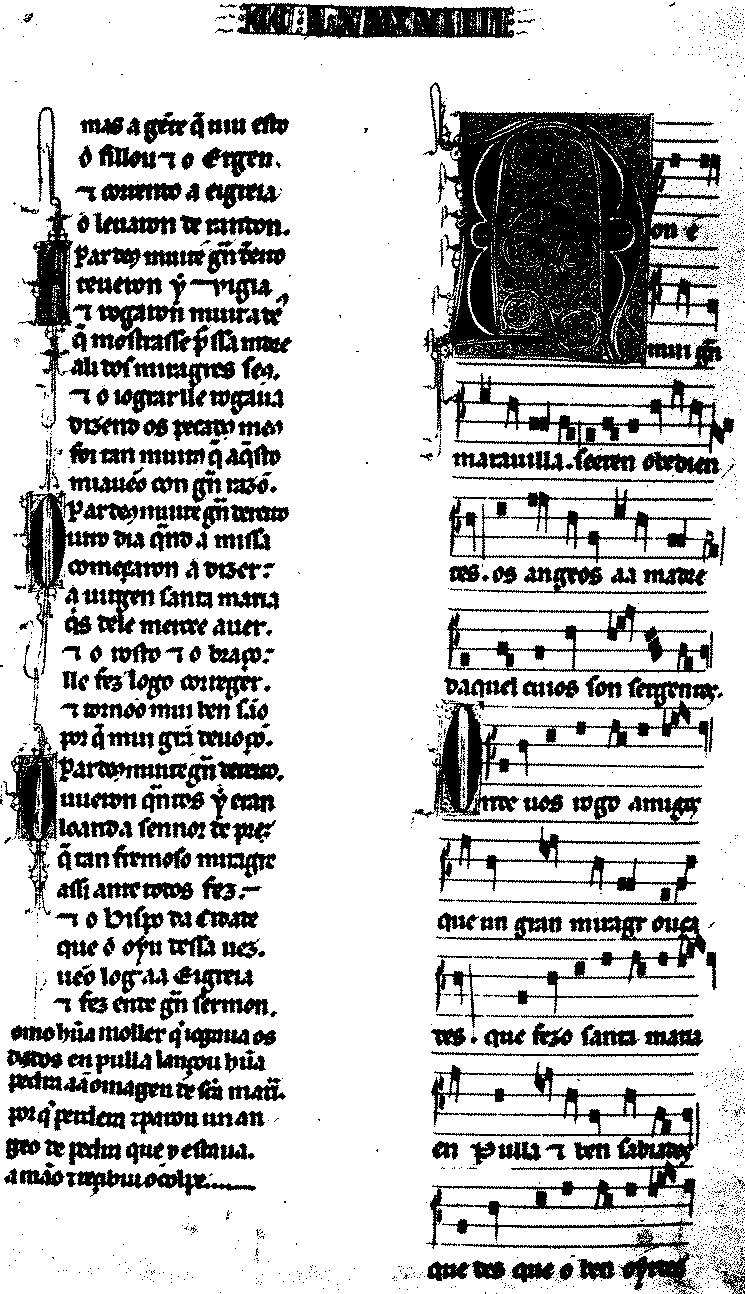
- a. 1284, Alfonso X of Castile, Cantigas de Santa Maria, Códice de los músicos, cantiga 294 (facsimile):
- [C]omo hũa moller q̇ iogaua os dados en pulla lançou hũa pedra aa omagen de ſṫa maṙi[a] poꝛ q̇ perdera ⁊ parou un angeo de pedra que y eſtaua a mão ⁊ reçibiu o colpe.
- [H]ow a woman who was playing the dices in Apulia threw a stone at the statue of Holy Mary because she had lost, and an angel of stone which was there reached out its hand and received the blow.
- [C]omo hũa moller q̇ iogaua os dados en pulla lançou hũa pedra aa omagen de ſṫa maṙi[a] poꝛ q̇ perdera ⁊ parou un angeo de pedra que y eſtaua a mão ⁊ reçibiu o colpe.
Descendants
Etymology 2
Inherited from Latin ala (“wing”).
Noun
aa f (plural aas)
- wing
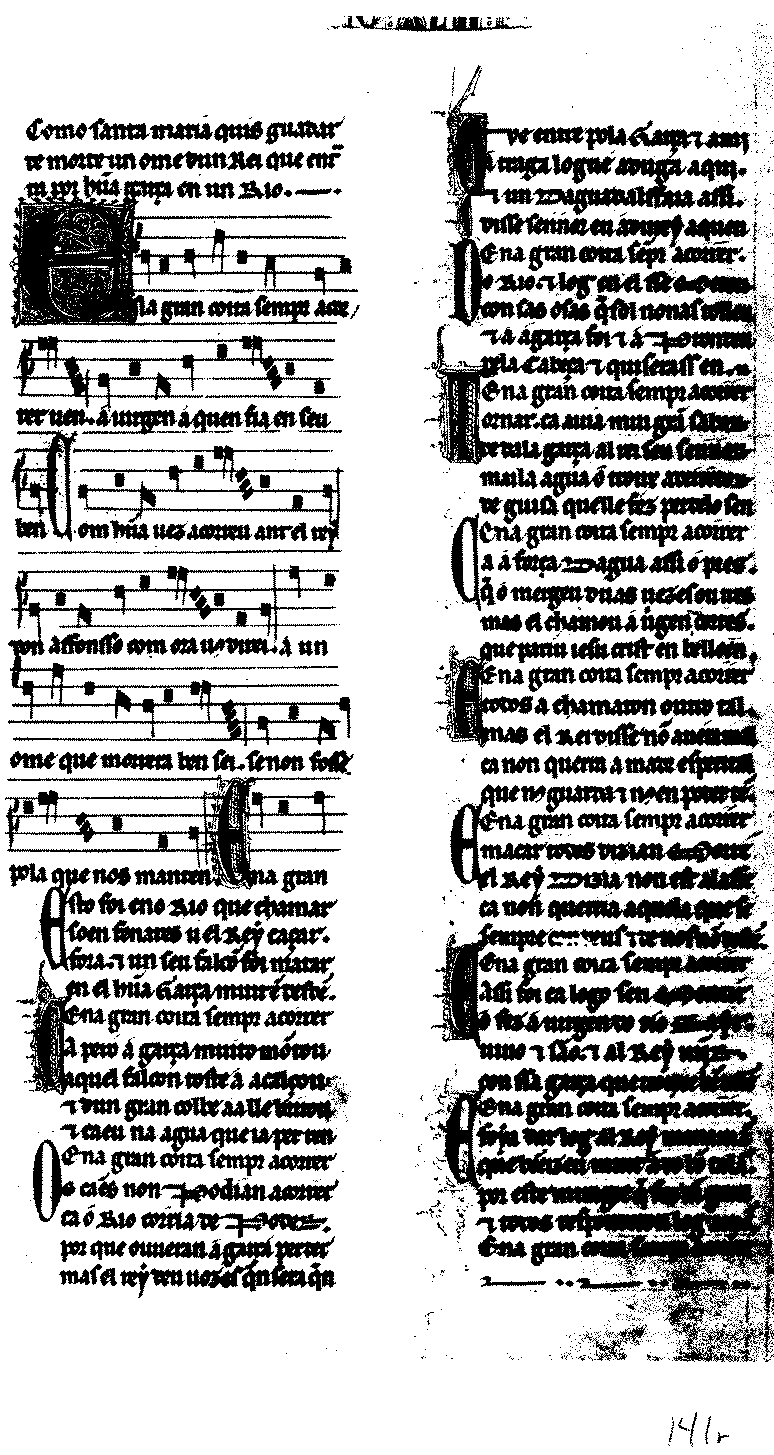
- a. 1284, Alfonso X of Castile, Cantigas de Santa Maria, Códice de los músicos, cantiga 142 (facsimile):
- ⁊ dun gran colbe aa lle bꝛitou
- And with a powerful blow, broke its wing
Descendants
Paraujano
Pronunciation
- IPA(key): /ˈaː/
- Rhymes: -aː
- Syllabification: aa
Adverb
aa
- there (far from the speaker)
References
- Álvarez, José; Bravo, María (2008), “aa”, in Diccionario básico de la lengua añú [Basic dictionary of the Añú language][7], Maracaibo, Venezuela: University of Zulia, →ISBN, page 41.
Pennsylvania German
Pronunciation
Etymology 1
From Old High German ouh, from Proto-Germanic *auk; cognate with German auch, Dutch ook, Old English ēac.
Alternative forms
- auch (literary)
Adverb
aa
- also, too
- 2004, Ammon Weber, edited by C. Richard Baum, Joshua R. Brown, The Comprehensive Pennsylvania German Dictionary, volume 1, 219 Mill Road, Morgantown, PA 19543-9516: Masthof Press, →ISBN, page 1:
- Ich bin mol in der Busche[1] gange. Ich bin aa. / Ich hab mei Ax mitgenumme. Ich hab aa. / Ich hab en Baam umghackt. Ich hab aa. / Ich hab ihn heemgschleeft. Ich hab aa. / Ich hab en Seidrog rausgmacht. Ich hab aa. / Die Sei hen rausgfresse. Ich hab aa.
- I went into the woods. I did, too. / I took my axe with me. I did, too. / I chopped down a tree. I did, too. / I dragged it home. I did, too. / I made a pig feeding though out of it. I did, too. / The pigs ate out of it. I did, too.
- to be sure, certainly, indeed
Interjection
aa
- (rare) to be sure!
- Synonyms: allerdings, doch, freilich, ei, ya
Etymology 2
From Old High German ana, from Proto-Germanic *ana, from Proto-Indo-European *h₂en- (“up, on high”). Compare German an, Dutch aan, English on.
Adverb
aa
- on (of a light)
- 1925 May 4, Pumpernickel Bill (William Stahley Troxell), The Allentown Morning Call[8]; republished as C. Richard Baum, Joshua R. Brown, editors, The Comprehensive Pennsylvania German Dictionary, volume 1, 219 Mill Road, Morgantown, PA 19543-9516: Masthof Press, 2004, →ISBN, page 1:
- in session (of a school)
- burning (of a fire)
- on, starting
Footnotes
References
- Beam, C. R., Brown, J. R., & Trout, J. L. (2004). The Comprehensive Pennsylvania German Dictionary: Vol. 1 (A) (1st ed.). Masthof Press.
- Pennsylvania Dutch Dictionary. (n.d.). https://padutchdictionary.com/#q=aa
Scots
Adjective
aa
References
- “aa, adj.”, in The Dictionary of the Scots Language, Edinburgh: Scottish Language Dictionaries, 2004–present, →OCLC.
Stoney
Noun
aa
Sundanese
Noun
aa
Swedish
Alternative forms
Etymology
A relaxed pronunciation of ja.
Pronunciation
- IPA(key): /²ɑːa/
Adverb
aa (not comparable)
- (colloquial) Expresses agreement or affirmation; yeah, yes
- Antonym: nä
- – Såg du tricket han gjorde? – Aa, helt sjukt!
- – Did you see the trick he did? – Yeah, crazy!
- – Har du matat kaninerna? – Aa, det har jag.
- – Have you fed the rabbits? – Yes, I have.
Usage notes
Often doubly emphasized – compare mhm.
Tagalog
Etymology 1
From the reduplication of Hokkien 齷 / 龌 (ak, “dirty”), according to Manuel (1948). Compare Indonesian eek. False cognate of Greenlandic a'a.
Pronunciation
- (Standard Tagalog) IPA(key): /ʔaˈʔaʔ/ [ʔɐˈʔaʔ], /ˈʔaʔaʔ/ [ˈʔaː.ʔɐʔ]
- Rhymes: -aʔ, -aʔaʔ
- Syllabification: a‧a
Noun
aâ or aà (Baybayin spelling ᜀᜀ) (childish)
Derived terms
Etymology 2
Pronunciation
- (Standard Tagalog) IPA(key): /ˈʔaʔa/ [ˈʔaː.ʔɐ]
- Rhymes: -aʔa
- Syllabification: a‧a
Interjection
aa (Baybayin spelling ᜀᜀ)
- an exclamation expressing warning
See also
Etymology 3
Pronunciation
- (Standard Tagalog) IPA(key): /ʔaˈʔaʔ/ [ʔɐˈʔaʔ]
- Rhymes: -aʔ
- Syllabification: a‧a
Noun
aâ (Baybayin spelling ᜀᜀ) (obsolete)
- name of the Baybayin letter ᜀ, corresponding to "a"
See also
Further reading
- “aa”, in Pambansang Diksiyonaryo | Diksiyonaryo.ph, 2018
- Manuel, E. Arsenio (1948), Chinese elements in the Tagalog language: with some indication of Chinese influence on other Philippine languages and cultures and an excursion into Austronesian linguistics, Manila: Filipiniana Publications, page 12
- Douglas, Carstairs (1873), “ok [R. ak, dirty].”, in Chinese-English Dictionary of the Vernacular or Spoken Language of Amoy, With the Principal Variations of the Chang-chew and Chin-chew Dialects. (overall work in Hokkien and English), London: Trübner & Co., page 352; New Edition, With Corrections by the Author., Thomas Barclay, Lîm Iàn-sîn 林燕臣, London: Publishing Office of the Presbyterian Church of England, 1899, page 352
- Santos, Fr. Domingo de los (1835), Vocabulario de la lengua Tagala, primera y segunda parte. En la primera, se pone primero el Castellano, y despues el Tagalo. Y en la segunda al contrario, que son las raíces simples con sus acentos.[9] (overall work in Spanish and Classical Tagalog), Manila: La Imprenta nueva de D. José María Dayot, por Tomás Oliva.
- San Buena Ventura, Fr. Pedro de (1613), Vocabulario de lengua tagala. El romance castellano puesto primero. Primera, y segunda parte.[10] (overall work in Early Modern Spanish and Classical Tagalog), as directed by Gov. Gen. Juan de Silva, Pila, Laguna: La noble Villa de Pila, por Tomás Pinpin y Domingo Loag., page 1:
- A) AA yaon (pc) la primera letra del. a.b.c. Tagalog. Eſta letra A. ſegun. S. Iſidoro (lib.r. Ethimolo) es la primera letra de todas las lẽguas. Los Latinos y Eſpañoles ſolos la nombran, como la eſcriuen, y la eſcriuen, como la nombran, las de mas naciones no, q̃ ſõ muy diferentes ẽ eſto. Porque el Hebreo la llama Aleph, el Griego. Alpha, el Arabigo. Alipha, &t, y nuestros Tagalos. A ,|, Aayaon ,|; [ᜀ], y eſto [ſolo para] nombralla de porſi, vt, anung ng̃alã [niring] litra? como ſellama eſta letra? ℞, Aayaon, mas en eſcritura, y en lo que hablan, raçonando, [la eſcriuẽ], y [pronuncian] ſimplemẽte, como ſuena, A.
Tlingit
Pronunciation
- IPA(key): /aː/
Letter
aa (upper case Aa)
See also
- Canada:
- (Latin-script letters) A a, Á á, À à, Â â, Ch ch, Chʼ chʼ, D d, Dł dł, Dz dz, E e, É é, È è, Ê ê, G g, Gw gw, Gh gh, Ghw ghw, H h, I i, Í í, Ì ì, Î î, J j, K k, Kw kw, Kʼ kʼ, Kʼw kʼw, Kh kh, Khw khw, Khʼ khʼ, Khʼw khʼw (L l), Ł ł, Łʼ łʼ (M m), N n (O o), S s, Sʼ sʼ, Sh sh, T t, Tʼ tʼ, Tl tl, Tlʼ tlʼ, Ts ts, Tsʼ tsʼ, U u, Ú ú, Ù ù, Û û, W w, X x, Xw xw, Xʼ xʼ, Xʼw xʼw, Xh xh, Xhw xhw, Xhʼ xhʼ, Xhʼw xhʼw, Y y (Ÿ ÿ), ․
- US:
- (Latin-script letters) A a, Á á, Aa aa, Áa áa, Ch ch, Chʼ chʼ, D d, Dl dl, Dz dz, E e, É é, Ee ee, Ée ée, Ei ei, Éi éi, G g, Gw gw, G̱ g̱, G̱w g̱w, H h, I i, Í í, J j, K k, Kw kw, Kʼ kʼ, Kʼw kʼw, Ḵ ḵ, Ḵw ḵw, Ḵʼ ḵʼ, Ḵʼw ḵʼw, L l, Lʼ lʼ (Ḻ ḻ, M m), N n (O o), Oo oo, Óo óo, S s, Sʼ sʼ, Sh sh, T t, Tʼ tʼ, Tl tl, Tlʼ tlʼ, Ts ts, Tsʼ tsʼ, U u, Ú ú, W w, X x, Xw xw, Xʼ xʼ, Xʼw xʼw, X̱ x̱, X̱w x̱w, X̱ʼ x̱ʼ, X̱ʼw x̱ʼw, Y y (Ÿ ÿ, Y̱ y̱), ․
Võro
Noun
aa (genitive [please provide], partitive [please provide])
Inflection
This noun needs an inflection-table template.
Votic
Etymology
Probably borrowed from Russian ага (aga).
Pronunciation
- (Luutsa, Liivtšülä) IPA(key): /ˈɑː/, [ˈɑː]
- Rhymes: -ɑː
- Hyphenation: aa
Interjection
aa
References
- Hallap, V.; Adler, E.; Grünberg, S.; Leppik, M. (2012), “aa”, in Vadja keele sõnaraamat [A dictionary of the Votic language], 2nd edition, Tallinn
Yoruba
Etymology 1
Pronunciation
- IPA(key): /àá/
Contraction
àá
- contraction of àwa + á, literally “We'll”
- Àá lọ sí Amẹ́ríkà ní oṣù tí ó ń bọ̀.
- We'll be going to the U.S. next month.
Etymology 2
Pronunciation
- IPA(key): /áá/
Contraction
áá
- contraction of òun + á, literally “He'll, she'll, it'll”
- Áá rí wa l'ọ́jọ́ márùn-ún òní.
- She'll be seeing us four days from now.
Zyphe
Noun
aa
References
- Samson Alexander Lotven (2021) The Sound Systems of Zophei Dialects and Other Maraic Languages (Dissertation)[11]