sino
Cebuano
Pronunciation
- Hyphenation: si‧no
- IPA(key): /ˈsino/ [ˈs̪i.n̪o]
Noun
sino
Esperanto
Etymology
From Latin sinus (“bosom; pocket, lap”). Compare Italian seno, French sein. Doublet of sinuso.
Pronunciation
- IPA(key): /ˈsino/
Audio: (file) - Rhymes: -ino
- Syllabification: si‧no
Noun
sino (accusative singular sinon, plural sinoj, accusative plural sinojn)
- lap (upper legs of a seated person)
- La knabo sidis sur la sino de sia avino.
- The boy sat on his grandmother's lap.
Derived terms
- sinokomputilo (“laptop”)
Galician
Etymology
From Old Galician-Portuguese sino (13th century, Cantigas de Santa Maria), from Late Latin signum (“bell”), from Latin signum (“sign”), from Proto-Indo-European *sek- (“to cut”) or *sekʷ- (“to follow”). Cognate with Portuguese sino.
Pronunciation
- IPA(key): /ˈsi.no̝/
Noun
sino m (plural sinos)
Derived terms
- Monte do Sino
- sineiro
- Sineiro
- Sino
References
- Seoane, Ernesto Xosé González; Granja, María Álvarez de la; Agrelo, Ana Isabel Boullón (2006–2022), “sino”, in Dicionario de Dicionarios do galego medieval [Dictionary of dictionaries of Medieval Galician] (in Galician), Santiago de Compostela: Instituto da Lingua Galega
- Barreiro, Xavier Varela; Guinovart, Xavier Gómez (2006–2018), “sino”, in Corpus Xelmírez: corpus lingüístico da Galicia medieval [Corpus Xelmírez: linguistic corpus of Medieval Galicia] (in Galician), Santiago de Compostela: Instituto da Lingua Galega
- Antón Luís Santamarina Fernández, editor (2006–2013), “sino”, in Dicionario de Dicionarios da lingua galega [Dictionary of Dictionaries of the Galician language] (in Galician), Santiago de Compostela: Instituto da Lingua Galega
- Antón Luís Santamarina Fernández, Ernesto Xosé González Seoane, María Álvarez de la Granja, editors (2003–2018), “sino”, in Tesouro informatizado da lingua galega (in Galician), Santiago de Compostela: Instituto da Lingua Galega
- Rosario Álvarez Blanco, editor (2014–2024), “sino”, in Tesouro do léxico patrimonial galego e portugués (in Galician), Santiago de Compostela: Instituto da Lingua Galega, →ISSN
Inari Sami
Etymology
(This etymology is missing or incomplete. Please add to it, or discuss it at the Etymology scriptorium.)
Noun
siṇo
Inflection
| Even o-stem, ṇ-n gradation | ||||||||||||||||||||||
|---|---|---|---|---|---|---|---|---|---|---|---|---|---|---|---|---|---|---|---|---|---|---|
| Nominative | siṇo | |||||||||||||||||||||
| Genitive | sino | |||||||||||||||||||||
| Singular | Plural | |||||||||||||||||||||
| Nominative | siṇo | sinoh | ||||||||||||||||||||
| Accusative | sino | sinoid | ||||||||||||||||||||
| Genitive | sino | sinoi | ||||||||||||||||||||
| Illative | siṇon | sinoid | ||||||||||||||||||||
| Locative | siinoost | sinoin | ||||||||||||||||||||
| Comitative | sinoin | sinoiguin | ||||||||||||||||||||
| Abessive | sinottáá | sinoittáá | ||||||||||||||||||||
| Essive | sinnoon | |||||||||||||||||||||
| Partitive | sinnood | |||||||||||||||||||||
| ||||||||||||||||||||||
Further reading
- Eino Koponen, Klaas Ruppel, Kirsti Aapala, editors (2002–2008), Álgu database: Etymological database of the Saami languages[1], Helsinki: Research Institute for the Languages of Finland
Italian
Etymology
(This etymology is missing or incomplete. Please add to it, or discuss it at the Etymology scriptorium.)
Pronunciation
- IPA(key): /ˈsi.no/
- Rhymes: -ino
- Hyphenation: sì‧no
Preposition
sino
- alternative form of fino
Derived terms
Anagrams
Ladino
Alternative forms
- sinón
Etymology
Inherited from Old Spanish sinon.
Conjunction
sino (Hebrew spelling סינו)[1]
- but (rather)
- 2002, Gad Nassi, editor, En Tierras Ajenas Yo Me Vo Murir: Tekstos Kontemporanos en Djudeo-espaniol : Leyenda de Una Lingua - Haketia - Kuentos. Memorias - Meliselda - Oki Oki[2], Isis, →ISBN, page 361:
- ‘Yo no so hombre, sino mujer djudia i ainda esto muchacha i atada kon un mansevo.’
- I am no man, but rather a Jewess and I remain a maiden committed with a lad.’
- if not; otherwise
- 2002, Gad Nassi, editor, En Tierras Ajenas Yo Me Vo Murir: Tekstos Kontemporanos en Djudeo-espaniol : Leyenda de Una Lingua - Haketia - Kuentos. Memorias - Meliselda - Oki Oki[3], Isis, →ISBN, page 81:
- “Senior,” disho Yaakov, “kere merkar la lolana? Sino la vendere a alungo de otro.”
- ‘Sir,’ said Jacob, ‘want to buy the dress? Otherwise I shall sell it to somebody else.’
References
Latin
Etymology
From Proto-Italic *sinō, from Proto-Indo-European *tḱi-né-ti, denominative present of the root *tḱey- (“to build, cultivate”).[1]
Pronunciation
- (Classical Latin) IPA(key): [ˈsɪ.noː]
- (modern Italianate Ecclesiastical) IPA(key): [ˈsiː.no]
Verb
sinō (present infinitive sinere, perfect active sīvī or siī, supine situm); third conjugation
Conjugation
| indicative | singular | plural | |||||||||||
|---|---|---|---|---|---|---|---|---|---|---|---|---|---|
| first | second | third | first | second | third | ||||||||
| active | present | sinō | sinis | sinit | sinimus | sinitis | sinunt | ||||||
| imperfect | sinēbam | sinēbās | sinēbat | sinēbāmus | sinēbātis | sinēbant | |||||||
| future | sinam | sinēs | sinet | sinēmus | sinētis | sinent | |||||||
| perfect | sīvī, siī |
sīvistī, sīstī, siistī1 |
sīvit, sīt, siit1 |
sīvimus, sīmus, siimus1 |
sīvistis, sīstis, siistis1 |
sīvērunt, sīrunt, sīvēre, siērunt, siēre1 | |||||||
| pluperfect | sīveram, sīram, sieram1 |
sīverās, sīrās, sierās1 |
sīverat, sīrat, sierat1 |
sīverāmus, sīrāmus, sierāmus1 |
sīverātis, sīrātis, sierātis1 |
sīverant, sīrant, sierant1 | |||||||
| future perfect | sīverō, sīrō, sierō1 |
sīveris, sīris, sieris1 |
sīverit, sīrit, sierit1 |
sīverimus, sīrimus, sierimus1 |
sīveritis, sīritis, sieritis1 |
sīverint, sīrint, sierint1 | |||||||
| passive | present | sinor | sineris, sinere |
sinitur | sinimur | siniminī | sinuntur | ||||||
| imperfect | sinēbar | sinēbāris, sinēbāre |
sinēbātur | sinēbāmur | sinēbāminī | sinēbantur | |||||||
| future | sinar | sinēris, sinēre |
sinētur | sinēmur | sinēminī | sinentur | |||||||
| perfect | situs + present active indicative of sum | ||||||||||||
| pluperfect | situs + imperfect active indicative of sum | ||||||||||||
| future perfect | situs + future active indicative of sum | ||||||||||||
| subjunctive | singular | plural | |||||||||||
| first | second | third | first | second | third | ||||||||
| active | present | sinam | sinās | sinat | sināmus | sinātis | sinant | ||||||
| imperfect | sinerem | sinerēs | sineret | sinerēmus | sinerētis | sinerent | |||||||
| perfect | sīverim, sīrim, sierim1 |
sīverīs, sīrīs, sierīs1 |
sīverit, sīrit, sierit1 |
sīverīmus, sīrīmus, sierīmus1 |
sīverītis, sīrītis, sierītis1 |
sīverint, sīrint, sierint1 | |||||||
| pluperfect | sīvissem, sīssem, siissem1 |
sīvissēs, sīssēs, siissēs1 |
sīvisset, sīsset, siisset1 |
sīvissēmus, sīssēmus, siissēmus1 |
sīvissētis, sīssētis, siissētis1 |
sīvissent, sīssent, siissent1 | |||||||
| passive | present | sinar | sināris, sināre |
sinātur | sināmur | sināminī | sinantur | ||||||
| imperfect | sinerer | sinerēris, sinerēre |
sinerētur | sinerēmur | sinerēminī | sinerentur | |||||||
| perfect | situs + present active subjunctive of sum | ||||||||||||
| pluperfect | situs + imperfect active subjunctive of sum | ||||||||||||
| imperative | singular | plural | |||||||||||
| first | second | third | first | second | third | ||||||||
| active | present | — | sine | — | — | sinite | — | ||||||
| future | — | sinitō | sinitō | — | sinitōte | sinuntō | |||||||
| passive | present | — | sinere | — | — | siniminī | — | ||||||
| future | — | sinitor | sinitor | — | — | sinuntor | |||||||
| non-finite forms | infinitive | participle | |||||||||||
| active | passive | active | passive | ||||||||||
| present | sinere | sinī | sinēns | — | |||||||||
| future | sitūrum esse | situm īrī | sitūrus | sinendus, sinundus | |||||||||
| perfect | sīvisse, sīsse, siisse1 |
situm esse | — | situs | |||||||||
| future perfect | — | situm fore | — | — | |||||||||
| perfect potential | sitūrum fuisse | — | — | — | |||||||||
| verbal nouns | gerund | supine | |||||||||||
| genitive | dative | accusative | ablative | accusative | ablative | ||||||||
| sinendī | sinendō | sinendum | sinendō | situm | sitū | ||||||||
1At least one rare poetic syncopated perfect form is attested.
Derived terms
References
- ^ De Vaan, Michiel (2008), “sinō, -ere”, in Etymological Dictionary of Latin and the other Italic Languages (Leiden Indo-European Etymological Dictionary Series; 7), Leiden, Boston: Brill, →ISBN, pages 566-7
Further reading
- “sino”, in Charlton T. Lewis and Charles Short (1879), A Latin Dictionary, Oxford: Clarendon Press
- “sino”, in Charlton T. Lewis (1891), An Elementary Latin Dictionary, New York: Harper & Brothers
- “sino”, in Gaffiot, Félix (1934), Dictionnaire illustré latin-français, Hachette.
- Sihler, Andrew L. (1995), New Comparative Grammar of Greek and Latin, Oxford, New York: Oxford University Press, →ISBN
- William Dwight Whitney, Benjamin E[li] Smith, editors (1911), “site”, in The Century Dictionary […], New York, N.Y.: The Century Co., →OCLC.
Nias
Etymology
From Proto-Malayo-Polynesian *sinaʀ, from Proto-Austronesian *siNaʀ.
Noun
sino (mutated form zino)
Derived terms
- mosino
References
- Sundermann, Heinrich. 1905. Niassisch-deutsches Wörterbuch. Moers: Bataviaasch Genootschap van Kunsten en Wetenschappen, p. 187.
Old Galician-Portuguese
Etymology
From Late Latin signum (“bell, ringing of a bell”), from Latin signum (“sign”), from Proto-Indo-European *sek- (“to cut”) or *sekʷ- (“to follow”). Cognate with Old Occitan senh.
Pronunciation
- IPA(key): /ˈsi.no/
Noun
sino m (plural sinos)
- bell
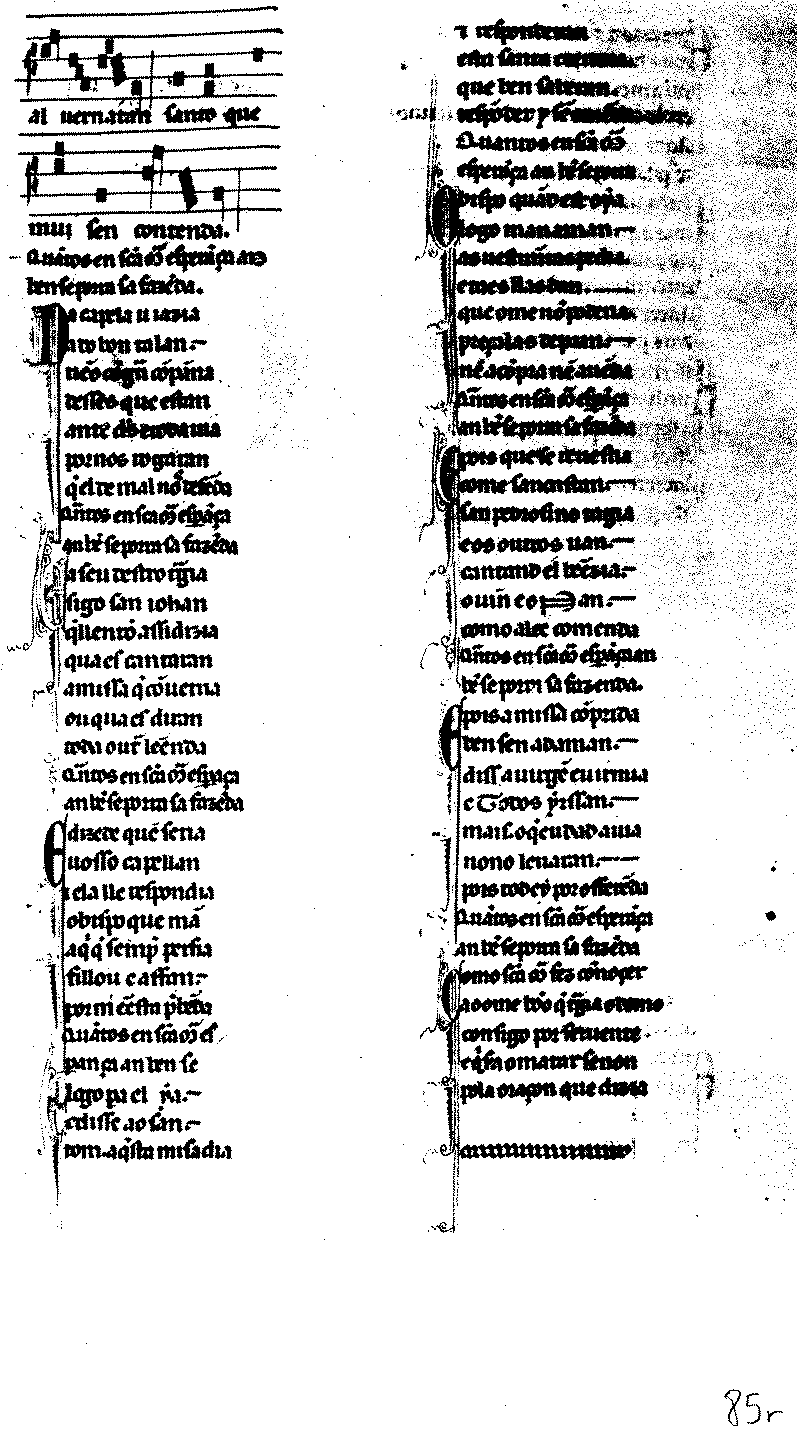
- a. 1284, Alfonso X of Castile, Cantigas de Santa Maria, Códice de los músicos, cantiga 66 (facsimile):
- ſan pedro ſino tagia
- Saint Peter rang the bell
- ſan pedro ſino tagia
Synonyms
Descendants
Oyda
Etymology
(This etymology is missing or incomplete. Please add to it, or discuss it at the Etymology scriptorium.)
Noun
sino
See also
References
Portuguese
Pronunciation
- (Brazil) IPA(key): /ˈsĩ.nu/
- (Southern Brazil) IPA(key): /ˈsi.no/
- (Portugal) IPA(key): /ˈsi.nu/
Etymology 1
Inherited from Old Galician-Portuguese sino (“bell”), from Late Latin signum (“bell, ringing of a bell”), from Latin signum (“sign”), from Proto-Indo-European *sek- (“to cut”) or *sekʷ- (“to follow”).
Cognate with Galician sino, Catalan seny and Romansh zain. Also related to French tocsin and English tocsin (both ultimately from Old Occitan senh (“bell”)). Doublet of senha, senho, and signo.
Noun
sino m (plural sinos)
- bell (percussive instrument)
- 1913, Fernando Pessoa, Ó sino da minha aldeia:
- Ó sino da minha aldeia,
Dolente na tarde calma,
Cada tua badalada
Soa dentro da minha alma.- O bell of my village,
Doleful in the calm afternoon,
Each of thy tollings
Sounds inside my soul.
- O bell of my village,
Derived terms
Related terms
Descendants
See also
Etymology 2
From Latin sinus. Doublet of seio and seno.
Noun
sino m (plural sinos)
Related terms
Further reading
- “sino”, in Dicionário Aulete Digital (in Portuguese), Rio de Janeiro: Lexikon Editora Digital, 2008–2026
- “sino”, in Dicionário Priberam da Língua Portuguesa (in Portuguese), Lisbon: Priberam, 2008–2026
Serbo-Croatian
Noun
sino (Cyrillic spelling сино)
- vocative singular of sina
Spanish
Pronunciation
- IPA(key): /ˈsino/ [ˈsi.no]
Audio: (file) - Rhymes: -ino
- Syllabification: si‧no
Etymology 1
Borrowed from Latin signum. Doublet of signo, cf. also seña. Cognate with English sign.
Noun
sino m (plural sinos)
Etymology 2
Univerbation of si (“if”) + no (“not”). Compare Portuguese senão, French sinon.
Pronunciation
- IPA(key): /ˈsino/ [ˈsi.no]
- Rhymes: -ino
- Syllabification: si‧no
Conjunction
sino
- but (rather) (after a negative clause)
- No es cantante, sino actor. ― He is not a singer, but an actor.
- 2025 November 3, Hugo Maguey, “Uzbekistán: el corazón del mundo vuelve a latir [Uzbekistan: the heart of the world beats again]”, in El Sol de México[4]:
- Por primera vez en más de 40 años, la Conferencia General de la UNESCO no se celebra en París, sino aquí, en Samarcanda, símbolo de los cruces de civilizaciones.
- For the first time in 40 years, the UNESCO General Conference is not held in Paris, but here, in Samarkand, symbol of the crossroads of civilizations.
- except, apart from
- only, solely (in a negative clause)
- No eres sino un alumno. ― You are solely a student.
Further reading
- “sino”, in Diccionario de la lengua española [Dictionary of the Spanish Language] (in Spanish), online version 23.8.1, Royal Spanish Academy [Spanish: Real Academia Española], 15 December 2025
Tagalog
Alternative forms
Etymology
From Proto-Philippine *si-nu. By surface analysis, si + ano. Compare Brooke's Point Palawano sinu, Ilocano sino, Waray-Waray hin-o, and Yami sino. See also Malay si + Malay anu.
Pronunciation
- (Standard Tagalog) IPA(key): /ˈsino/ [ˈsiː.n̪o]
- Rhymes: -ino
- Syllabification: si‧no
Pronoun
sino (plural sino-sino, Baybayin spelling ᜐᜒᜈᜓ)
- (interrogative) who
Derived terms
- gasino
- pagsinuhin
- sinech
- siney
- sino man
- sino-sino
- sinuhin
Further reading
- “sino”, in Pambansang Diksiyonaryo | Diksiyonaryo.ph, 2018
Anagrams
Yami
Etymology
Compare Brooke's Point Palawano sinu, Ilocano sino, Waray-Waray hin-o, and Tagalog sino.
Pronoun
sino
- (interrogative) who
Zia
Noun
sino