nacer
Asturian
Alternative forms
Etymology
Verb
nacer
- to be born
See also
Galician
Alternative forms
Etymology
Inherited from Old Galician-Portuguese na(s)cer, from Latin nascere.
Pronunciation
- Rhymes: -eɾ
Verb
nacer (first-person singular present nazo, first-person singular preterite nacín, past participle nacido, short past participle nado)
nacer (first-person singular present naço, first-person singular preterite nacim or naci, past participle nacido, reintegrationist norm)
Conjugation
Conjugation of nacer (irregular short past participle; c-z alternation)
Reintegrated conjugation of nacer (c-ç alternation) (See Appendix:Reintegrationism)
1Less recommended.
See also
References
- Seoane, Ernesto Xosé González; Granja, María Álvarez de la; Agrelo, Ana Isabel Boullón (2006–2022), “nacer”, in Dicionario de Dicionarios do galego medieval [Dictionary of dictionaries of Medieval Galician] (in Galician), Santiago de Compostela: Instituto da Lingua Galega
- Barreiro, Xavier Varela; Guinovart, Xavier Gómez (2006–2018), “nacer”, in Corpus Xelmírez: corpus lingüístico da Galicia medieval [Corpus Xelmírez: linguistic corpus of Medieval Galicia] (in Galician), Santiago de Compostela: Instituto da Lingua Galega
- Antón Luís Santamarina Fernández, editor (2006–2013), “nacer”, in Dicionario de Dicionarios da lingua galega [Dictionary of Dictionaries of the Galician language] (in Galician), Santiago de Compostela: Instituto da Lingua Galega
- Antón Luís Santamarina Fernández, Ernesto Xosé González Seoane, María Álvarez de la Granja, editors (2003–2018), “nacer”, in Tesouro informatizado da lingua galega (in Galician), Santiago de Compostela: Instituto da Lingua Galega
- Rosario Álvarez Blanco, editor (2014–2024), “nacer”, in Tesouro do léxico patrimonial galego e portugués (in Galician), Santiago de Compostela: Instituto da Lingua Galega, →ISSN
- “nacer”, in Dicionário Estraviz de galego (in Galician), 2014–2026
Old Galician-Portuguese
Alternative forms
Etymology
Pronunciation
- IPA(key): /naˈt͡seɾ/
Verb
nacer
- to be born
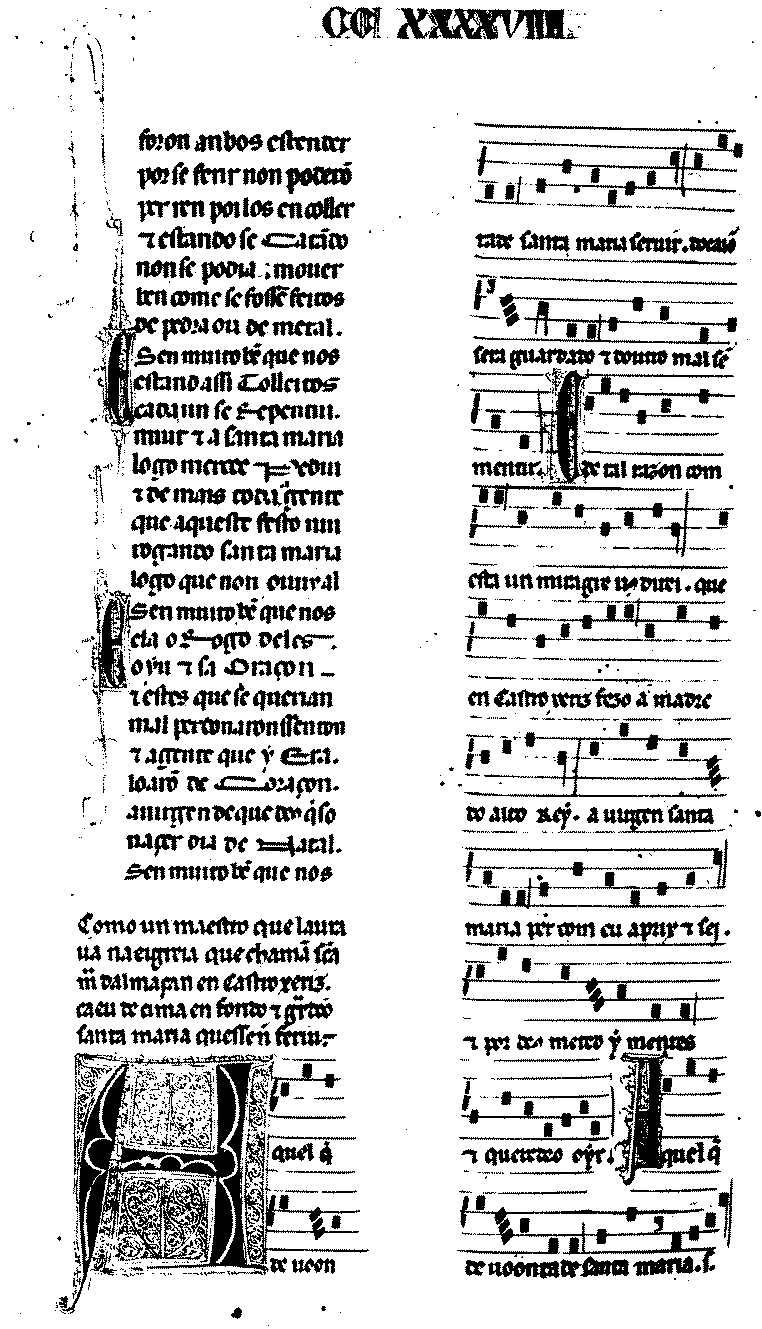
- a. 1284, Alfonso X of Castile, Cantigas de Santa Maria, Códice de los músicos, cantiga 248 (facsimile):
- a uirgen de que de(us) q(ui)so naçer dia de Natal.
- The Virgin from whom God chose to be born on Christmas day.
Conjugation
Conjugation of nacer
| infinitive | nacer | ||||||||
|---|---|---|---|---|---|---|---|---|---|
| gerund | simple | nacendo | |||||||
| compound | gerund of seer or haver or tẽer1 + past participle | ||||||||
| past participle | singular | plural | |||||||
| masculine | nado, nacido | nados, nacidos | |||||||
| feminine | nada, nacida | nadas, nacidas | |||||||
| present participle | nacente | nacentes | |||||||
| person | singular | plural | |||||||
| first | second | third | first | second | third | ||||
| indicative mood | eu ei |
tu | el~ele ela |
nos nos outros nos outras |
vos vos outros vos outras |
eles elas | |||
| simple tenses |
present | nasco, naço | naces | nace | nacemos | nacedes | nacen | ||
| imperfect | nacia | nacias | nacia | naciamos, nacíamos | naciades, nacíades | nacian | |||
| preterite | naci, nacin | naceste, naciste, nacesche, nacische, naceche, naciche | naceu, naceo, nacio, naciu | nacemos | nacestes | naceron | |||
| pluperfect | nacera | naceras | nacera | naceramos, nacêramos | nacerades, nacêrades | naceran | |||
| future | nacerei | nacerás | nacerá | naceremos | naceredes | nacerán | |||
| conditional | naceria | nacerias | naceria | naceriamos, naceríamos | naceriades, naceríades | nacerian | |||
| compound tenses |
present perfect | present of seer or haver or tẽer1 + past participle | |||||||
| pluperfect | imperfect of seer or haver or tẽer1 + past participle | ||||||||
| past anterior | preterite of seer or haver or tẽer1 + past participle | ||||||||
| pluperfect anterior | simple pluperfect of seer or haver or tẽer1 + past participle | ||||||||
| future perfect | future of seer or haver or tẽer1 + past participle | ||||||||
| conditional perfect | conditional of seer or haver or tẽer1 + past participle | ||||||||
| subjunctive mood | eu ei |
tu | el~ele ela |
nos nos outros nos outras |
vos vos outros vos outras |
eles elas | |||
| simple tenses |
present | nasca, naça | nascas, naças | nasca, naça | nascamos, naçamos | nascades, naçades | nascan, naçan | ||
| imperfect | nacesse | nacesses | nacesse | nacessemos, nacêssemos | nacessedes, nacêssedes | nacessen | |||
| future | nacer | naceres | nacer | nacermos | nacerdes | naceren | |||
| compound tenses |
present perfect | present subjunctive of seer or haver or tẽer1 + past participle | |||||||
| pluperfect | imperfect subjunctive of seer or haver or tẽer1 + past participle | ||||||||
| future perfect | future subjunctive of seer or haver or tẽer1 + past participle | ||||||||
| imperative mood | — | tu | — | nos nos outros nos outras |
vos vos outros vos outras |
— | |||
| affirmative | — | nace | — | nascamos, naçamos | nacede | — | |||
| negative | — | non nascas, non naças | — | non nascamos, non naçamos | non nascades, non naçades | — | |||
| personal infinitive | eu ei |
tu | el~ele ela |
nos nos outros nos outras |
vos vos outros vos outras |
eles elas | |||
| nacer | naceres | nacer | nacermos | nacerdes | naceren | ||||
| 1Teer and ter were also used, although all three were less common than haver. | |||||||||
Related terms
Descendants
Further reading
Spanish
Alternative forms
- nascer (archaic)
Etymology
Inherited from Old Spanish nasçer, from Latin nascere.
Pronunciation
- IPA(key): /naˈθeɾ/ [naˈθeɾ] (Spain, Equatorial Guinea)
- IPA(key): /naˈseɾ/ [naˈseɾ] (Latin America, Philippines)
Audio (Colombia): (file) - Rhymes: -eɾ
- Syllabification: na‧cer
Verb
nacer (first-person singular present nazco, first-person singular preterite nací, past participle nacido)
- to be born, to sprout, to begin to grow; to hatch (out)
- Yo nací en Guatemala
- I was born in Guatemala.
- to grow; to rise, to have its source (river); to rise (sun); to have its roots; to arise
Conjugation
Conjugation of nacer (c-zc alternation) (See Appendix:Spanish verbs)
| infinitive | nacer | ||||||
|---|---|---|---|---|---|---|---|
| gerund | naciendo | ||||||
| past participle | masculine | feminine | |||||
| singular | nacido | nacida | |||||
| plural | nacidos | nacidas | |||||
| singular | plural | ||||||
| 1st person | 2nd person | 3rd person | 1st person | 2nd person | 3rd person | ||
| indicative | yo | tú vos |
él/ella/ello usted |
nosotros nosotras |
vosotros vosotras |
ellos/ellas ustedes | |
| present | nazco | nacestú nacésvos |
nace | nacemos | nacéis | nacen | |
| imperfect | nacía | nacías | nacía | nacíamos | nacíais | nacían | |
| preterite | nací | naciste | nació | nacimos | nacisteis | nacieron | |
| future | naceré | nacerás | nacerá | naceremos | naceréis | nacerán | |
| conditional | nacería | nacerías | nacería | naceríamos | naceríais | nacerían | |
| subjunctive | yo | tú vos |
él/ella/ello usted |
nosotros nosotras |
vosotros vosotras |
ellos/ellas ustedes | |
| present | nazca | nazcastú nazcásvos2 |
nazca | nazcamos | nazcáis | nazcan | |
| imperfect (ra) |
naciera | nacieras | naciera | naciéramos | nacierais | nacieran | |
| imperfect (se) |
naciese | nacieses | naciese | naciésemos | nacieseis | naciesen | |
| future1 | naciere | nacieres | naciere | naciéremos | naciereis | nacieren | |
| imperative | — | tú vos |
usted | nosotros nosotras |
vosotros vosotras |
ustedes | |
| affirmative | nacetú nacévos |
nazca | nazcamos | naced | nazcan | ||
| negative | no nazcas | no nazca | no nazcamos | no nazcáis | no nazcan | ||
Selected combined forms of nacer (c-zc alternation)
These forms are generated automatically and may not actually be used. Pronoun usage varies by region.
| singular | plural | ||||||
|---|---|---|---|---|---|---|---|
| 1st person | 2nd person | 3rd person | 1st person | 2nd person | 3rd person | ||
| with infinitive nacer | dative | nacerme | nacerte | nacerle, nacerse | nacernos | naceros | nacerles, nacerse |
| accusative | nacerme | nacerte | nacerlo, nacerla, nacerse | nacernos | naceros | nacerlos, nacerlas, nacerse | |
| with gerund naciendo | dative | naciéndome | naciéndote | naciéndole, naciéndose | naciéndonos | naciéndoos | naciéndoles, naciéndose |
| accusative | naciéndome | naciéndote | naciéndolo, naciéndola, naciéndose | naciéndonos | naciéndoos | naciéndolos, naciéndolas, naciéndose | |
| with informal second-person singular tuteo imperative nace | dative | náceme | nácete | nácele | nácenos | not used | náceles |
| accusative | náceme | nácete | nácelo, nácela | nácenos | not used | nácelos, nácelas | |
| with informal second-person singular voseo imperative nacé | dative | naceme | nacete | nacele | nacenos | not used | naceles |
| accusative | naceme | nacete | nacelo, nacela | nacenos | not used | nacelos, nacelas | |
| with formal second-person singular imperative nazca | dative | názcame | not used | názcale, názcase | názcanos | not used | názcales |
| accusative | názcame | not used | názcalo, názcala, názcase | názcanos | not used | názcalos, názcalas | |
| with first-person plural imperative nazcamos | dative | not used | nazcámoste | nazcámosle | nazcámonos | nazcámoos | nazcámosles |
| accusative | not used | nazcámoste | nazcámoslo, nazcámosla | nazcámonos | nazcámoos | nazcámoslos, nazcámoslas | |
| with informal second-person plural imperative naced | dative | nacedme | not used | nacedle | nacednos | naceos | nacedles |
| accusative | nacedme | not used | nacedlo, nacedla | nacednos | naceos | nacedlos, nacedlas | |
| with formal second-person plural imperative nazcan | dative | názcanme | not used | názcanle | názcannos | not used | názcanles, názcanse |
| accusative | názcanme | not used | názcanlo, názcanla | názcannos | not used | názcanlos, názcanlas, názcanse | |
Derived terms
Related terms
Descendants
- > Chavacano: nace (inherited)
See also
Further reading
- “nacer”, in Diccionario de la lengua española [Dictionary of the Spanish Language] (in Spanish), online version 23.8.1, Royal Spanish Academy [Spanish: Real Academia Española], 15 December 2025