kitthe
Middle English
The spelling of this entry has been normalized according to the principles established by Wiktionary's editor community or recent spelling standards of the language.
Alternative forms
- kiththe, kiþ, kiþþe, kyȝth, kyth, kythe, kyþe
- cuððe, cuhðe, cyððe, kuððe (Early Middle English)
- keþþe (Kent); cithe, kidh, kiyth, kyght, kyghte, kytht (Northern); cuþþe, cuþþhe, kuþþe, kuythe (Southern, Southwest Midland)
Etymology
Inherited from Old English cȳþþ, cȳþþu, from Proto-West Germanic *kunþiþu.
Pronunciation
- IPA(key): /ˈkiθ(ə)/
- IPA(key): /ˈkɛθ(ə)/ (Kent)
- IPA(key): /ˈkyθ(ə)/ (Southern, Southwest Midland)
Noun
kitthe (plural kitthes)
- One's homeland or birthplace; the country one belongs to.
- One's kinsmen or relations; the people one belongs to.
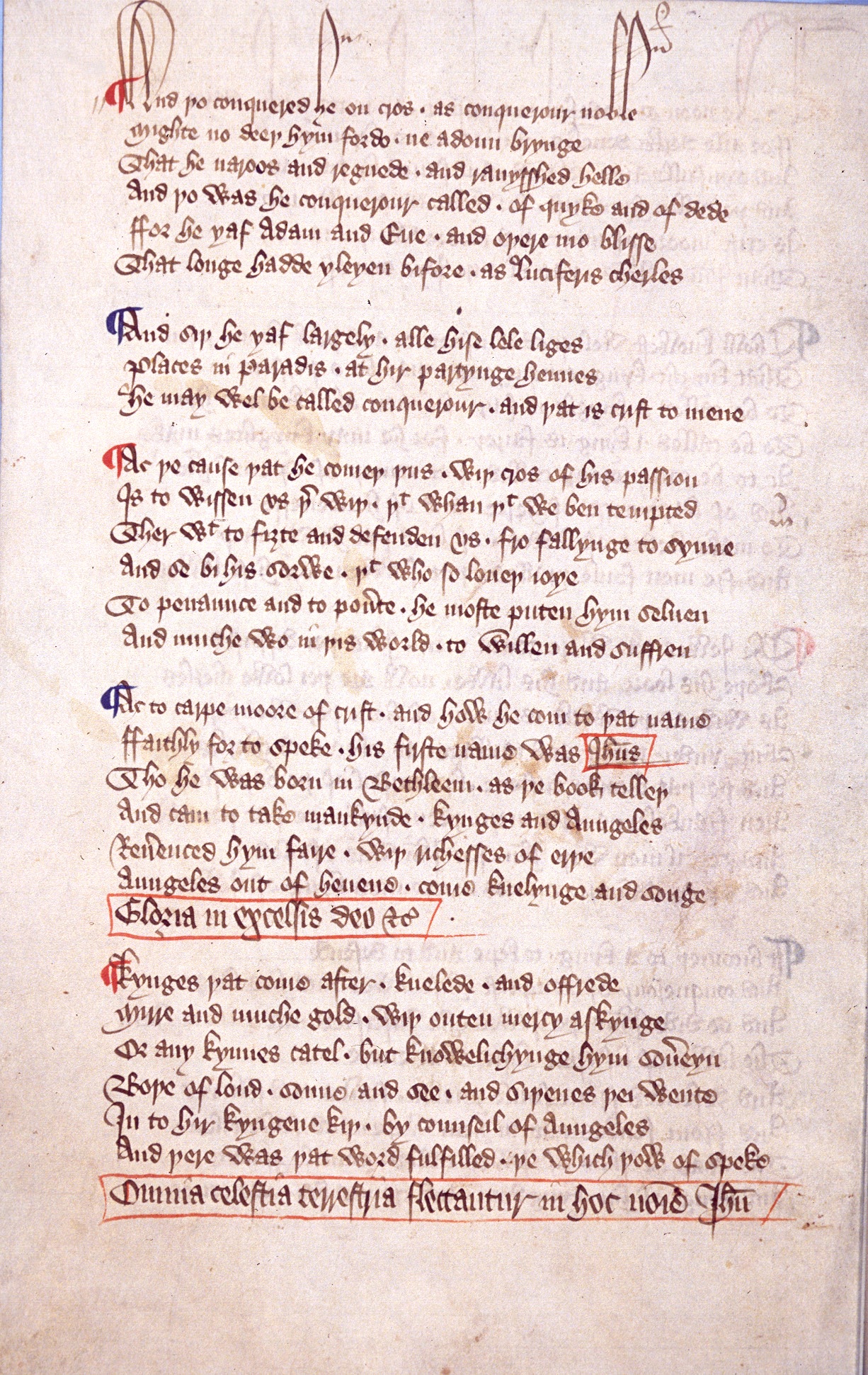
- c. 1378-9, [William Langland], “Paſſus xıx᷒ et explıcıt Dobet // et ımplıcıt Dobeſt”, in [Piers Plowman, A Treatise on Sin] (W, B-text), London, published c. 1400, →OCLC, folio 116, verso; republished as Thorlac Turville-Petre, Hoyt N. Duggan, editors, Cambridge, Trinity College, MS B.15.17 (The Piers Plowman Electronic Archive; 2), SEENET, 2014, →ISBN:
- ¶ Kynges þat come after. knelede. and offrede / Mırre and muche gold. Wıþ outen mercy aſkynge / Or any kynnes catel. but knowelıchynge hym sou͛eyn / Boþe of lond. sonne and see. and sıþenes þeı wente / In to hır kyngene kıþ. by counseıl of Aungeles
- Then kings came next, kneeling and offering / myrrh and plenty of gold, without asking for favour / or any kind of wealth, but instead acknowledging him as sovereign / of the land, sun, and sea; then they went / back to the kings' people using instructions from angels.
- (rare) Relation, heritage; ethnic or familial connection.
- (rare) A descendant or offspring; someone descending from oneself.
- (rare) Knowledge, facts (especially customary)
- (rare) Acquaintance; the state of knowing someone.
Descendants
References
- “kitthe, n.”, in MED Online, Ann Arbor, Mich.: University of Michigan, 2007, retrieved 22 May 2018.