busshel
Middle English
Alternative forms
- boschell, bosshell, buschel, buschell, bushell, busschel, busshell, bussel, bussell, buyschel, buysshel
Etymology
From Old French boissel.
Pronunciation
- IPA(key): /ˈbuʃɛl/, /ˈbui̯ʃɛl/, /ˈbusɛl/
Noun
busshel (plural busshels or busshel)
- bushel (volume measure)
- bushel (vessel holding a bushel)
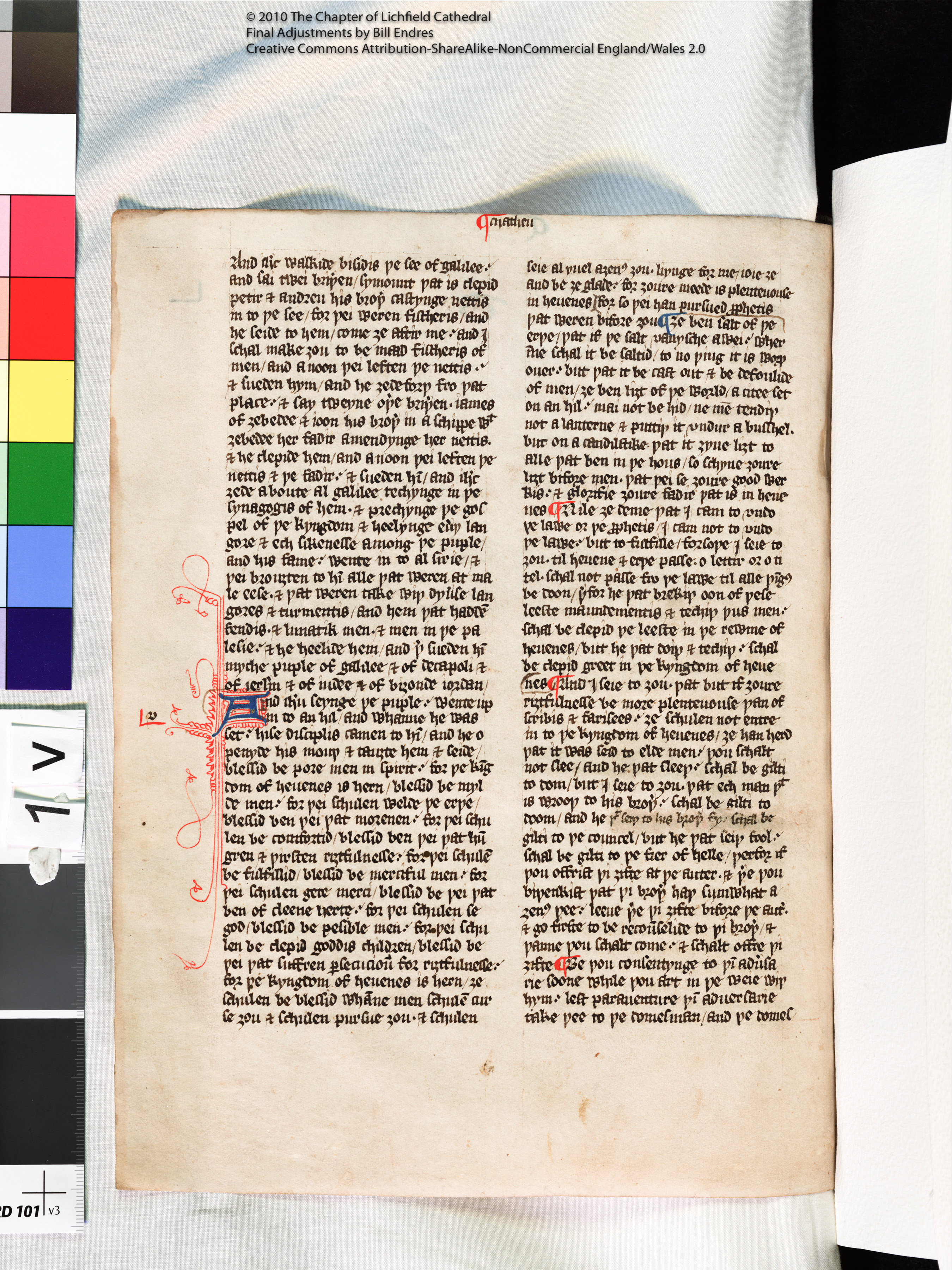
- c. 1395, John Wycliffe, John Purvey [et al.], transl., Bible (Wycliffite Bible (later version), MS Lich 10.)[1], published c. 1410, Matheu 5:15, folio 1, verso, column 1; republished as Wycliffe's translation of the New Testament, Lichfield: Bill Endres, 2010:
- ne me tendiþ not a lanterne / ⁊ puttiþ it vndur a buſſhel [translating mōdius] · but on a candilſtike· that it ȝyue liȝt to alle þat ben in þe hous
- You don't light a lamp and put it under a bushel, but on a candlestick, so it gives light to everybody who's at home.
- 1387–1400, [Geoffrey] Chaucer, “The Somnours Tale”, in The Tales of Caunt́bury (Hengwrt Chaucer; Peniarth Manuscript 392D), Aberystwyth, Ceredigion: National Library of Wales, published [c. 1400–1410], →OCLC, folio 80, recto:
- Ẏıf vs a buſſhel whete / Malt oꝛ Reẏe / A goddes kechẏl / oꝛ a trẏp[e] of cheeſe / Oꝛ ellıs what ẏow lẏſt / we maẏ nat cheſe […]
- "Give us a bushel of wheat, malt, or rye, a God's cake, a bit of cheese / or anything that you want; we don't need to choose […] "
Descendants
References
- “busshel, n.(1).”, in MED Online, Ann Arbor, Mich.: University of Michigan, 2007.