asse
English
Pronunciation
Etymology 1
Noun
asse (plural asses)
- Obsolete spelling of ass.
Etymology 2
Perhaps from Afrikaans asse (“ashes”), because the fur at the top of the Cape fox's body looks like ash.
Noun
asse (plural asses)
- (rare) A Cape fox (Vulpes chama).[1]
- Synonym: asse fox
- 1906, Praagh, L. V, The Transvaal and its mines : the encyclopedic history of the Transvaal[2]:
- and the little Asse Fox (Canis chama).
- 1910, Encyclopædia Britannica 1911 ed. Vol. 10[3], page 769:
- South of the Zambezi the group reappears in the shape of the asse-fox or fennec, (V. cama), a dark-coloured species, with a black tip to the long, bushy tail and reddish-brown ears.
References
References
- “asse”, in Webster’s Revised Unabridged Dictionary, Springfield, Mass.: G. & C. Merriam, 1913, →OCLC.
Anagrams
Alemannic German
Alternative forms
Etymology
From Old High German ezzan, from Proto-Germanic *etaną. Cognate with German essen, Dutch eten, English eat, Swedish äta.
Verb
asse
References
- Patuzzi, Umberto, ed., (2013) Luserna / Lusérn: Le nostre parole / Ünsarne börtar / Unsere Wörter [Our Words], Luserna, Italy: Comitato unitario delle isole linguistiche storiche germaniche in Italia / Einheitskomitee der historischen deutschen Sprachinseln in Italien
French
Pronunciation
Noun
asse m (plural asses)
- a type of pickaxe used in tunneling
Further reading
- “asse”, in Trésor de la langue française informatisé [Digitized Treasury of the French Language], 2012
Ingrian
| →○ | illative | asse |
|---|---|---|
| ○ | inessive | as |
| ○→ | elative | ast |
Etymology
Formed analogously from ast by replacing the (superficial) elative ending with an illative ending.
Pronunciation
- (Ala-Laukaa) IPA(key): /ˈɑsːe/, [ˈɑs̠ː]
- (Soikkola) IPA(key): /ˈɑsːe/, [ˈɑʃːe̞]
- (Hevaha) IPA(key): /ˈɑsːek/, [ˈɑʃːe̞ɡ̊]
- Rhymes: -ɑsː, -ɑsːe
- Hyphenation: as‧se
Postposition
asse (+ illative or allative)
- (of time) up to, until
- (of distance or motion) all the way to
asse (+ elative or ablative)
- (of time) ever since
- (of distance or motion) all the way from
Synonyms
Derived terms
References
- Ruben E. Nirvi (1971), Inkeroismurteiden Sanakirja, Helsinki: Suomalais-Ugrilainen Seura, page 21
- Arvo Laanest (1997), Isuri keele Hevaha murde sõnastik, Eesti Keele Instituut, page 21
Italian
Pronunciation
- IPA(key): /ˈas.se/
- Rhymes: -asse
- Hyphenation: às‧se
Etymology 1
From Latin axis, axem, from Proto-Indo-European *h₂eḱs- (“axis”).
Noun
asse f (plural assi)
Etymology 2
From Latin assis, variant of axis.
Noun
asse m (plural assi)
- axle
- (mathematics, physics) axis
- (anatomy) axis (vertebra)
- Synonym: epistrofeo
Derived terms
Etymology 3
Noun
asse f (plural assi)
- (historical, Ancient Rome) as (any of several coins of Rome)
Anagrams
Latin
Noun
asse
- ablative singular of as
Lule Sami
Etymology
From Proto-Samic *ësē.
Noun
asse
Inflection
| Even e-stem, ss-s gradation | ||||||||||||||||||||||
|---|---|---|---|---|---|---|---|---|---|---|---|---|---|---|---|---|---|---|---|---|---|---|
| Nominative | asse | |||||||||||||||||||||
| Genitive | ase | |||||||||||||||||||||
| Singular | Plural | |||||||||||||||||||||
| Nominative | asse | ase | ||||||||||||||||||||
| Accusative | asev | asijt | ||||||||||||||||||||
| Genitive | ase | asij | ||||||||||||||||||||
| Illative | assáj | asijda | ||||||||||||||||||||
| Inessive | asen | asijn | ||||||||||||||||||||
| Elative | ases | asijs | ||||||||||||||||||||
| Comitative | asijn | asij | ||||||||||||||||||||
| Abessive | asedagá asedagi |
asijdagá asijdagi | ||||||||||||||||||||
| Essive | assen | |||||||||||||||||||||
| ||||||||||||||||||||||
Further reading
- Eino Koponen, Klaas Ruppel, Kirsti Aapala, editors (2002–2008), Álgu database: Etymological database of the Saami languages[5], Helsinki: Research Institute for the Languages of Finland
Middle English
Etymology 1
From Old English assa, a back-formation from assen (“she-ass, female donkey”).
Alternative forms
- has, as, ass (Northern or Late Middle English)
Pronunciation
- IPA(key): /ˈas(ə)/
Noun
asse (plural assen or asses or (late) asse)
- An ass or donkey (Equus asinus asinus, especially if male)
- c. 1390 [c. 1225], “Furſte dole: ſeruiſe”, in Þe roule of reclous (Ancrene Wisse, Bodleian MS. Eng. poet. a. 1)[6], Worcestershire, folio 373, recto; republished at Oxford: Digital Bodleian, 10 January 2019:
- BI. daye ſũtyme. oþ᷑ beo niht. gedereþ in oure herte. alle seeke and ſoꝛe. þat wo. and pouert. þt poꝛe þoleþ. þe pyne þat pͥſons habbeþ. þer aliggen wıþ Iren heuye I.feteret. Nomeliche of þe cristene. þat beoþ in heþeneſſe. Sũme in prison. sũme in as muche wo. as Oxe is. oþer Aſſe.
- At some point in the day or night hold in your heart all the sick and grieving, the suffering and deprivation the poor endure, the torments that prisons contain, where [people] lie fettered with heavy iron, and especially the Christians who are in Heathendom: some in prison, and some in as much misery as an ox or a donkey.
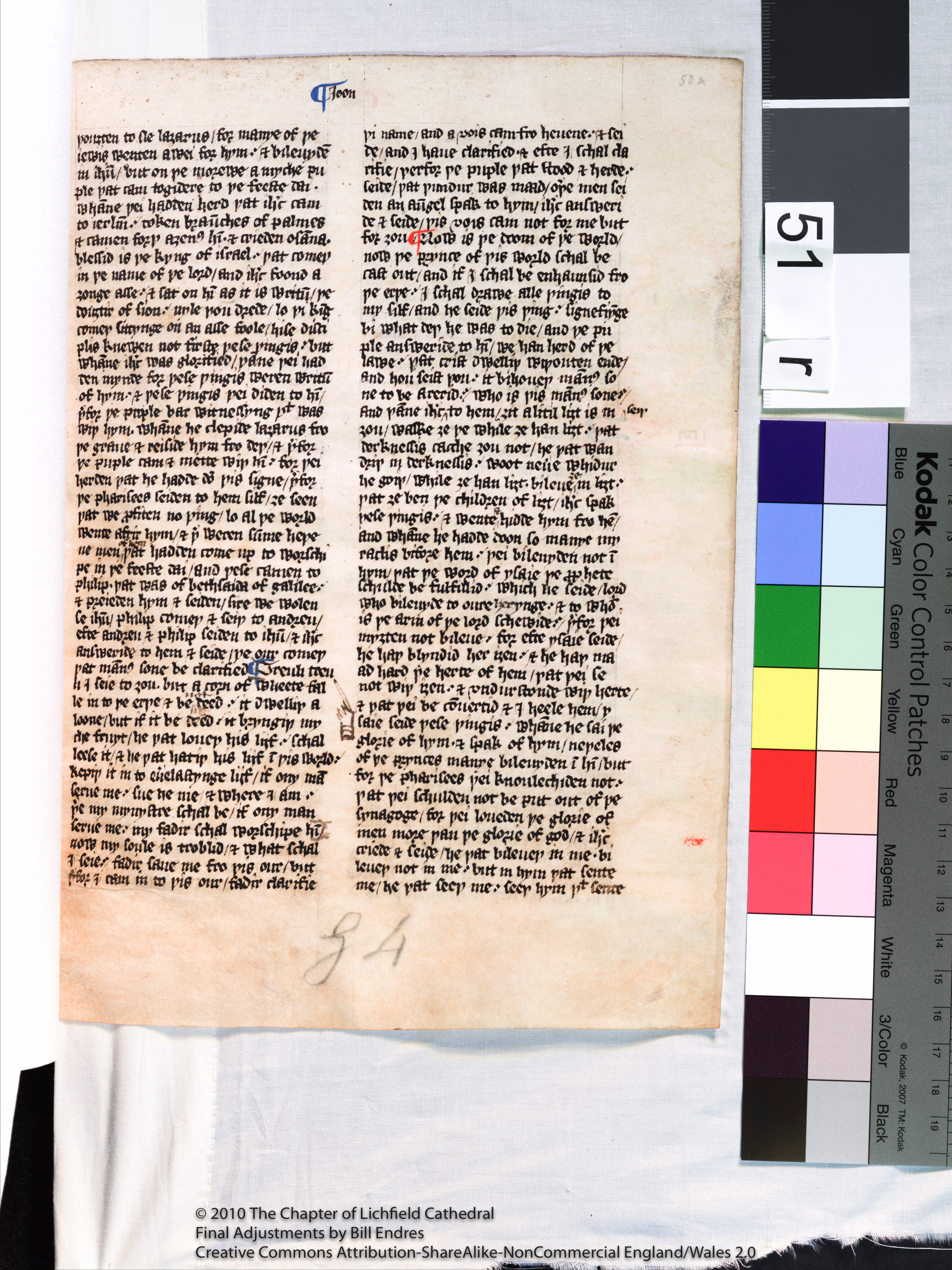
- c. 1395, John Wycliffe, John Purvey [et al.], transl., Bible (Wycliffite Bible (later version), MS Lich 10.)[7], published c. 1410, Joon 12:15, folio 51, recto, column 1; republished as Wycliffe's translation of the New Testament, Lichfield: Bill Endres, 2010:
- A wild ass or wild donkey (Equus africanus)
- An ass (stupid person, moron)
Declension
| singular | plural | |
|---|---|---|
| (nominative/accusative) | asse | assen, asses |
| genitive | asses, asse | *assene, asses |
| dative | — | — |
Descendants
References
- “asse, n.”, in MED Online, Ann Arbor, Mich.: University of Michigan, 2007.
Etymology 2
Verb
asse
- (Late Middle English, Yorkshire) alternative form of asken (“to ask”)
Old English
Etymology 1
From earlier assen, from Latin asina. By surface analysis, assa + -e (feminine)
Alternative forms
Noun
asse f
Etymology 2
Noun
asse m
- alternative form of assa
Old Irish
Alternative forms
Etymology
From Proto-Celtic *ad-sādo-syos.[1]
Adjective
asse (comparative assu)
Declension
| singular | masculine | feminine | neuter |
|---|---|---|---|
| nominative | assae | assae | assae |
| vocative | assai | ||
| accusative | assae | assai | |
| genitive | assai | assae | assai |
| dative | assu | assai | assu |
| plural | masculine | feminine/neuter | |
| nominative | assai | assai | |
| vocative | assai assu* | ||
| accusative | assai assu* | ||
| genitive | assae | ||
| dative | assaib | ||
* when substantivized
Derived terms
Mutation
| radical | lenition | nasalization |
|---|---|---|
| asse (pronounced with /h/ in h-prothesis environments) |
asse | n-asse |
Note: Certain mutated forms of some words can never occur in Old Irish.
All possible mutated forms are displayed for convenience.
References
- ^ Matasović, Ranko (2009), “*sādo-”, in Etymological Dictionary of Proto-Celtic (Leiden Indo-European Etymological Dictionary Series; 9), Leiden: Brill, →ISBN, page 318
Further reading
- Gregory Toner, Sharon Arbuthnot, Máire Ní Mhaonaigh, Marie-Luise Theuerkauf, Dagmar Wodtko, editors (2019), “2 assa(e)”, in eDIL: Electronic Dictionary of the Irish Language
Pali
Alternative forms
- 𑀅𑀲𑁆𑀲𑁂 (Brahmi script)
- अस्से (Devanagari script)
- অস্সে (Bengali script)
- අස්සෙ (Sinhalese script)
- အဿေ or ဢသ်သေ (Burmese script)
- อสฺเส or อัสเส (Thai script)
- ᩋᩔᩮ (Tai Tham script)
- ອສ຺ເສ or ອັສເສ (Lao script)
- អស្សេ (Khmer script)
- 𑄃𑄥𑄴𑄥𑄬 (Chakma script)
Noun
asse
Pite Sami
Etymology
From Proto-Samic *ësē.
Noun
asse
Inflection
| Even e-stem, ss-s gradation | ||
|---|---|---|
| Nominative | asse | |
| Genitive | ase | |
| Singular | Plural | |
| Nominative | asse | ase |
| Accusative | asev | isijt |
| Genitive | ase | isij |
| Illative | assáj | isijda |
| Inessive | asen | isijn |
| Elative | asest ases |
isijst isijs |
| Comitative | isijn | isij |
| Essive | assen | |
Further reading
- Eino Koponen, Klaas Ruppel, Kirsti Aapala, editors (2002–2008), Álgu database: Etymological database of the Saami languages[8], Helsinki: Research Institute for the Languages of Finland
Portuguese
Verb
asse
- inflection of assar:
- first/third-person singular present subjunctive
- third-person singular imperative