wastour
English
Noun
wastour (plural wastours)
- Alternative form of waster.
- 1829, Robert Southey, “Colloquy XIII. The River Greta.—Trade.—Population.—Colonies.”, in Sir Thomas More: or, Colloquies on the Progress and Prospects of Society. […], volume II, London: John Murray, […], →OCLC, page 297:
- For though knights are not more needed now to protect the husbandmen against wastours and wicked men, […].
Anagrams
Middle English
Alternative forms
Etymology
Borrowed from Anglo-Norman wastour (continental Old French gasteor); equivalent to wast (“desolate”) + -our.
Pronunciation
- IPA(key): /wasˈtuːr/, /ˈwastur/, /ˈwastər/, /waːs-/
Noun
wastour (plural wastours)
- A devastator or raider; one who lays waste.
- A squanderer; one who wastes money or resources.
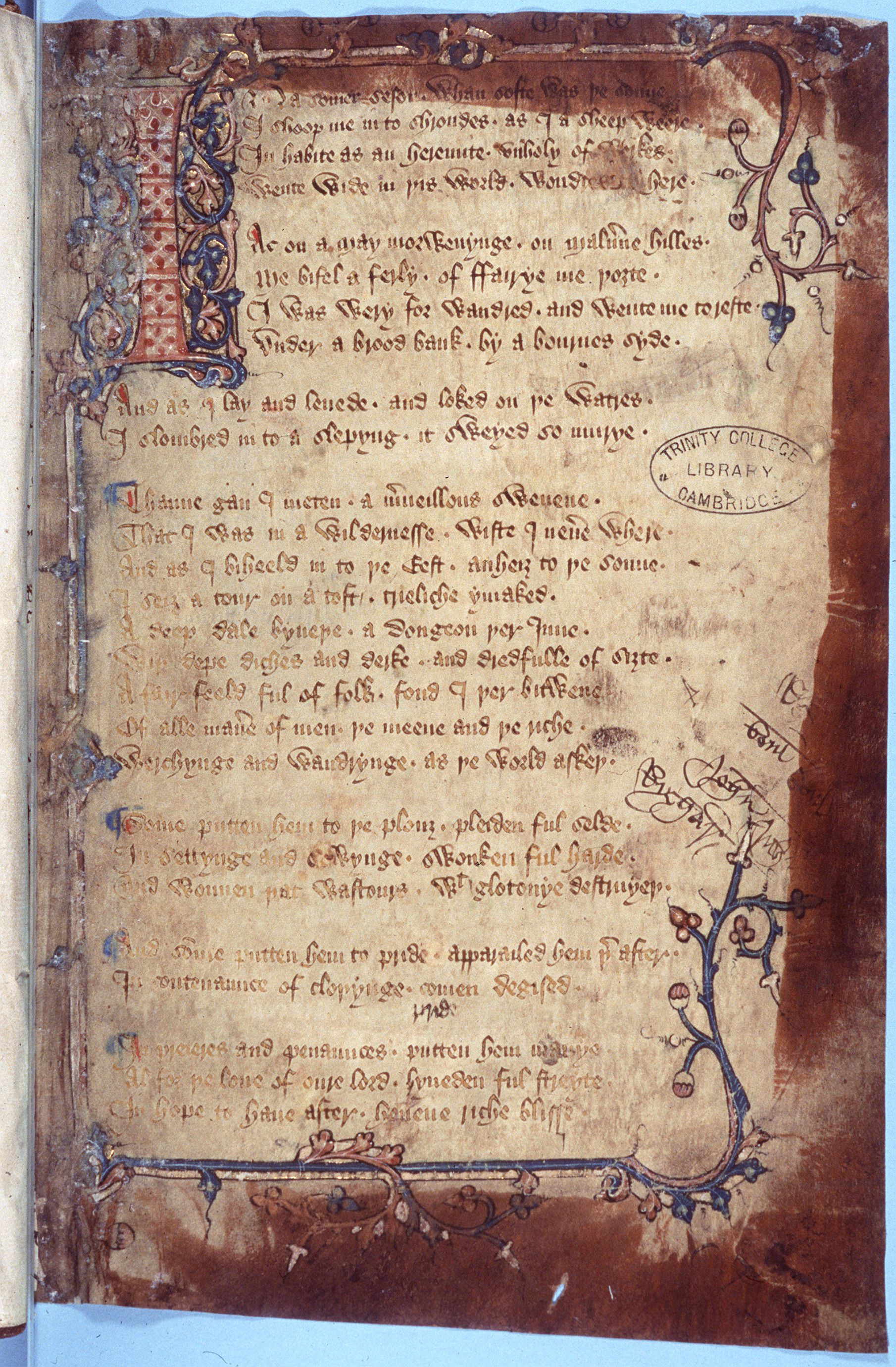
- c. 1378-9, [William Langland], “[Prologue]”, in [Piers Plowman, A Treatise on Sin] (W, B-text), London, published c. 1400, →OCLC, folio 1, recto; republished as Thorlac Turville-Petre, Hoyt N. Duggan, editors, Cambridge, Trinity College, MS B.15.17 (The Piers Plowman Electronic Archive; 2), SEENET, 2014, →ISBN:
- Some putten hem to þe plouȝ. pleıden ful selde / In settynge and sowynge. swonken ful harde. / And wonnen þat waſtours. wt glotonẏe deſtruẏeþ.
- Some apply themselves to the plough; [they] very rarely played, / but worked so hard in planting and sowing, / and obtained what idlers squander through gluttony.
Descendants
References
- “wā̆stǒur, n.”, in MED Online, Ann Arbor, Mich.: University of Michigan, 2007.