palavra
Galician
Noun
palavra f (plural palavras, reintegrationist norm)
- reintegrationist spelling of palabra
References
- “palavra”, in Dicionário Estraviz de galego (in Galician), 2014–2026
Ladino
Etymology
From hyperthesis of Old Spanish parabla, from Late Latin, from Latin parabola, from Ancient Greek παραβολή (parabolḗ).
Pronunciation
- IPA(key): /paˈlavɾa/
Noun
palavra f (Hebrew spelling פאלאברה, plural palavras)
- word
- 1979 July, Moshe Shaul, “Istoria i Dezvelopamiento del Djudeo-Espaniol”, in Aki Yerushalayim[1], archived from the original on 3 December 2020, page 11:
- La primera de eyas es ke el djudeo-espaniol kontiene un grande numero de arkaizmos o sea, palavras ke eran empleadas en Espania asta el siglo XV ma ke dezparesieron dezde entonses de su vokabulario, mientres ke en el djudeo-espaniol kontinuan a existir asta oy.
- The first of them is that Judeo-Spanish contains a large number of archaisms, or rather, words that were used in Spain until the 15th century but which disappeared after then from its vocabulary, while in Judeo-Spanish they continue to be used to this day.
Synonyms
Old Galician-Portuguese
Alternative forms
Etymology
With hyperthesis from earlier paravla, from Late Latin parabola (“speech”), from Latin parabola (“comparison, illustration”), from Ancient Greek παραβολή (parabolḗ, “comparison; parable”).
Pronunciation
- IPA(key): /pa.ˈla.βɾa/
Noun
palavra f (plural palavras)
- word
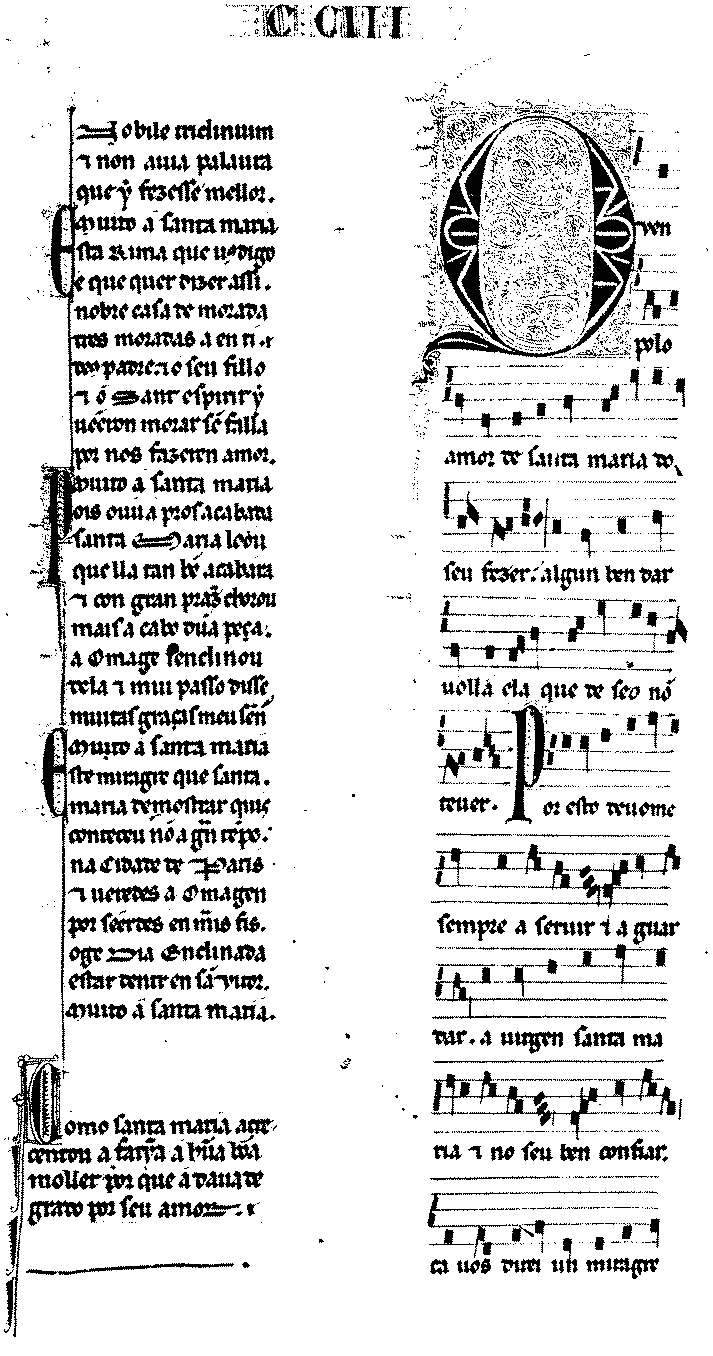
- a. 1284, Alfonso X of Castile, Cantigas de Santa Maria, Códice de los músicos, cantiga 202 (facsimile):
- […] ⁊ non auia palaura que y fezeſſe mellor.
- […] and there was no (other) word which would fit better.
- […] ⁊ non auia palaura que y fezeſſe mellor.
Descendants
Portuguese
Etymology
From Old Galician-Portuguese palavra, with hyperthesis from earlier paravra, paravla, from Late Latin parabola (“speech”), from Latin parabola (“comparison, illustration”), from Ancient Greek παραβολή (parabolḗ, “comparison; parable”). Doublet of parábola, a borrowing.
Pronunciation
- (Brazil) IPA(key): /paˈla.vɾɐ/
- (Southern Brazil) IPA(key): /paˈla.vɾa/
- (Portugal) IPA(key): /pɐˈla.vɾɐ/
- (Northern Portugal) IPA(key): /pɐˈla.bɾɐ/ [pɐˈla.βɾɐ]
Noun
palavra f (plural palavras)
- word
- unit of language
- Abri o dicionário e li a definição de uma palavra qualquer.
- I opened the dictionary and read the definition of a random word.
- Synonym: vocábulo
- 1999, Os pecados da língua: pequeno repertório de grandes erros de linguagem, Editora AGE Ltda., →ISBN, page 114:
- O erro estava na receita, pois l é símbolo de litro e não abreviatura de lata, palavra que não pode ser abreviada, por questões de clareza.
- (please add an English translation of this quotation)
- oath; guarantee
- Você tem a minha palavra.
- You have my word.
- Synonyms: palavra de honra, palavra de rei, promessa, garantia
- brief conversation
- Preciso ter uma palavra com meus filhos.
- I must have a word with my children.
- (computing) unit of data
- Esse processador aceita palavras de 32 bits.
- This processor handles 32-bit words.
- unit of language
- the ability or permission to talk
- No meio da conferência, me passaram a palavra.
- I was given the permission to speak in the middle of the conference.
- religious teachings
- Cristãos seguem a palavra de Jesus.
- Christians follow the word of Jesus.
Derived terms
- em duas palavras
- em uma palavra
- medir as palavras
- palavra de honra
- palavra mágica
- palavra por palavra
- palavra-chave
- palavra-passe
- palavra-valise
- palavrão
- palavras cruzadas
- palavreado
- palavrear
- palavrinha (diminutive)
- palavrona (augmentative)
- para bom entendedor, meia palavra basta
- passa-palavra
- pesar as palavras
- pôr palavras na boca de
- sem palavra
- tirar a palavra da boca de, tirar as palavras da boca de
- última palavra
Related terms
Descendants
Interjection
palavra!
- word (used to assert that something is true)
Further reading
- “palavra”, in Dicionário Aulete Digital (in Portuguese), Rio de Janeiro: Lexikon Editora Digital, 2008–2026
- “palavra” in Dicionário Aberto based on Novo Diccionário da Língua Portuguesa de Cândido de Figueiredo, 1913
- “palavra”, in Dicionário Priberam da Língua Portuguesa (in Portuguese), Lisbon: Priberam, 2008–2026
Turkish
Etymology
Descended from Ottoman Turkish پالاوره (palavra), from either Greek παλάβρα (palávra) or Ladino palavra, ultimately from Old Spanish palabra.
Pronunciation
- IPA(key): /pɑˈɫɑvɾɑ/
Noun
palavra (definite accusative palavrayı, plural palavralar)
- (colloquial, derogatory, vulgar) nonsense, bullshit, bollocks
- Palavraların burada sökmez.
- Your bullshit don't fly here.
- (colloquial, derogatory, vulgar) lie
- Hükümetin palavralarına mı inanıyorsun bir de? Eyvah ki ne eyvah...
- And you're believing in the lies of the government now? Oh dear...
Declension
| singular | plural | |
|---|---|---|
| nominative | palavra | palavralar |
| definite accusative | palavrayı | palavraları |
| dative | palavraya | palavralara |
| locative | palavrada | palavralarda |
| ablative | palavradan | palavralardan |
| genitive | palavranın | palavraların |
Alternative forms
- palavara, patavra, partal (dialectal)
Descendants
- → Romanian: palavră