comunicacioun
Middle English
Alternative forms
- comenycacion, cominicacioun, cominicasion, communecacoun, communicacion, communication, communycacion, communycacioun, communycacyon, commynycacioun, comownycacyon, comunicacion, comunicacyon, comunicacyoun, comunycacyoun, comynycacioun, komynykasyon
Etymology
Borrowed from Anglo-Norman communicacion, Middle French communicacion, or their etymon Latin commūnicātiō; compare comun (“common”).
Pronunciation
- IPA(key): /kɔˌmiu̯niˌkaːsiˈuːn/, /kɔˌmiu̯niˈkaːsjun/, /kɔmini-/
Noun
comunicacioun (uncountable) (chiefly Late Middle English, formal)
- Interconnection, interaction; the state of being associated:
- Discussion, deliberation, conferral.
- An instance of discussion or debate; a meeting.
- (rare) Distribution, sharing.
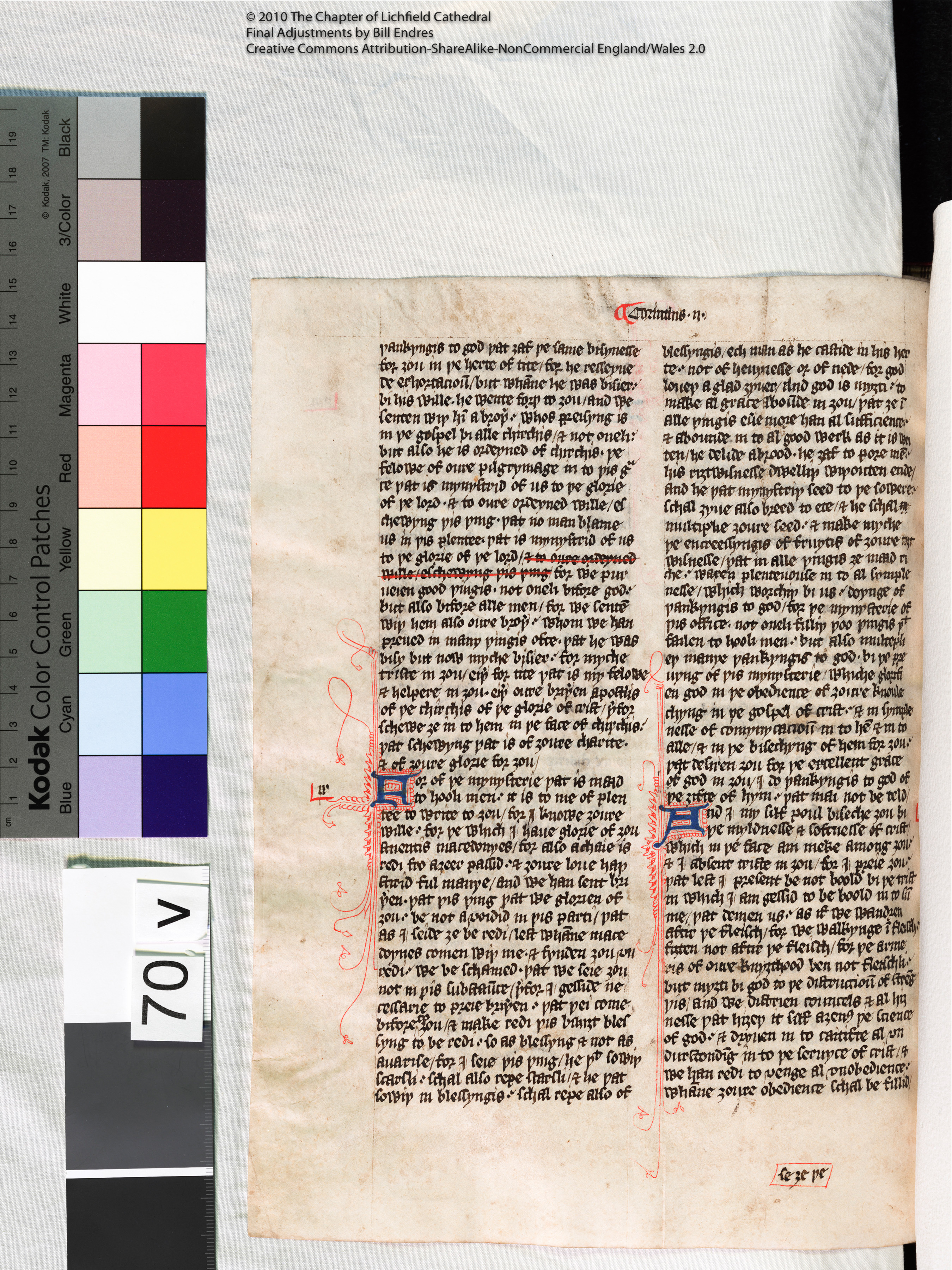
- c. 1395, John Wycliffe, John Purvey [et al.], transl., Bible (Wycliffite Bible (later version), MS Lich 10.)[1], published c. 1410, Coꝛinthis ·ii· 9:13, folio 70, verso, column 2; republished as Wycliffe's translation of the New Testament, Lichfield: Bill Endres, 2010:
- bı þe pꝛeuyng of þıs mynyſterie / whıche gloꝛifıen god ın þe obedıence of ȝoure knoulechyng in þe goſpel of crıſt⹎ ⁊ ın ſympleneſſe of comynycacıoũ ın to hẽ ⁊ ın to alle
- Using the example of this ministry, they will glorify God through the obedience [that comes] from your acknowledgement of the gospel of Christ and the generosity of your sharing with them and everyone [else].
- (rare) A communication or message.
- (rare) Similitude, resemblance.
- (rare) Frequency, commonness.
Descendants
- English: communication
References
- “commū̆nicāciǒun̄, n.”, in MED Online, Ann Arbor, Mich.: University of Michigan, 2007.